
Level 1 sweep and inspection to the NFPA 211 annual standard - flue, crown, cap, and flashing checked and photographed
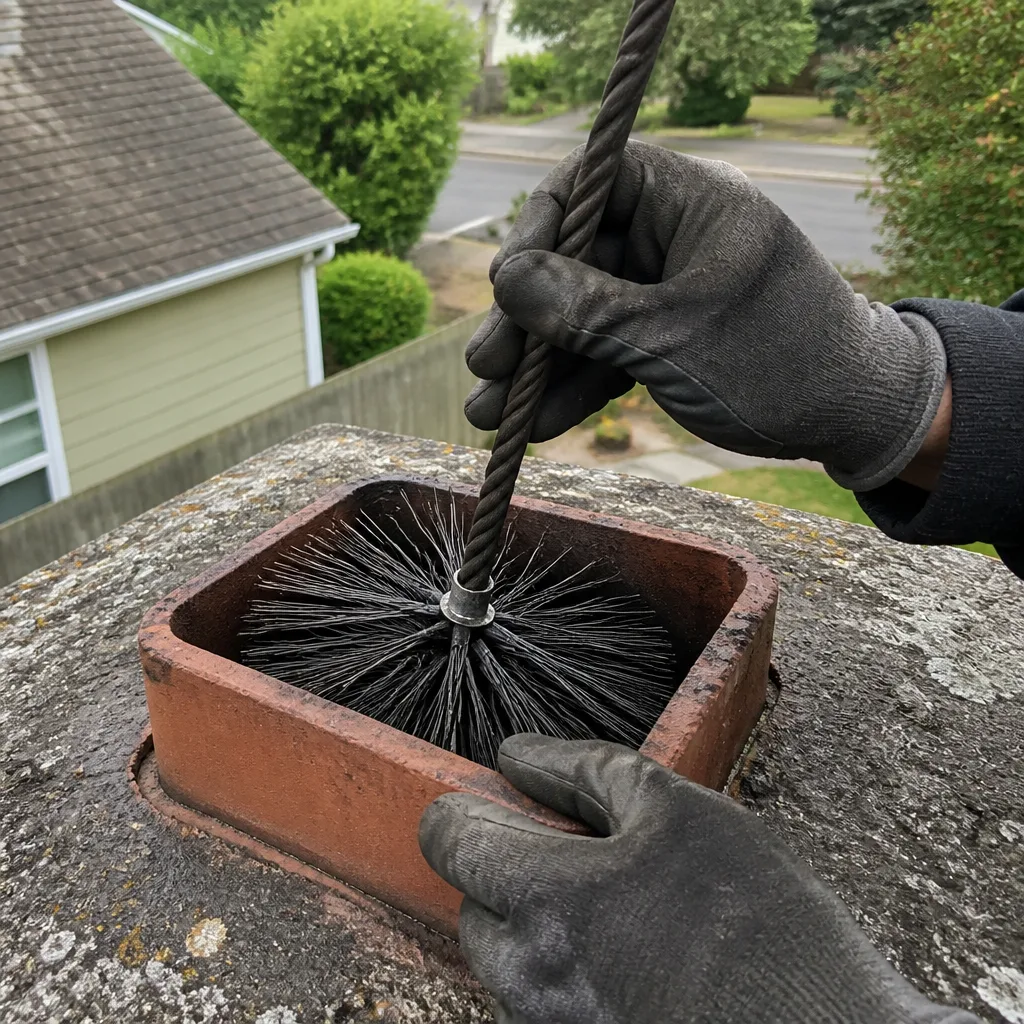
Chimney sweep logs do not sweep chimneys. They loosen some creosote - which then falls where a brush and vacuum still have to collect it.
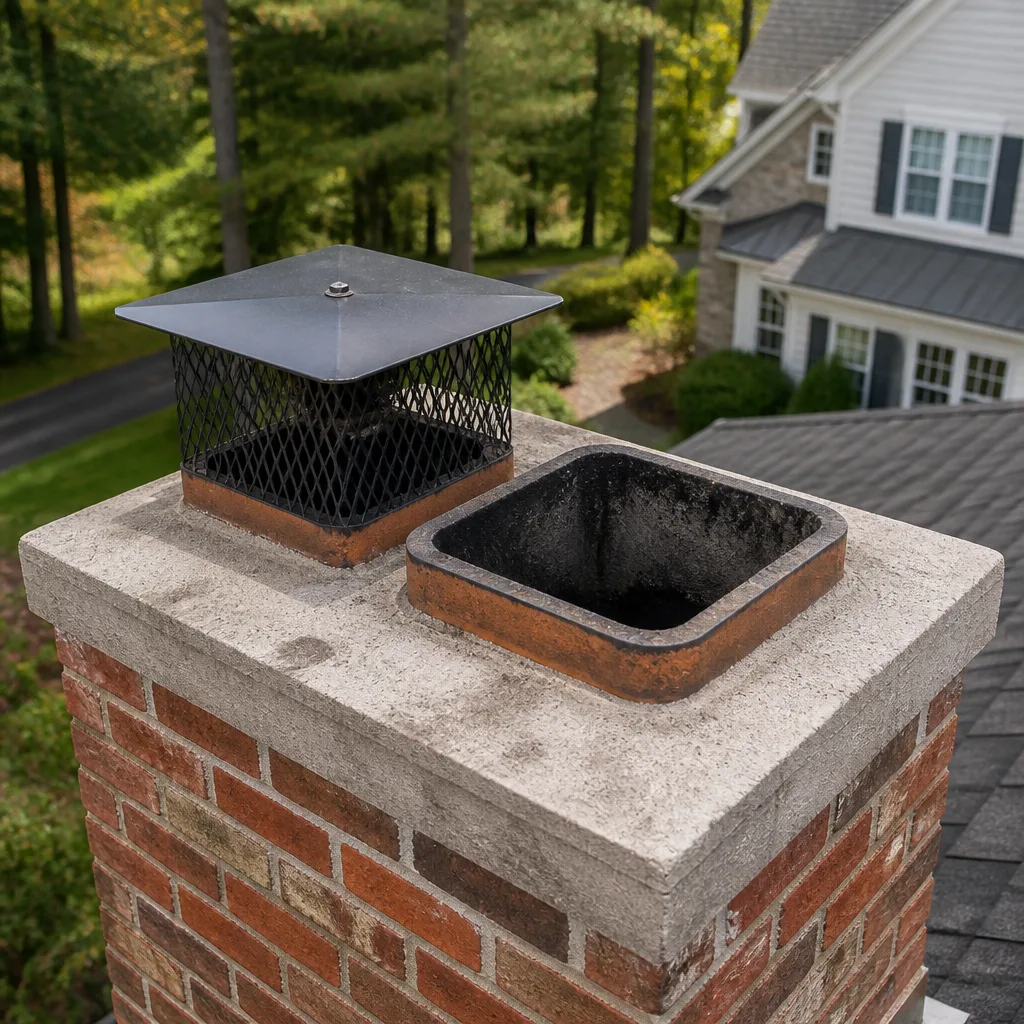
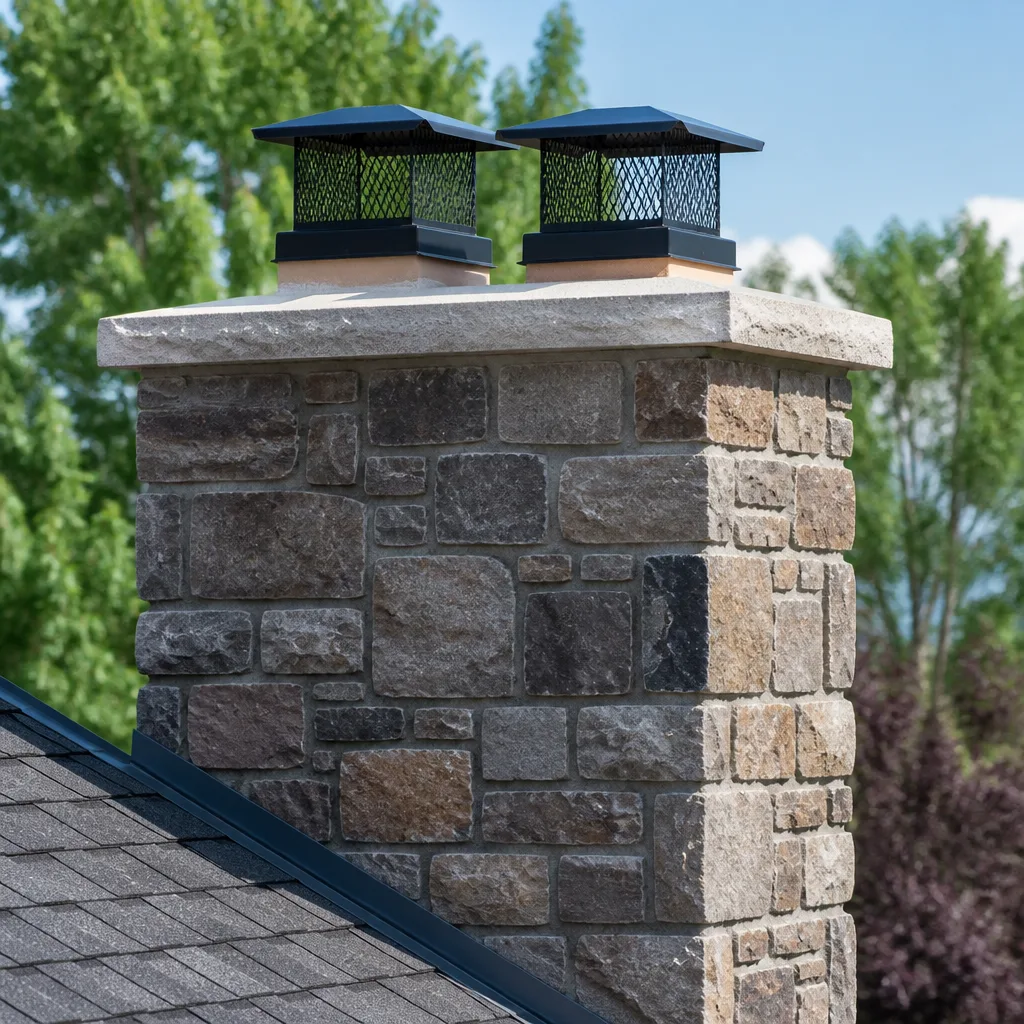
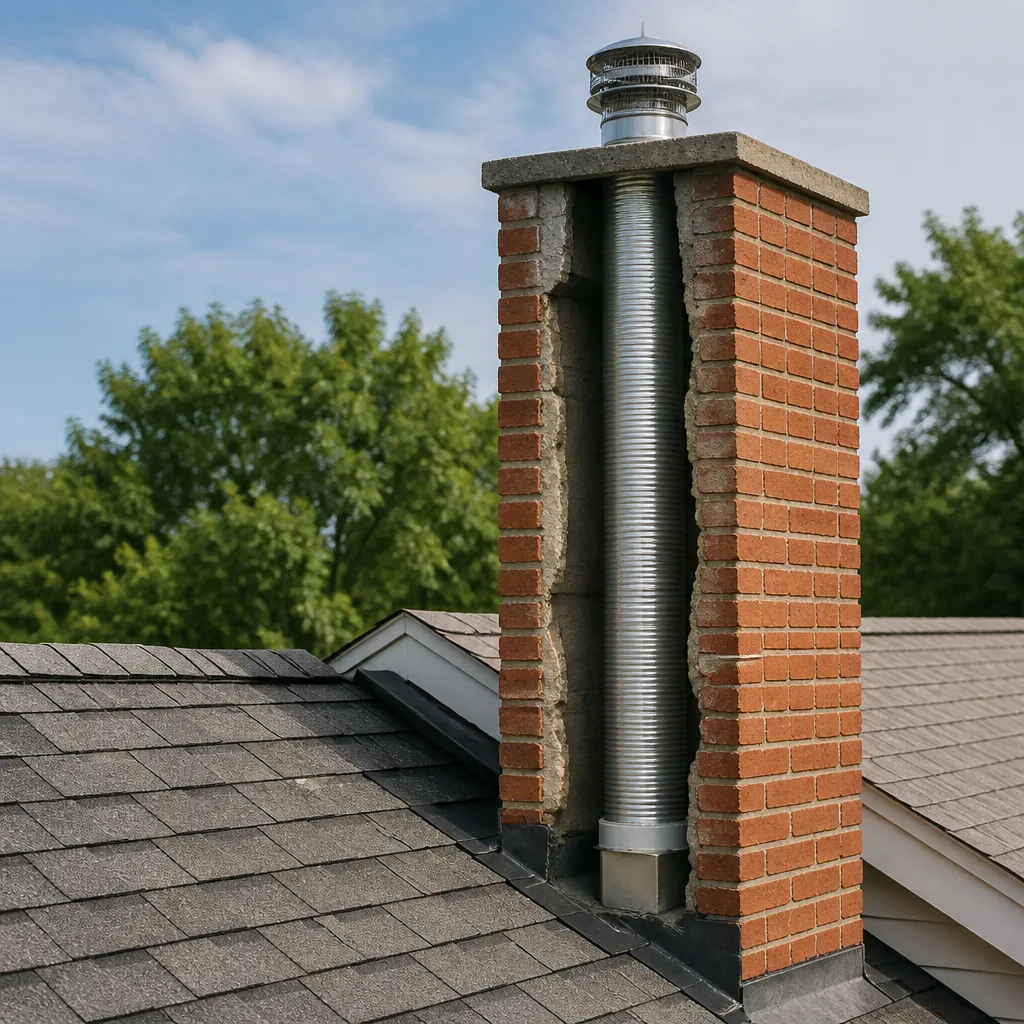
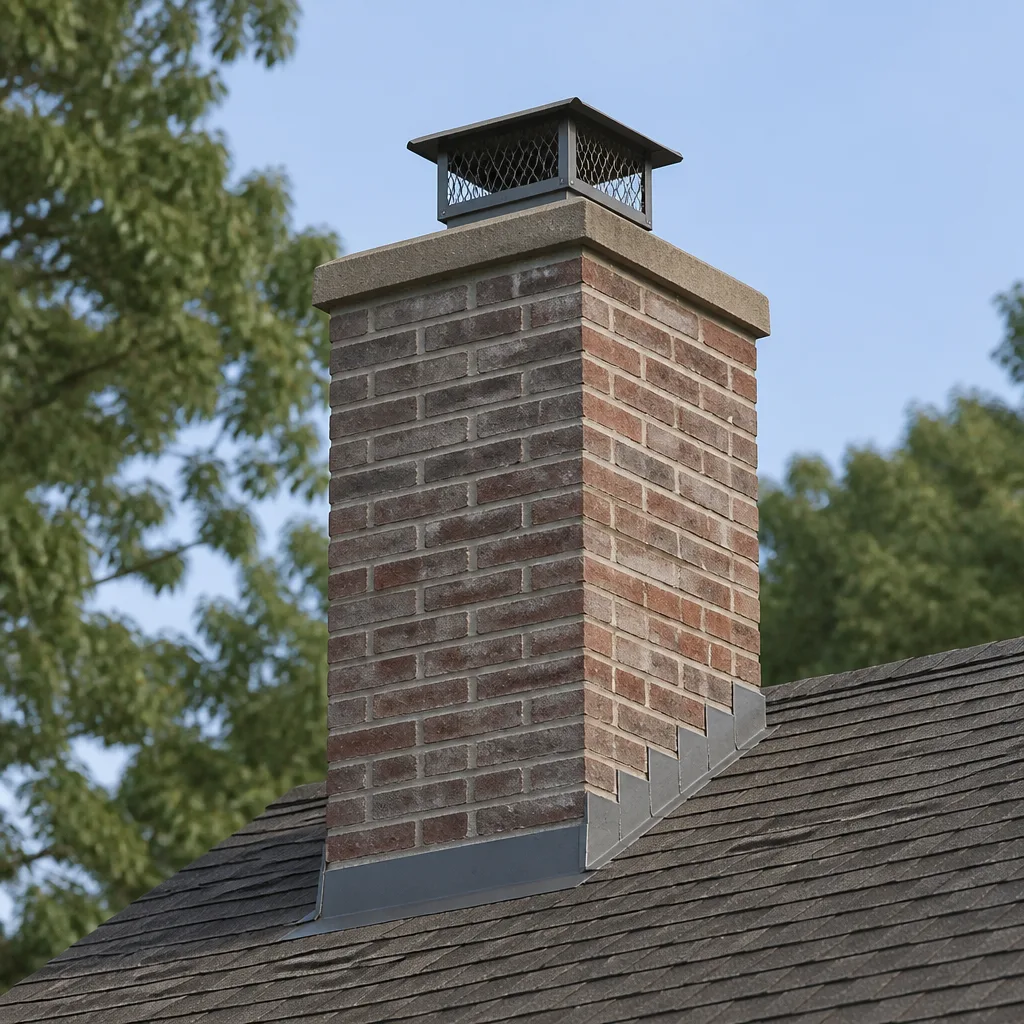
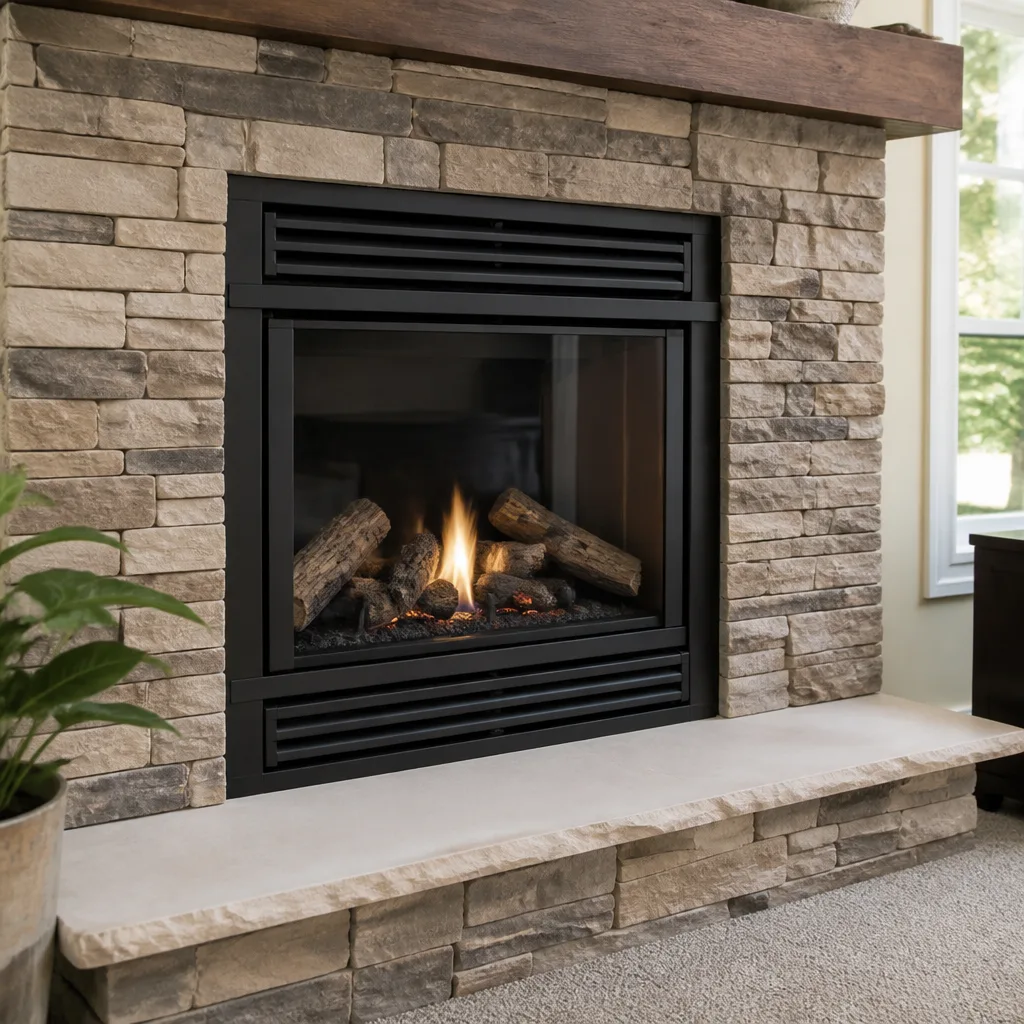
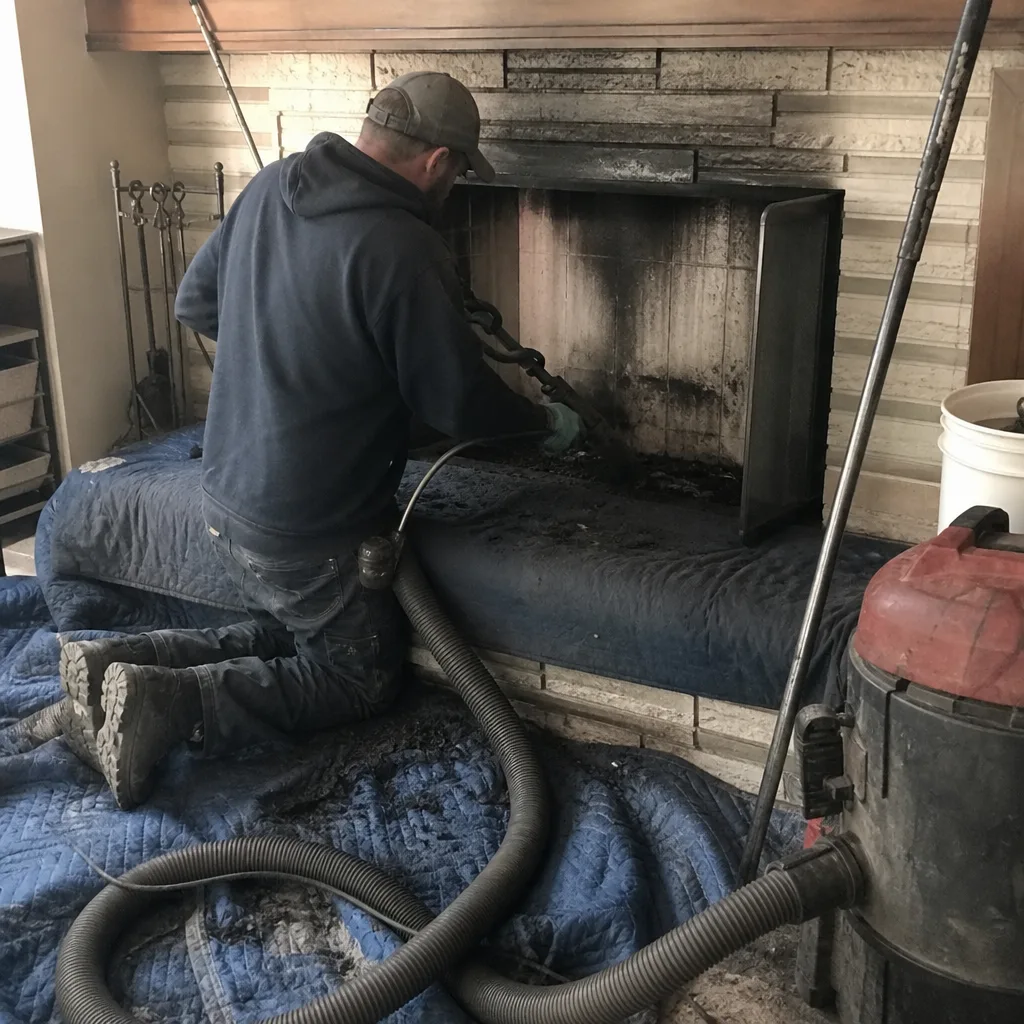 Before
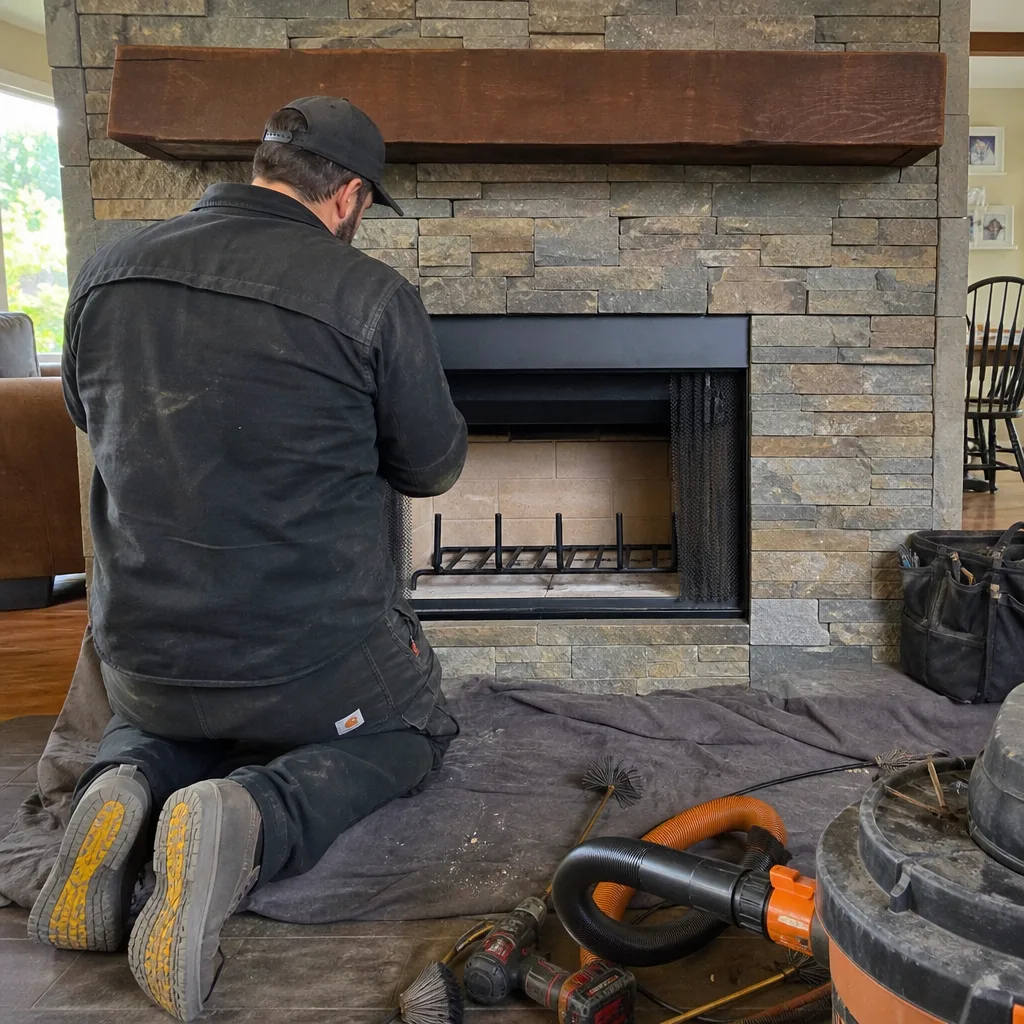 After
After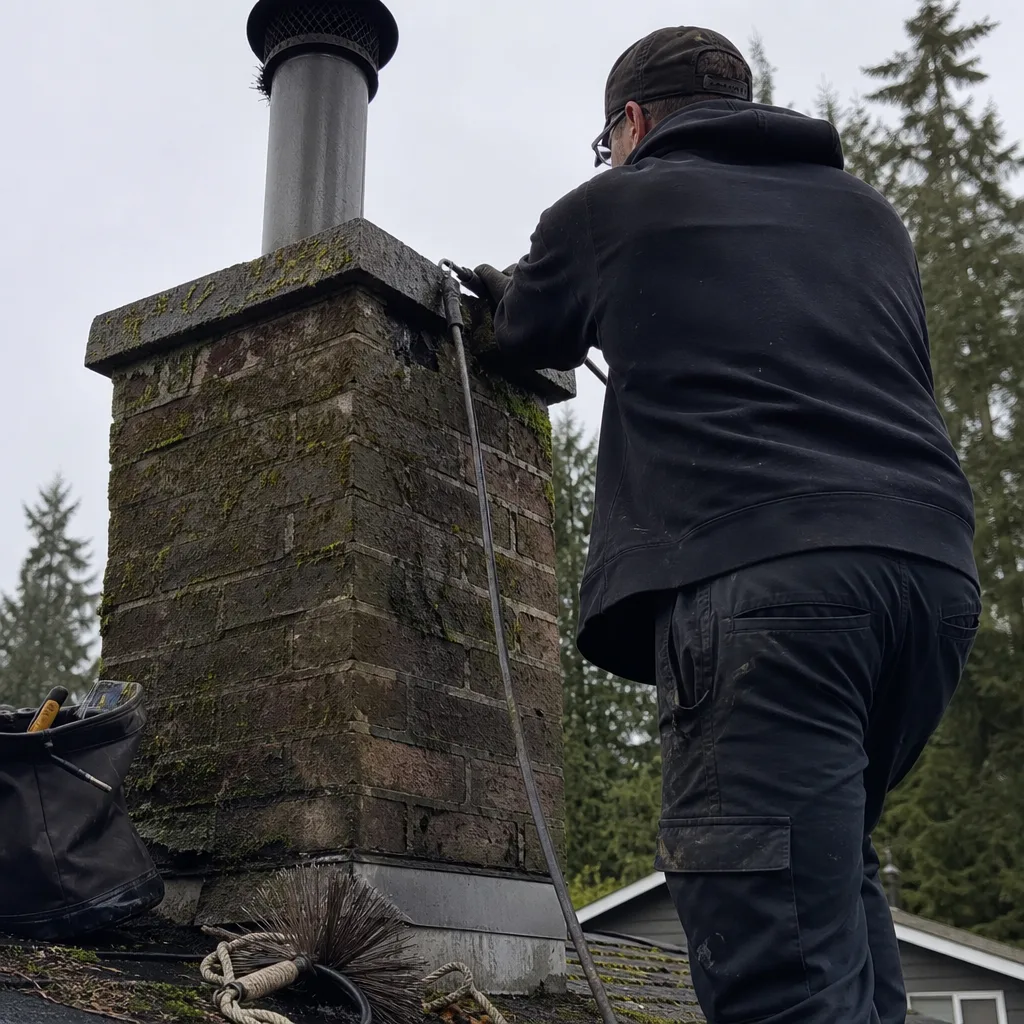 Before
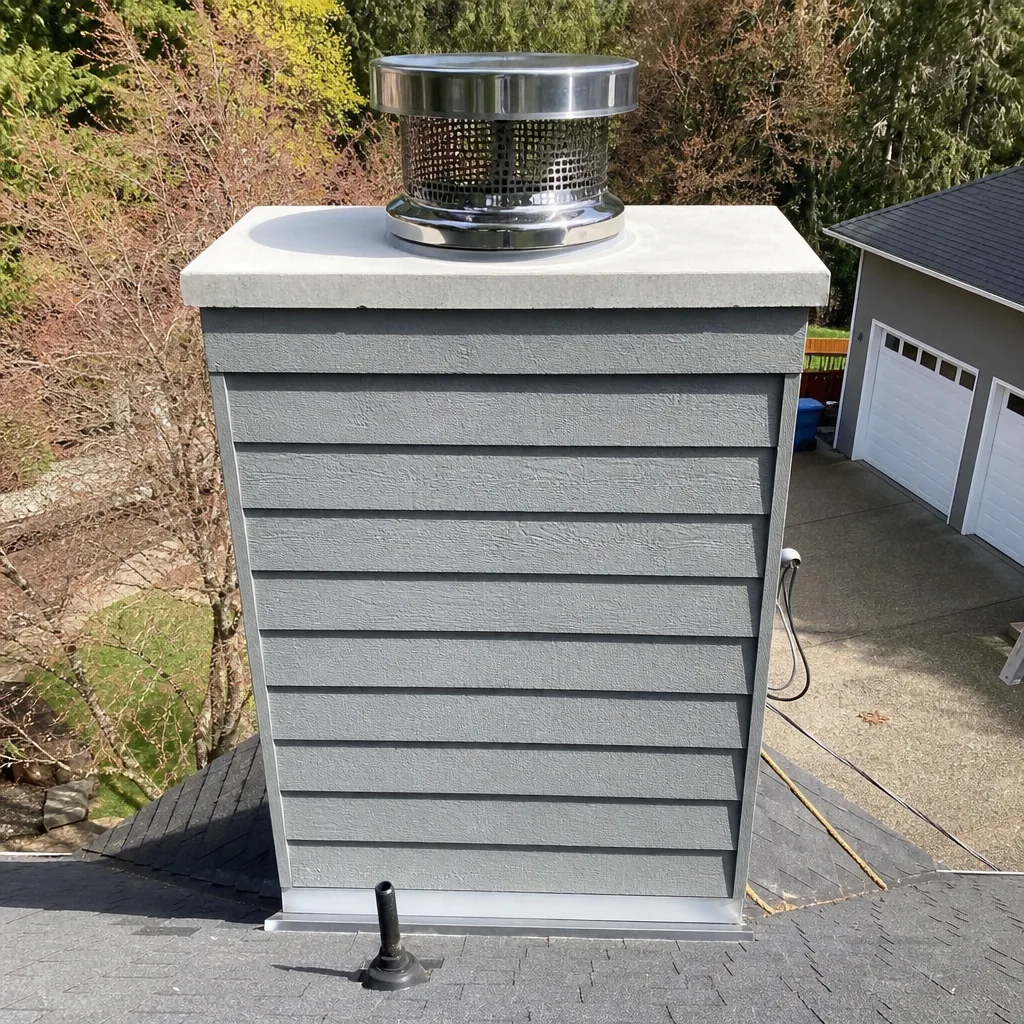 After
After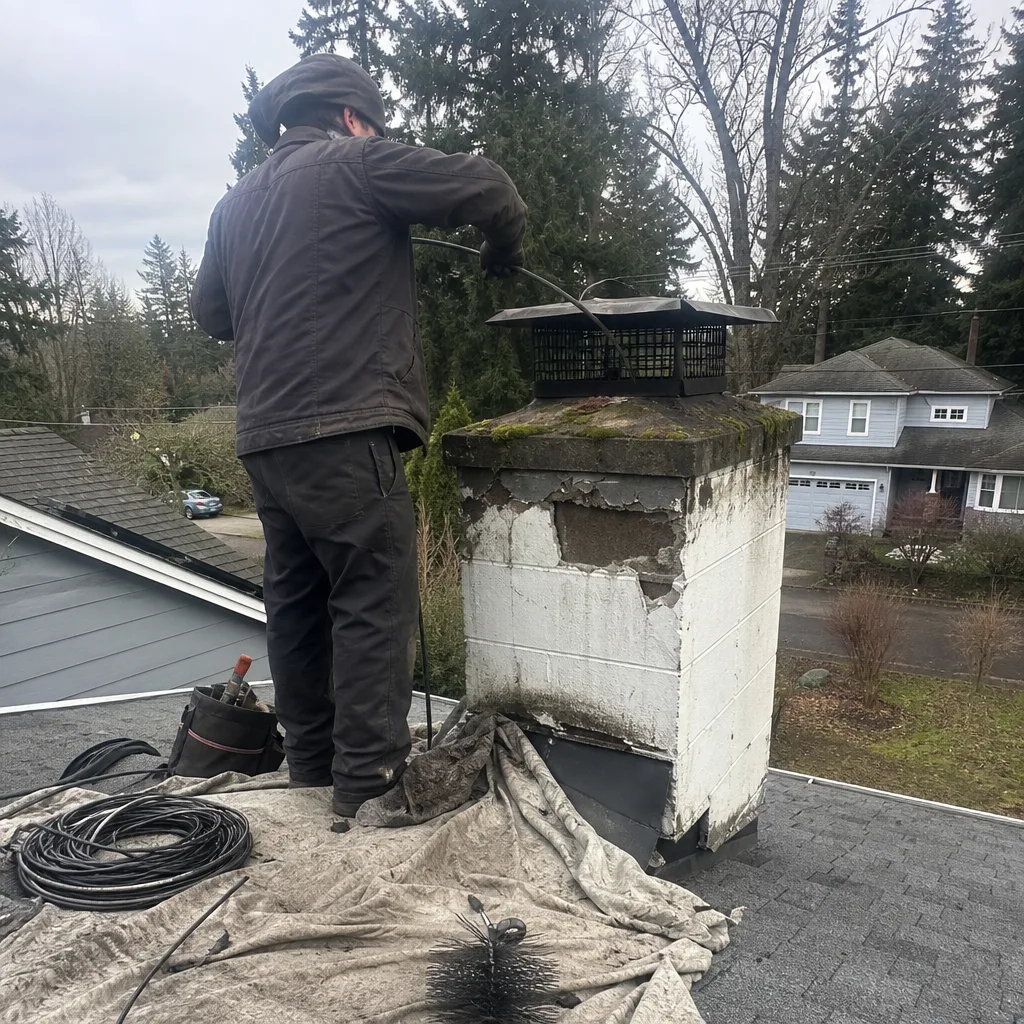 Before
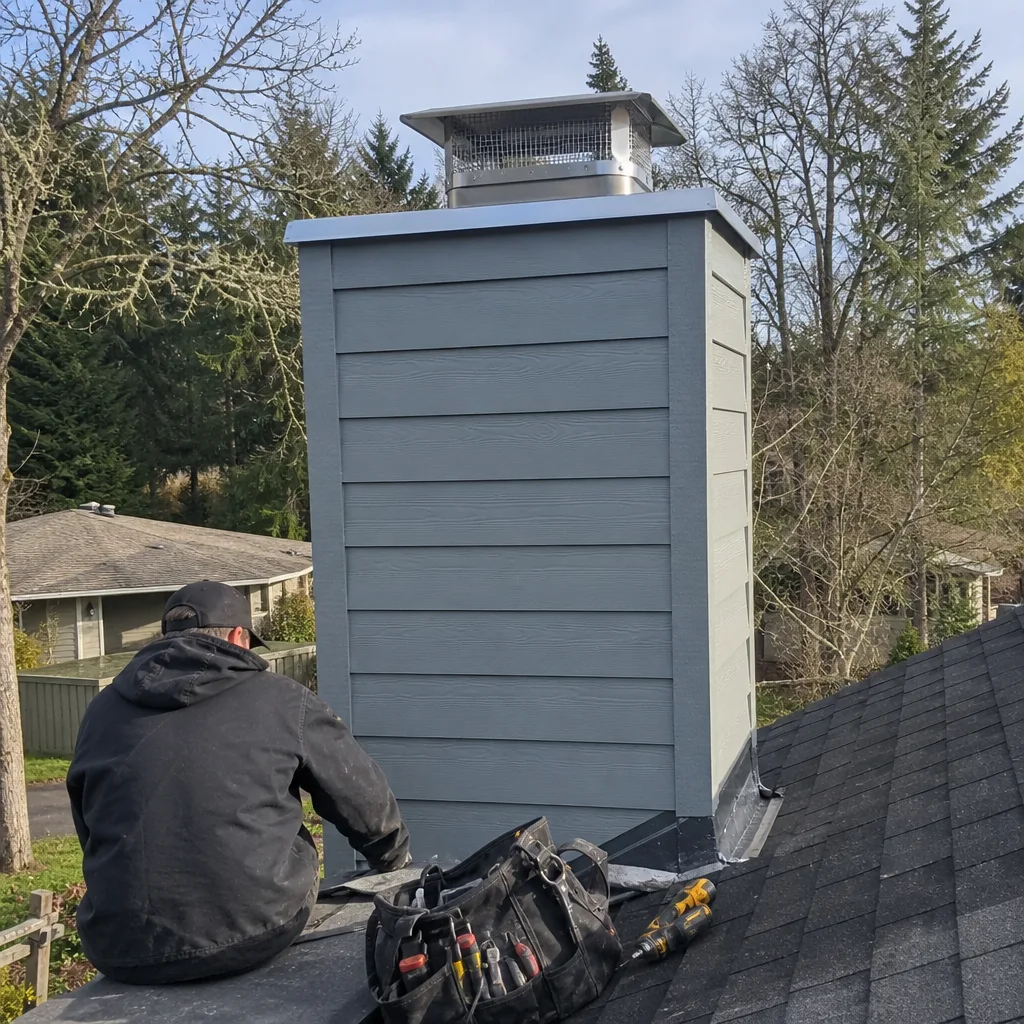 After
AfterHeatShield Chimney Cap Installation: The Olympia Owner’s Guide
HeatShield chimney cap installation in Olympia typically runs $340-$620 for most single-flue applications, including the cap, collar hardware, and labor with a camera-checked flue top. We stock HeatShield-compatible caps and collars on our trucks, and most replacements are completed in under two hours once the flue condition is verified. You’ll usually discover the problem after a windstorm off Budd Inlet sends water down the flue, or when rust streaks start running down the brick below the crown.
Which HeatShield Models This Applies To
HeatShield caps are not universal. The product line breaks into two series: the original HeatShield Cerfractory Foam system caps (used with resurfaced flues from the early 2000s through roughly 2015) and the current HeatShield Pro series, which uses a slightly larger collar diameter and a different mesh gauge. The critical measurement is the flue tile inside diameter at the top course, not the chimney crown width. Most Olympia homes built between 1985 and 2005 with original clay flue tiles measure 8″×8″, 8″×12″, or 13″×13″ - and HeatShield caps are spec’d to those exact IDs, not the OD.
To identify your series, check the existing cap for a stamped model prefix: “HS-C” indicates the Cerfractory-era collar, while “HS-P” or “HS-Pro” marks the current line. The mounting bolt pattern differs by 3/8 inch, which means mixing series hardware strips threads in the collar casting. We source HeatShield caps through Haven’s buying network alongside DuraFlex and Gelco equivalents, and we’ll match the OEM spec unless the flue condition justifies a different approach. For flues that have shifted in the ’01 Nisqually earthquake zone, we sometimes spec a Gelco adjustable-band cap instead - but only after the camera shows us the full picture.
Signs Your HeatShield Chimney Cap Installation Is Failing
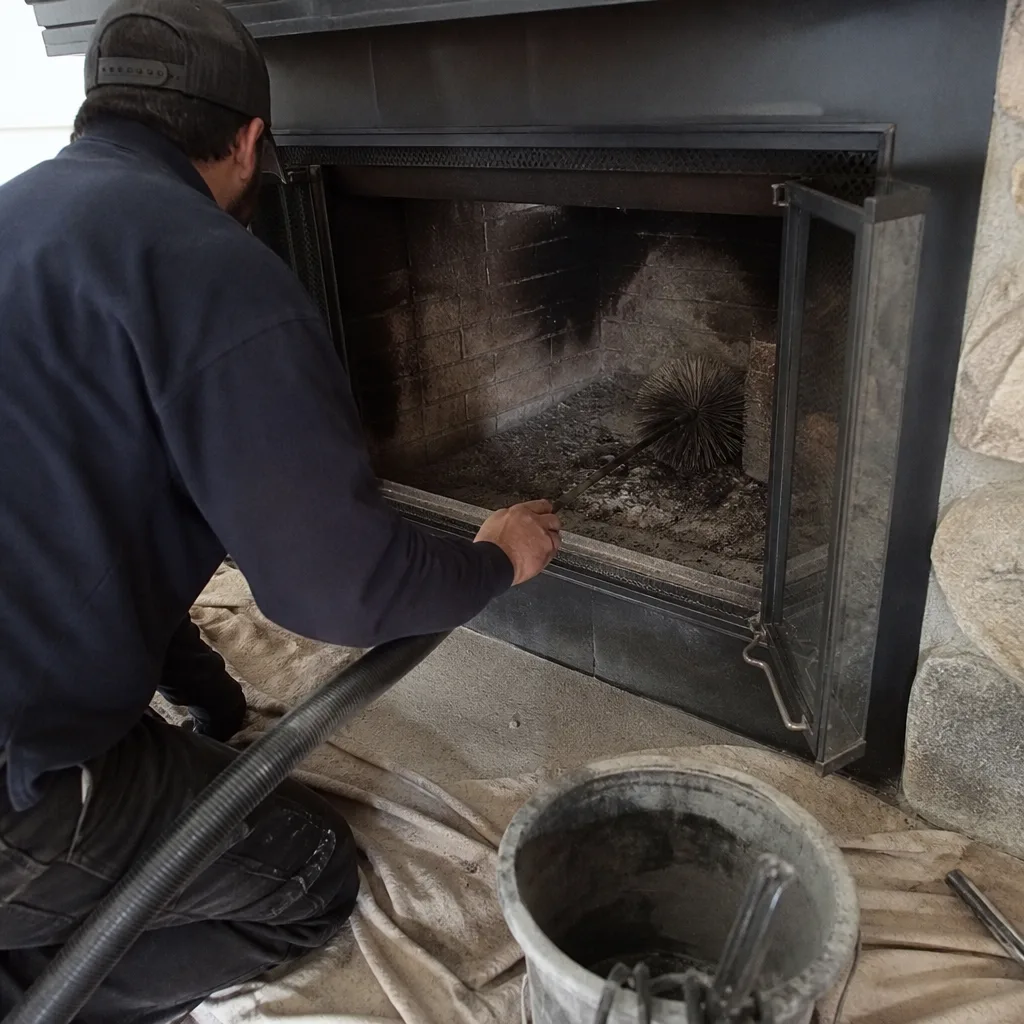
- Rust streaks on the brick below the crown. HeatShield caps use a 304 stainless mesh and a galvanized or powder-coated collar. Once the collar coating fails - accelerated by Olympia’s marine air and the salt load from Puget Sound westerlies - the rust runs down and stains the masonry below. The cap is still structurally sound at this stage, but the collar is porous and letting moisture reach the flue top.
- Water in the firebox after heavy rain. The cap mesh is designed to shed water at velocity, but a dented or sagging lid creates a pooling point. In Olympia’s fall storms, that pooled water finds any gap between the cap base and the flue tile. The camera usually shows efflorescence on the top course when this starts.
- Mesh pulled away from the frame or wildlife entry. Squirrels and raccoons in the Capitol Lake and Priest Point Park corridors test every cap. HeatShield’s 5/8-inch mesh is spec’d to stop birds, but a determined raccoon can lever the mesh from the frame if the spot-welds have corroded. We find this most often on south-facing caps where UV degradation weakened the frame sealant first.
- Cap sitting crooked or loose after wind. The HeatShield collar bolts to the flue tile with expansion anchors. In older Olympia installations, those anchors were set in mortar that has frizzed from freeze-thaw cycles. The cap doesn’t fall - yet - but the gap lets draft spill and embers escape.
- Draft problems or smoke rollout on startup. A cap with collapsed internal baffles or a wasp nest in the lid chamber chokes the flue. HeatShield Pro caps have a specific lid clearance; if that clearance is clogged, the flue can’t establish draft until the fire is hot enough to overcome the restriction. That’s a carbon monoxide risk in tight-sealed modern homes.
 Before
 After
AfterReplacement Cost & What’s Included
| Component | Price Range (Olympia) |
|---|---|
| HeatShield-compatible cap and collar (OEM or Gelco equivalent) | $180-$340 |
| Labor: remove old cap, inspect flue top with camera, install new cap | $140-$240 |
| Flue tile repair or anchor reset (if needed) | $80-$160 |
| Typical total installed | $340-$620 |
The range depends on three things we can only confirm on site: whether the flue tile top is intact enough to anchor into, whether the crown needs minor patching to shed water properly, and whether we need a custom-sized cap for an non-standard flue. We deliver a written price before any work starts - Haven Standard Clause 1 - and that price includes the camera inspection, the photo record, and our 365-Day Done Right Promise. No add-ons, no invoice surprises. The cap itself carries the manufacturer’s warranty; our labor is warranted for one full year.
DIY or Call Us?
Here’s what you can safely check from the ground or a sturdy ladder: whether the cap is visibly loose, whether the mesh has holes, and whether rust is running the brick. Use binoculars. Don’t climb past the eavesline unless you’re roped and comfortable with it - the combination of Olympia’s roof moss and our winter dew point makes metal flashing treacherous even in dry weather.
What goes wrong with DIY: stripping the collar bolt threads by using the wrong series hardware, setting anchors in friable mortar that pulls out in the next windstorm, and installing a cap with insufficient clearance above the flue tile (that chokes draft and voids the manufacturer’s warranty). The camera goes in first. Everything else follows from what it finds. For the actual installation, we bring the right anchor system, the torque spec, and the flue-top sealant - and we document the condition before we start. Call (360) 464-2015 when you’re ready for the written price.
FAQs
In Olympia’s marine climate, expect 12-18 years from a stainless HeatShield cap if the collar coating is intact, but only 8-12 years if the cap faces southwest into the salt air off Budd Inlet. The mesh usually outlasts the collar; we see collar failure before mesh failure in about 70% of our removals. Call (360) 464-2015 and we’ll check yours with the camera - estimates are free.
Mesh can be spot-welded and collars can be re-coated in some cases, but the labor cost usually approaches replacement, and repaired caps don’t carry a fresh warranty. We only recommend repair when the cap is a custom size with long lead times. For standard HeatShield sizes, replacement is the honest recommendation - and we’ll show you the camera footage so you can see why. Call (360) 464-2015 for a free second opinion on any estimate.
Most HeatShield cap replacements take 90 minutes to two hours from ladder set to photo record delivered. If we need to rebuild anchor points in the flue tile or patch the crown, add 45 minutes. We don’t quote time - we quote the job - but most Olympia homeowners are back to their day by lunch. Call (360) 464-2015 to book.
We stock the three most common HeatShield collar and cap sizes - 8″×8″, 8″×12″, and 13″×13″ - along with Gelco equivalents for same-day replacement. Odd sizes and custom finishes (copper, black powder-coat) ship in 3-5 business days through Haven’s buying network. We’ll tell you which category you’re in before we book the appointment, not after we arrive. Call (360) 464-2015 to confirm availability for your flue size.
Level Two Chimney Olympia is an independent service provider and is not affiliated with HeatShield. We source HeatShield-compatible parts through our Haven Standard supplier network alongside DuraFlex, Gelco, Olympia Chimney, Famco, and Copperfield materials.
Written by Corrine Halstead, Owner, Level Two Chimney Olympia at Level Two Chimney Olympia, serving Olympia and nearby areas.