
Last updated September 21, 2026
Level 1 sweep and inspection to the NFPA 211 annual standard - flue, crown, cap, and flashing checked and photographed
Chimney sweep logs do not sweep chimneys. They loosen some creosote - which then falls where a brush and vacuum still have to collect it.
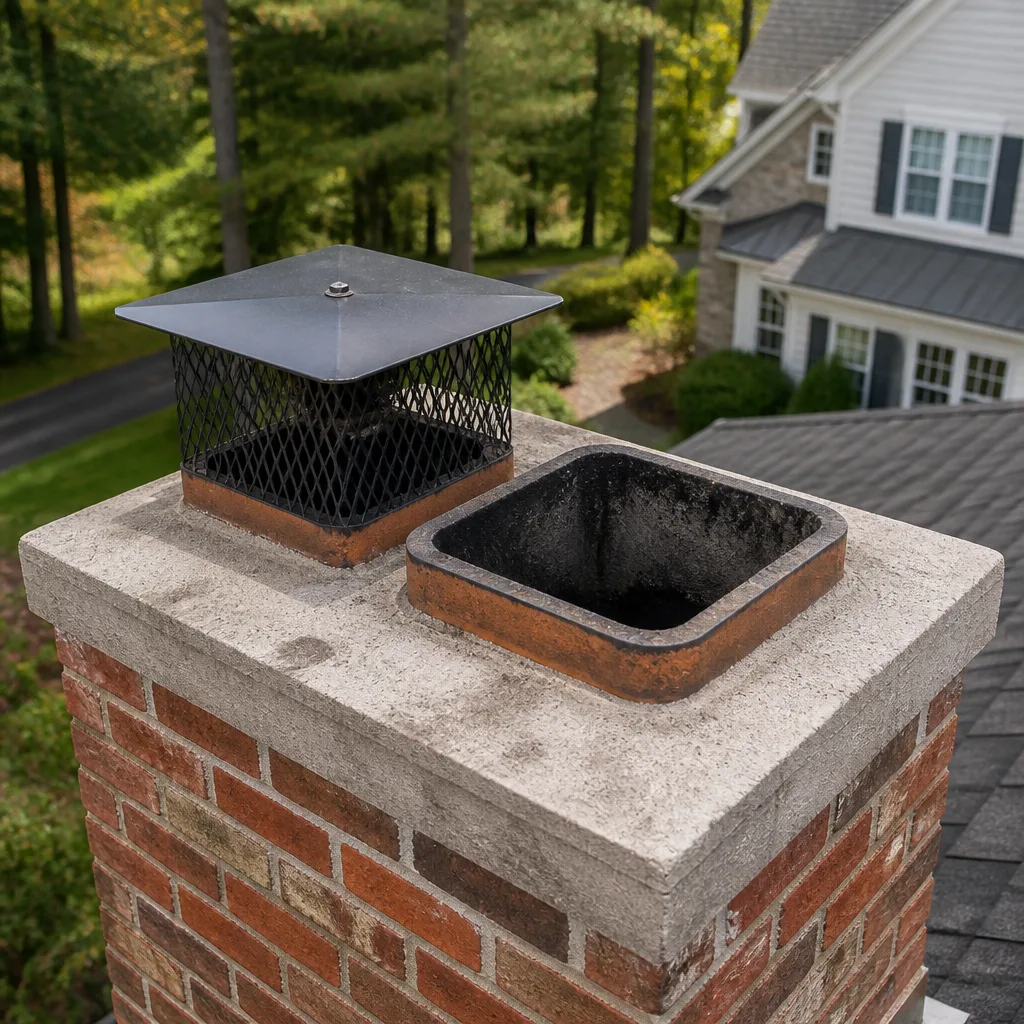
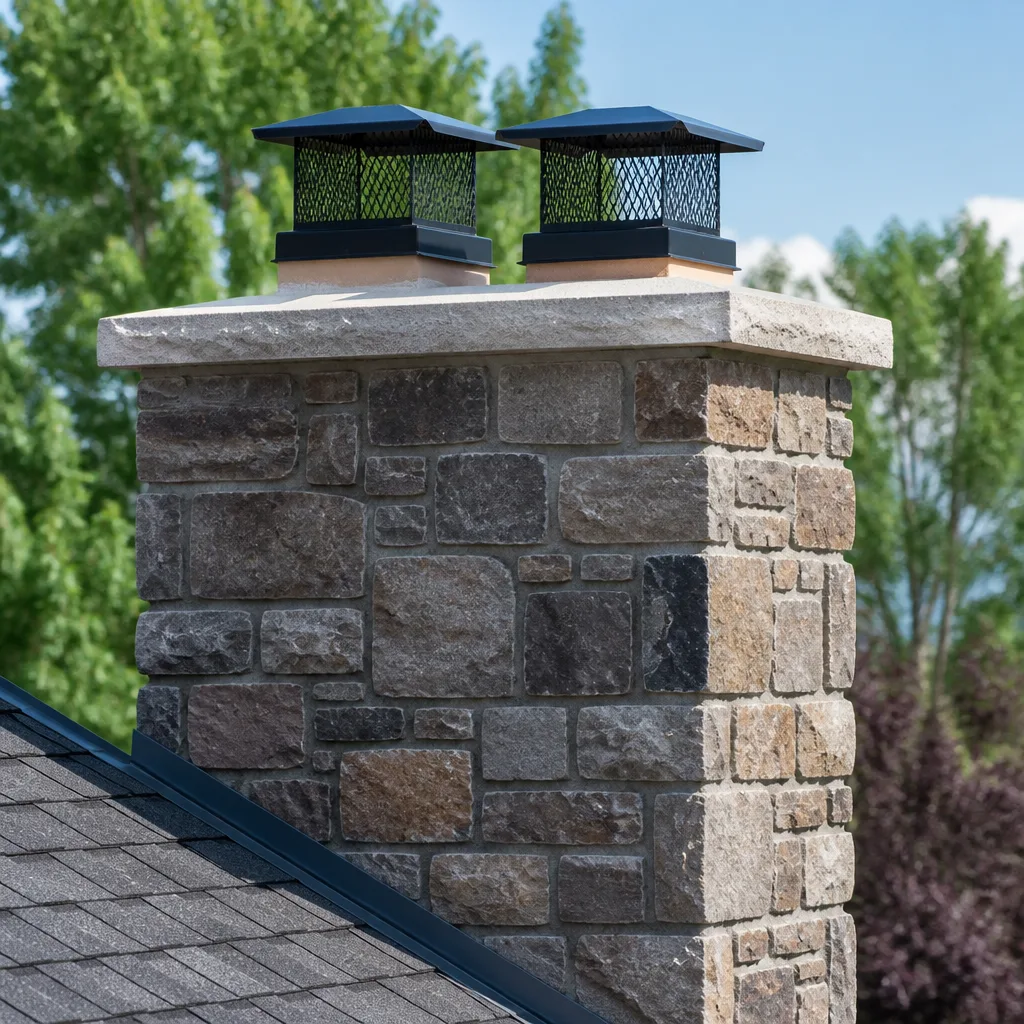
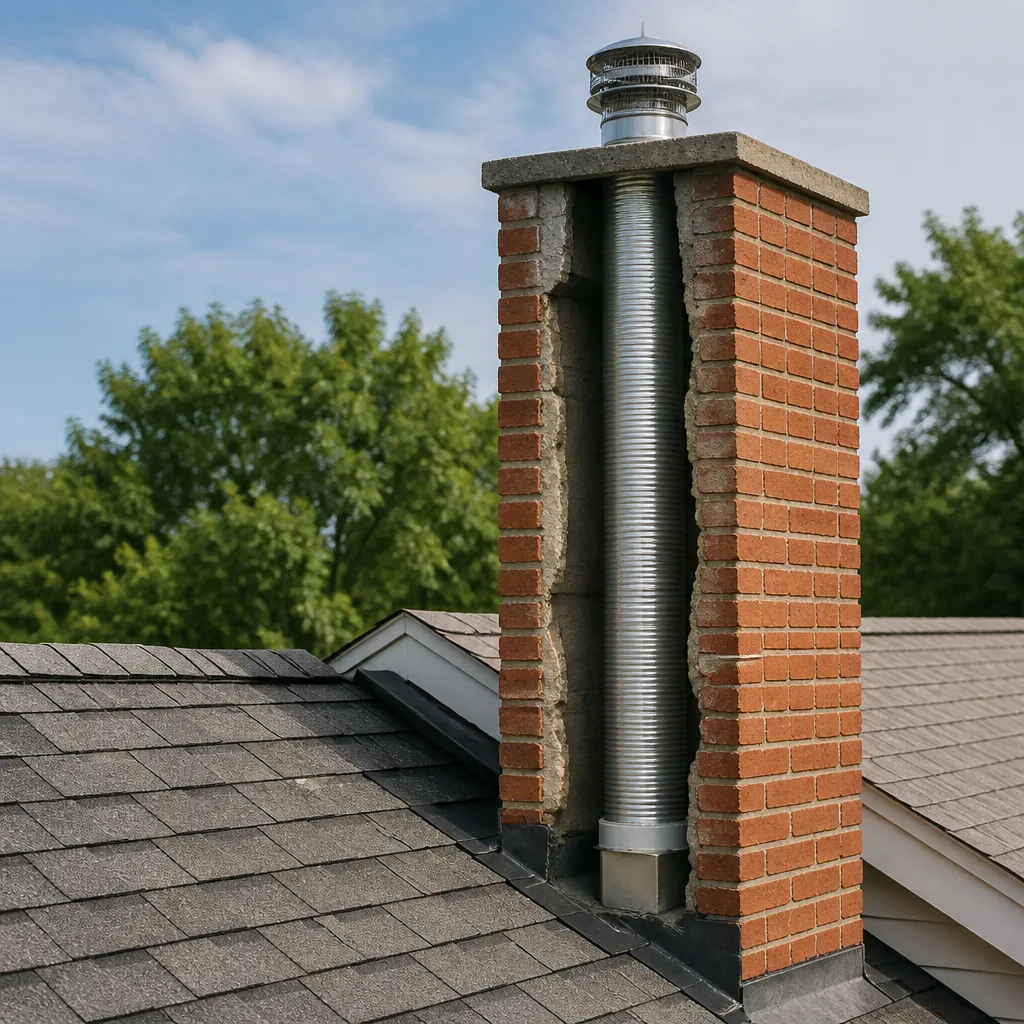
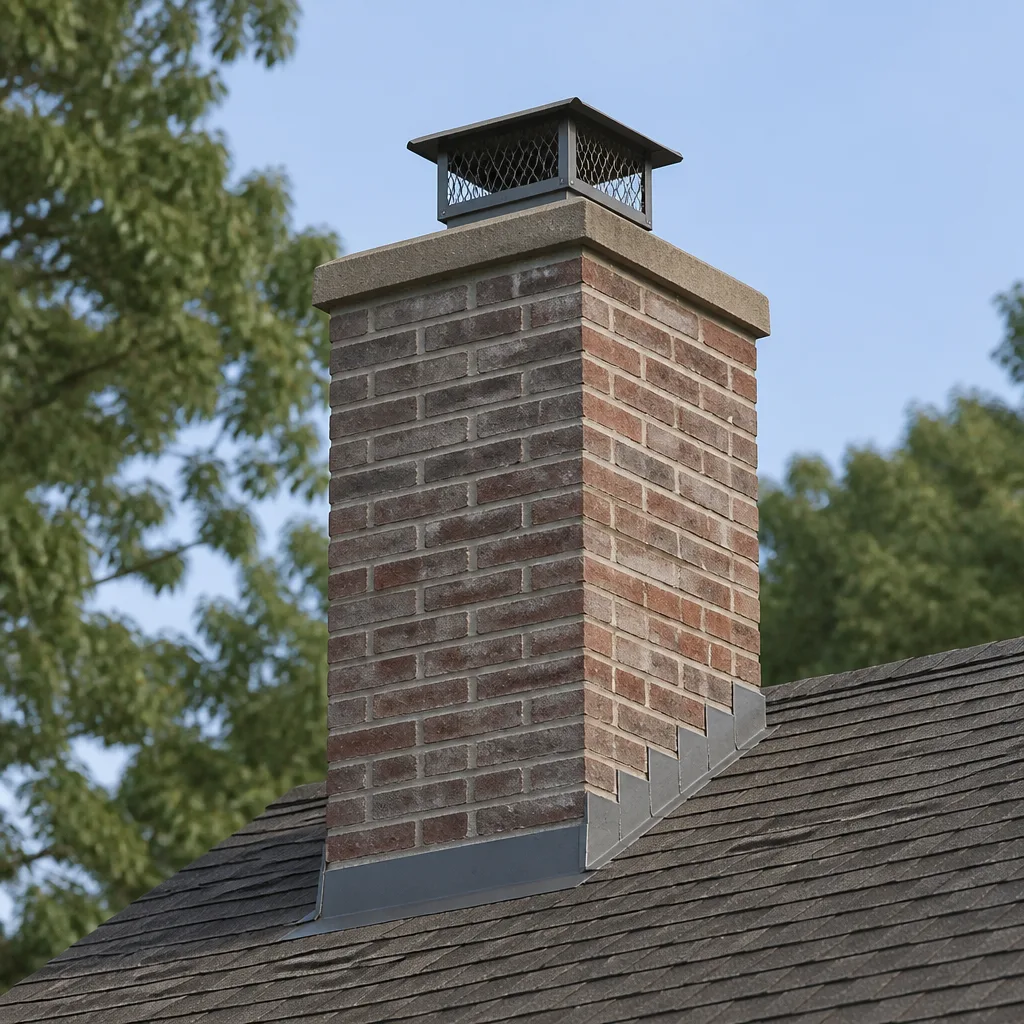
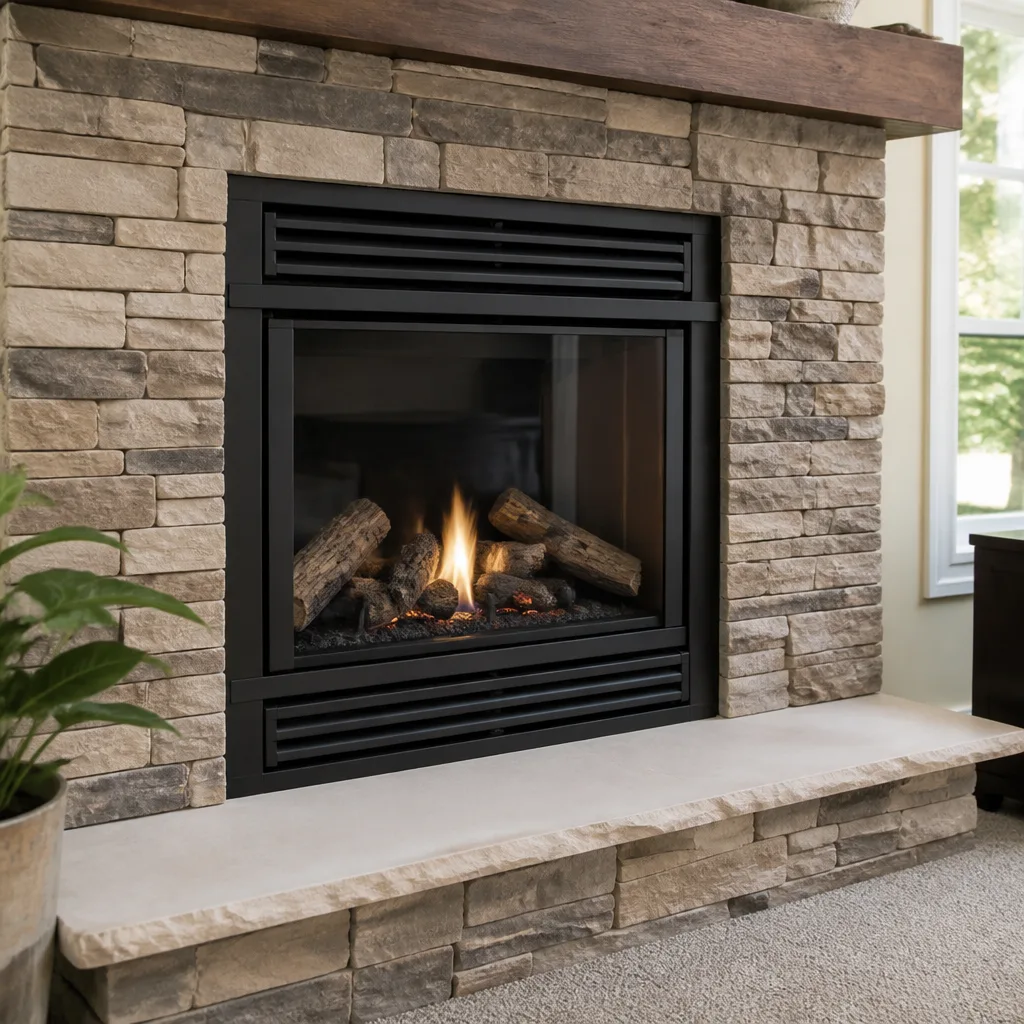
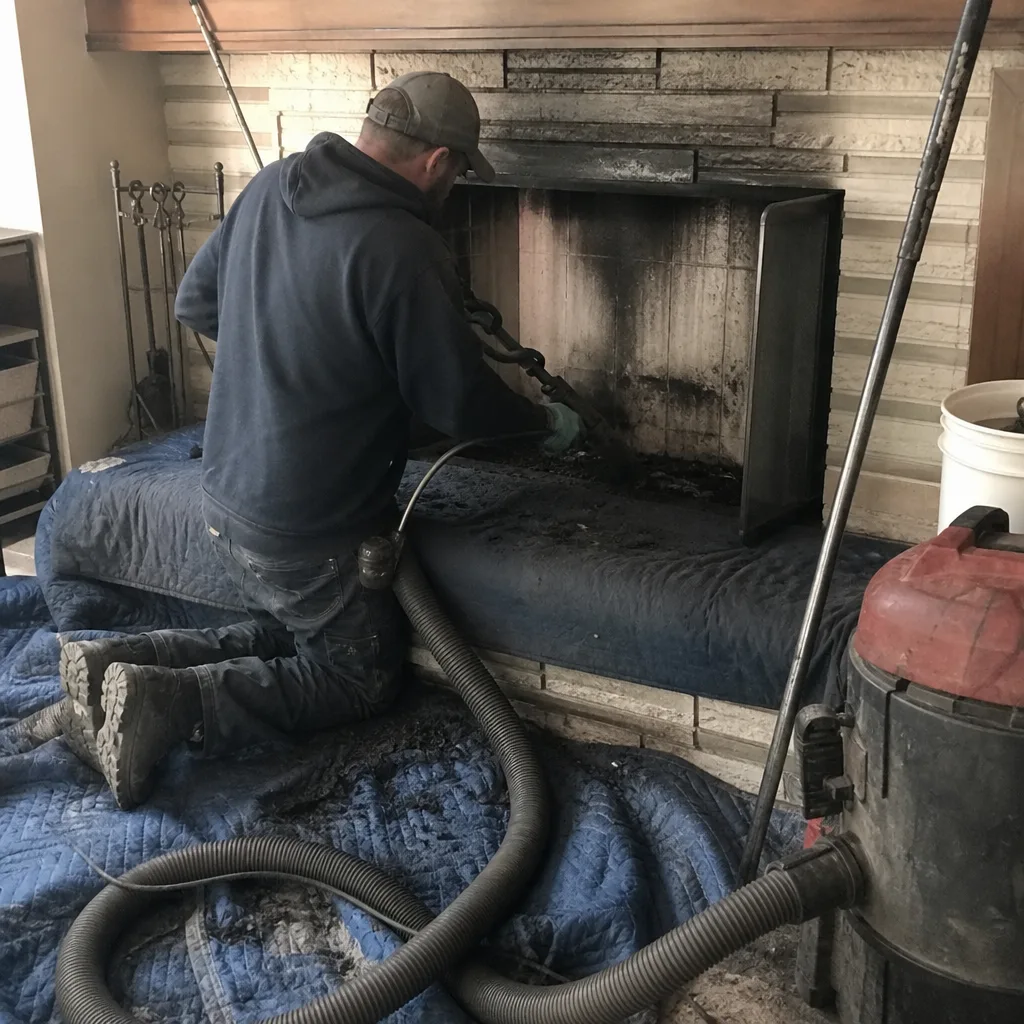 Before
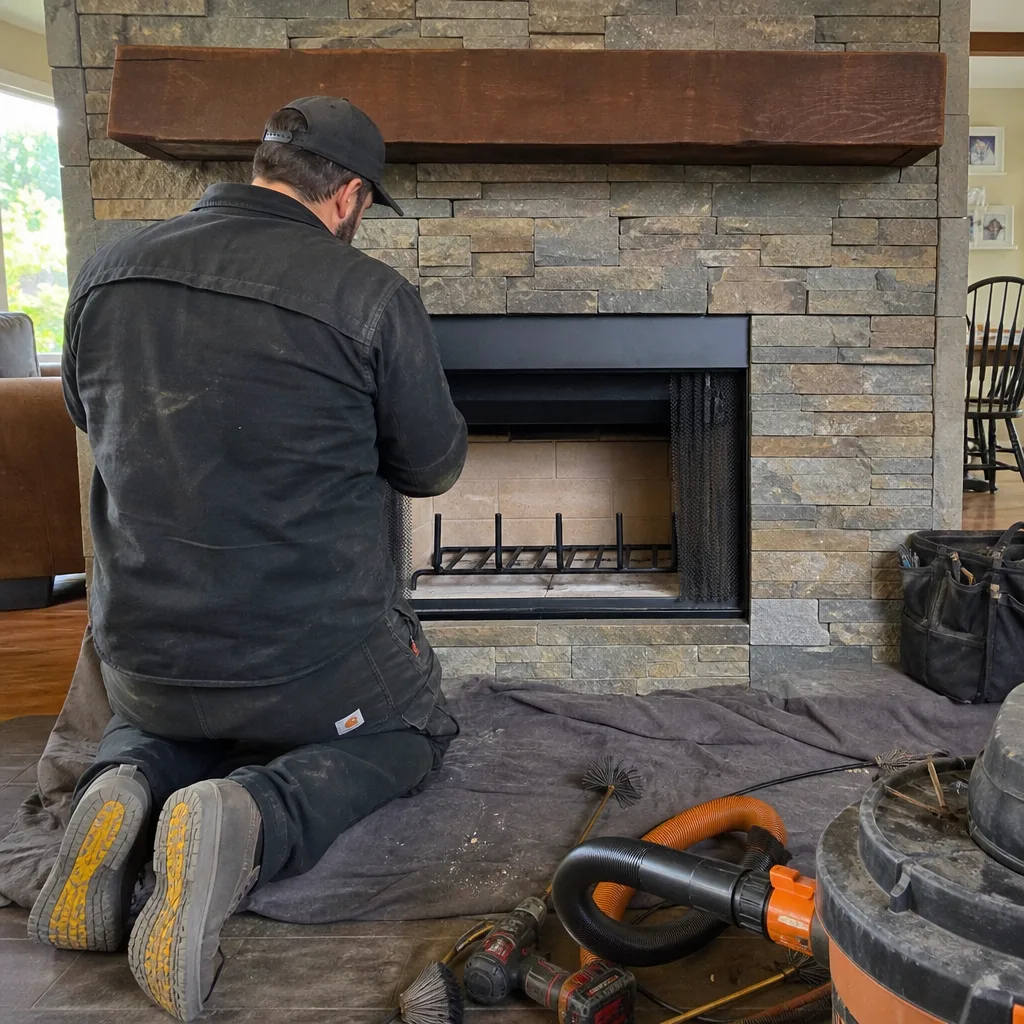 After
After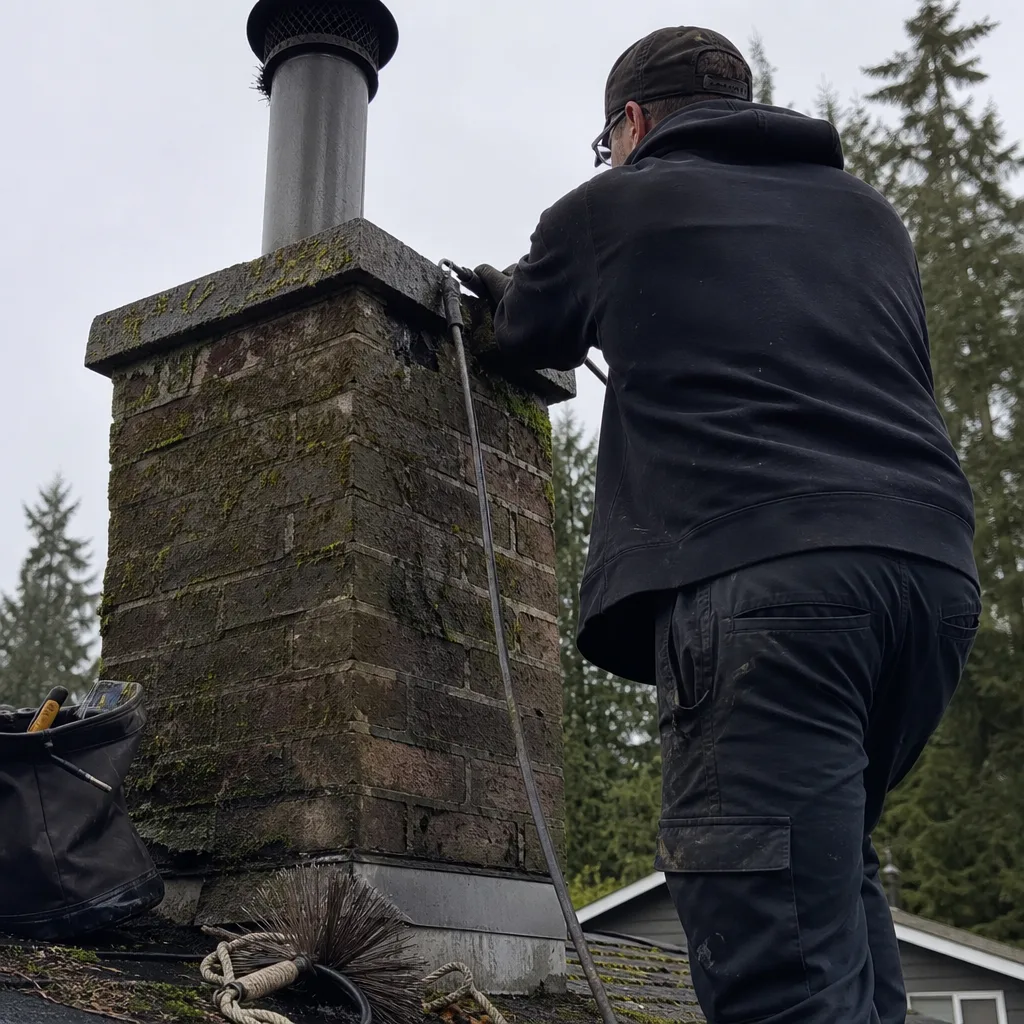 Before
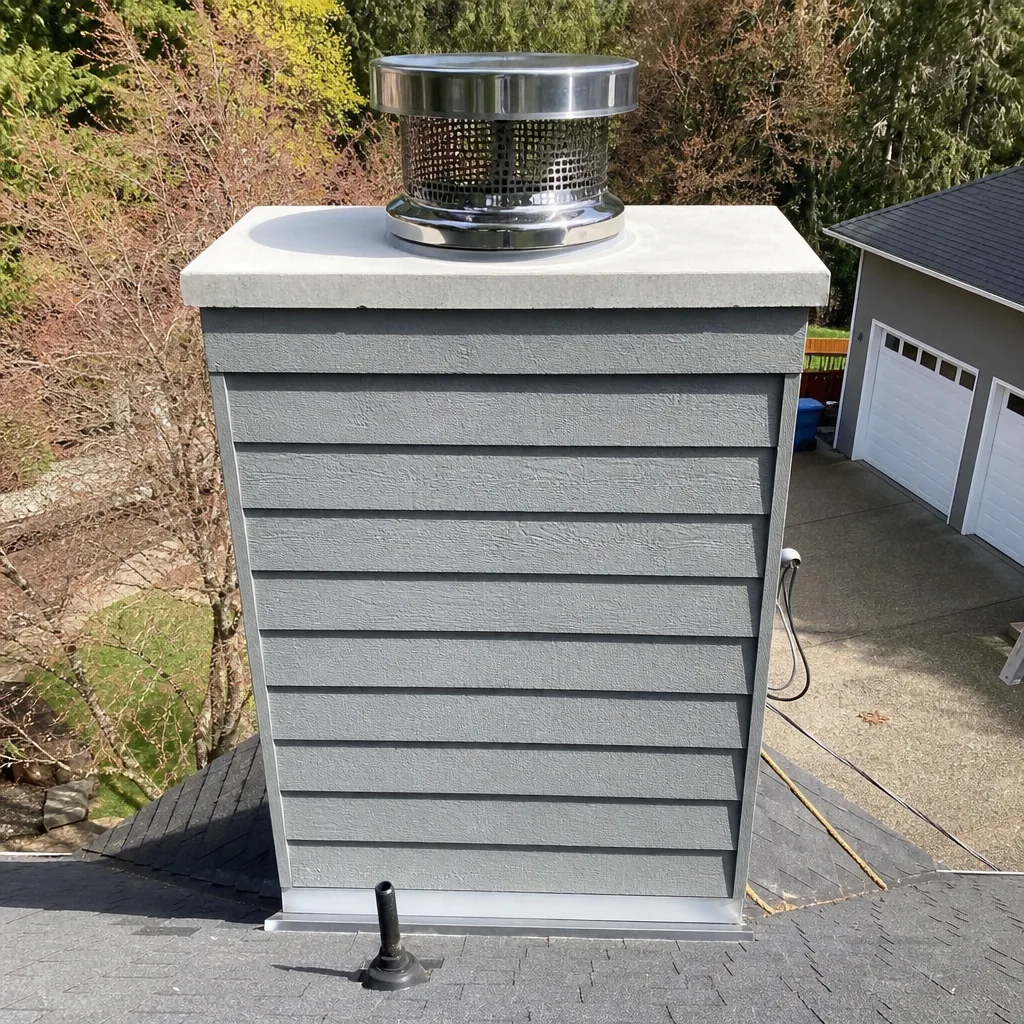 After
After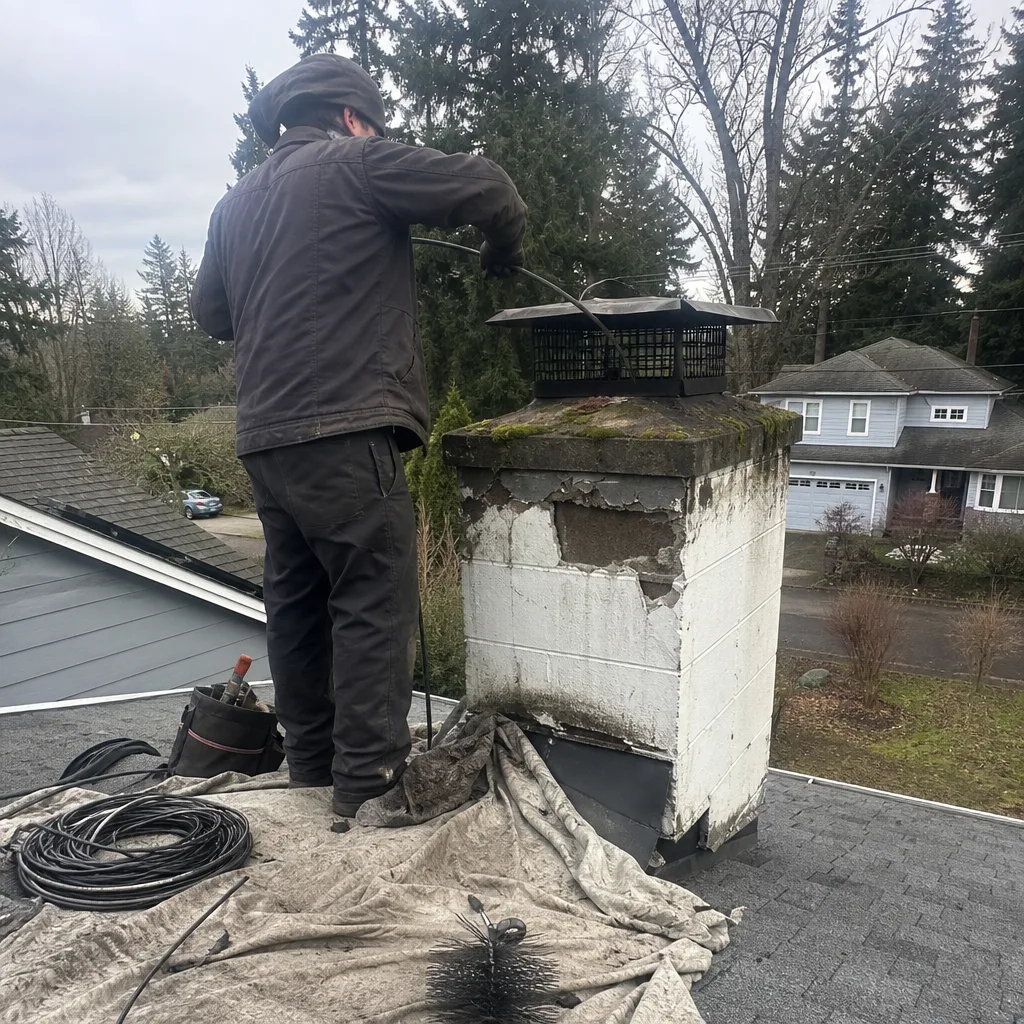 Before
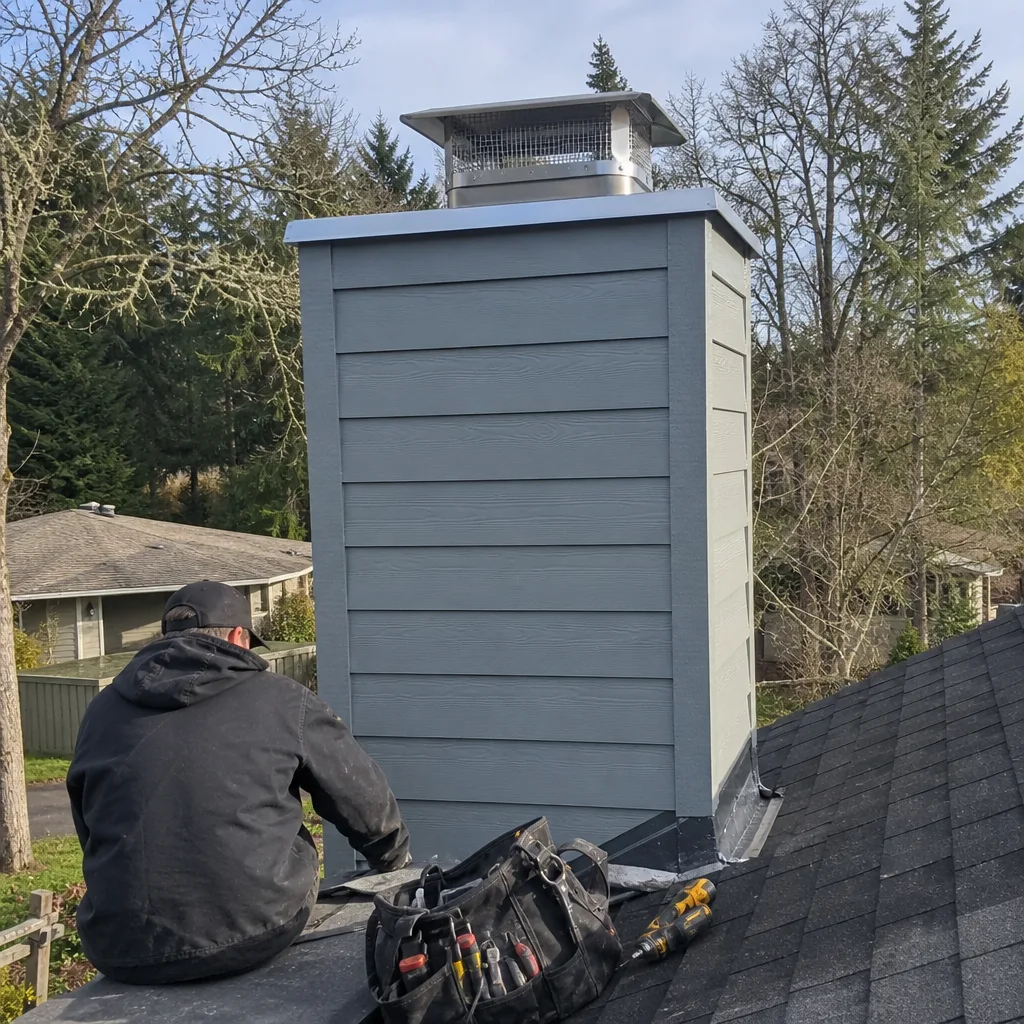 After
AfterDIY vs Professional Chimney Cleaning: The Olympia Homeowner’s Decision Guide
A $45 chimney brush kit will clean exactly what it touches. It will not tell you whether the tile at the third joint above the smoke chamber is cracked, whether the cap is seating against marine-grade corrosion, or whether the damper blade has warped enough to allow backdraft. Those aren’t cleaning findings - they’re camera findings. In Olympia’s climate, where Pacific moisture pushes through masonry nine months of the year and softwood creosote hardens faster than national averages suggest, the real question isn’t whether you can run a brush up your flue. It’s whether you can diagnose what you can’t see. This guide maps precisely what DIY equipment can accomplish, what it cannot, and how to make the decision without guessing at risks you have no way to verify. For how to hire a chimney cleaning contractor in Olympia, see our step-by-step guide.
Quick Answer
DIY chimney brushing removes Stage 1 creosote from accessible flue surfaces in straight-run masonry fireplaces with documented clean histories. In Olympia, professional Chimney Cleaning & Sweep in Olympia is warranted when any of the following apply: creosote harder than light powder, any moisture history, an unlined or damaged flue, a cap or crown condition you cannot inspect from the roof, or a need for insurance-recognized documentation. Most Olympia homes built between 1960 and 1995 fall into at least one of these categories.
Table of Contents
- What DIY Chimney Cleaning Actually Accomplishes
- Olympia-Specific Climate Risks That DIY Misses
- Component-by-Component: What a Brush Touches vs. What a Camera Sees
- When DIY Cleaning Actually Makes Sense
- The Insurance Documentation Problem with DIY Cleaning
- True Cost Comparison: DIY Kit vs. Professional Sweep
- Common Mistakes to Avoid
- When to Call a Professional
- Frequently Asked Questions
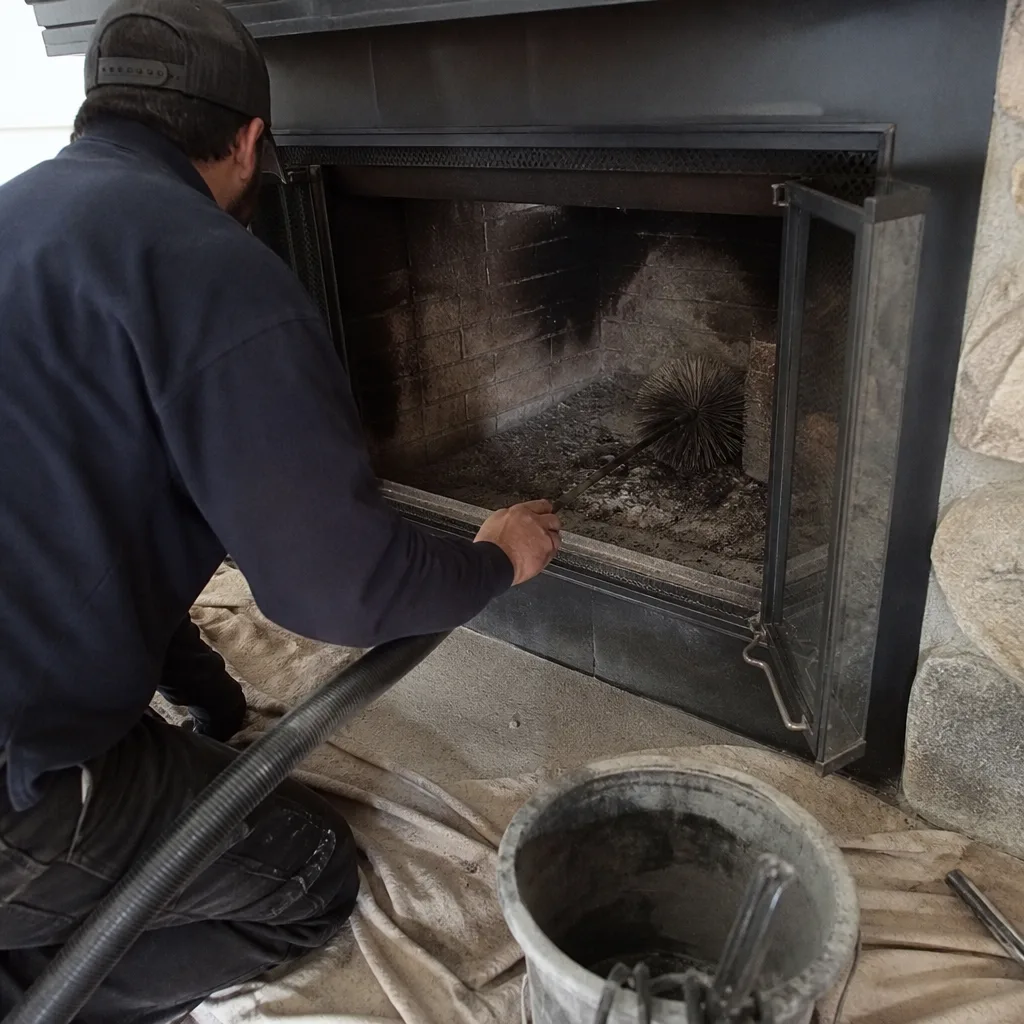
 Before
 After
AfterWhat DIY Chimney Cleaning Actually Accomplishes
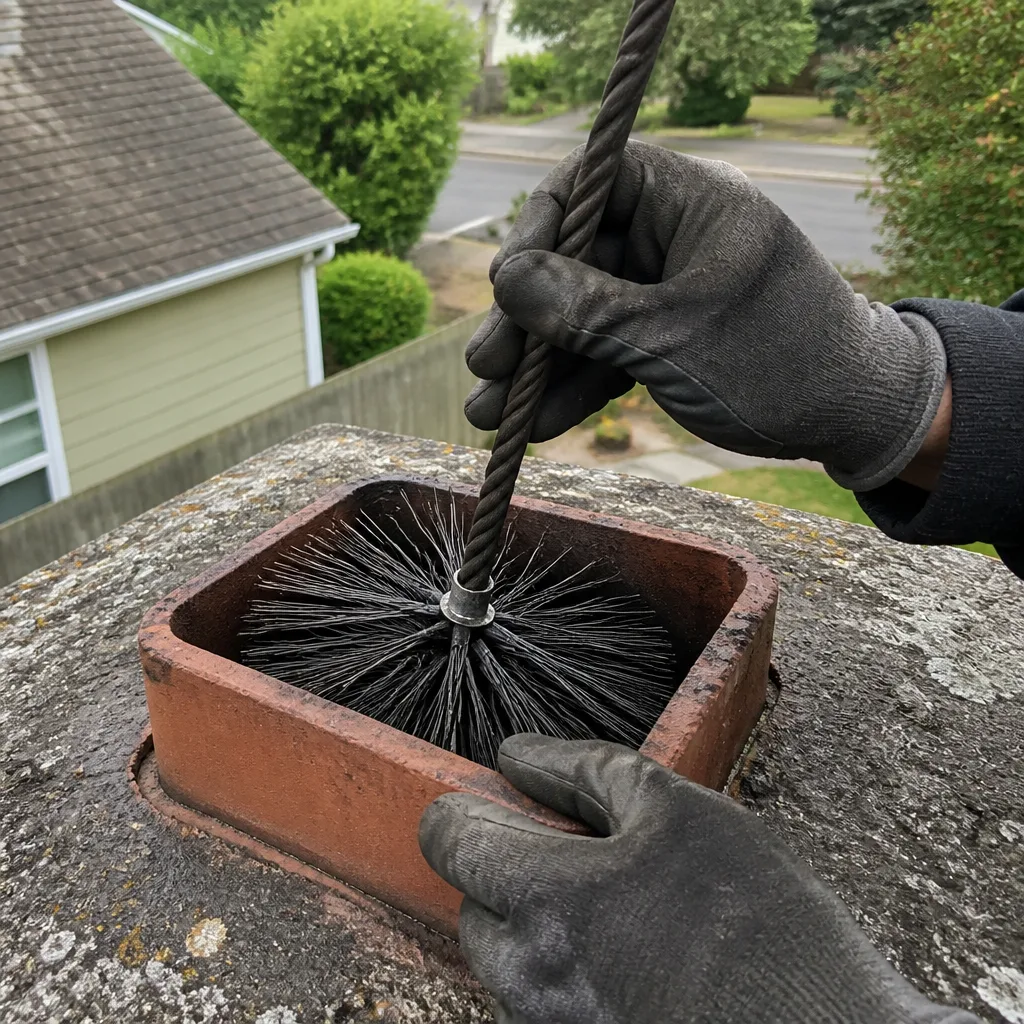
A homeowner-grade chimney brush kit - typically a polypropylene or wire brush head with 3-6 flexible fiberglass rods - is designed for one task: mechanical dislodging of dry, flaky creosote from the interior walls of a flue liner. The brush head diameter must match the flue dimension within half an inch. The rods must reach from the firebox to the cap without disconnection. The operator must protect the firebox and hearth from debris fallout, wear respiratory protection, and possess a vacuum capable of capturing fine particulate without recirculating it into the living space.
When these conditions align, the result is removal of Stage 1 creosote: the light, sooty, or granular deposit that forms during complete combustion of seasoned hardwood at adequate temperatures. Stage 1 brushes off. It is the only stage that brushes off reliably.
Stage 2 creosote - crunchy, porous flakes that adhere to liner walls - requires more aggressive mechanical action than a hand-fed rod delivers. Stage 3, the hardened, tar-like glaze that poses genuine fire risk, bonds chemically to terra cotta or metal liner surfaces. Removing it with homeowner tools risks liner damage and almost always leaves significant residue. In our experience across 38,000+ inspections since 2009, Stage 3 creosote in Olympia flues correlates strongly with two conditions: routine burning of unseasoned Douglas fir or western red cedar, and flue temperatures kept low via air-restricted burning for overnight duration. Both practices are common in Thurston County.
What DIY cleaning does not accomplish, by design:
- Inspection of liner integrity - cracks, spalling, or displacement invisible from the firebox opening
- Assessment of the smoke chamber, the roughly 30-degree sloped area above the damper that funnels gases into the flue
- Evaluation of crown condition, cap fit, or spark arrestor function
- Measurement of flue draft or spillage under operating conditions
- Documentation recognized by insurance adjusters or home inspectors
The brush cleans. It does not diagnose. In a climate where moisture intrusion accelerates liner degradation and freeze-thaw cycling stresses crown mortar, cleaning without diagnosis is maintenance theater - activity mistaken for assurance.
Olympia-Specific Climate Risks That DIY Misses
Olympia’s maritime climate creates chimney conditions that diverge significantly from drier inland regions or colder continental zones. Understanding these local factors - covered in our seasonal chimney cleaning care for Olympia guide - explains why national DIY guides often understate the risks for Thurston County homeowners.
Softwood creosote hardening. The predominant firewood species in Olympia’s supply chain - Douglas fir, western hemlock, and red alder - are softwoods or soft hardwoods with higher resin content than the oak and hickory assumed by many national burning guides. Resinous wood produces more volatile organic compounds during combustion. When flue temperatures drop below 250°F, these compounds condense as liquid creosote that solidifies into Stage 2 and Stage 3 deposits faster than hardwood-derived creosote. A homeowner brushing annually may encounter material that has hardened beyond brush removal within a single burning season, particularly in shallow, exterior chimney chase structures common in Ranch-style homes built in Lacey and Tumwater during the 1970s.
Moisture-driven liner fractures. Olympia receives 50+ inches of annual precipitation, much of it as prolonged light rain rather than intense downpours. This moisture pattern drives water through masonry crowns and mortar joints over extended periods. Water that reaches the flue liner expands during freeze cycles - infrequent but present in Olympia’s winter lows - and contracts, generating hairline fractures in terra cotta tiles. These fractures occur on the exterior liner surfaces, the sides facing masonry rather than the flue interior. A brush passing through the flue contacts only the interior surface. The fracture remains undetected until a camera inspection reveals daylight or mortar degradation behind the tile. We’ve documented this pattern repeatedly in the older masonry stock of the Eastside and South Capitol neighborhoods, where 1920s-1950s construction often lacks modern crown overhangs.
Wildlife nesting in caps. Olympia’s urban-wildland interface - particularly properties backing onto Watershed Park, Priest Point Park, or the Green Cove Creek corridor - sees consistent raccoon, squirrel, and starling intrusion into uncapped or poorly capped flues. A brush pushed through nesting material compacts it rather than removing it. Compacted organic matter restricts draft, accelerates moisture retention, and creates ignition risk distinct from creosote. Removal requires cap removal, manual extraction, and often repair of the spark arrestor mesh. The brush makes the problem worse.
Marine-grade corrosion on metal components. Salt air from Puget Sound, though moderated by distance, contributes to accelerated corrosion on galvanized steel caps, stainless steel liner terminations, and damper hardware. Surface corrosion visible from below may indicate deeper section loss at the cap flange or liner collar - areas only accessible by roof-level inspection. A brush operator working from the firebox has no visibility to these failure modes.
Component-by-Component: What a Brush Touches vs. What a Camera Sees
To make the DIY vs. professional decision concrete, consider each chimney component individually. The brush-and-rod kit addresses one column of this comparison. NFPA 211 Level 2 inspection, the standard we established as default practice at Level Two Chimney Olympia home in 2009, addresses both.
Firebox
DIY reachable: Side and rear firebrick surfaces, hearth extension, visible damper blade face. A brush kit does not touch these; a homeowner may brush ash and loose debris manually.
Camera/Level 2 findings: Firebrick mortar joint recession exceeding 1/4 inch (repair threshold), heat reflector panel integrity, damper frame alignment and seal, lintel corrosion, hearth-to-firebox joint separation. In Olympia, we regularly see hearth settlement in homes on the Capitol Lake clay soils, creating gaps that allow ember contact with combustible framing.
Smoke Chamber
DIY reachable: None. The smoke chamber sits above the damper, typically 18-36 inches of sloped masonry narrowing to the flue throat. No brush kit accesses this space.
Camera/Level 2 findings: Parged surface condition (the mortar coating that smooths smoke chamber walls), corbelled brick exposure, creosote accumulation in the chamber throat. The smoke chamber is the most common location of undetected creosote buildup we encounter. NFPA 211 requires parging to be intact; exposed corbelling creates turbulence that deposits creosote and reduces draft efficiency. Clause 4 of the Haven Standard requires photo documentation of this area when accessible.
Flue Liner
DIY reachable: Interior cylindrical surface from damper to cap, accessible by rod length. Brush contact is linear; spiral brushing requires rod rotation that most homeowner kits do not facilitate effectively.
Camera/Level 2 findings: Tile joint alignment and mortar condition, tile cracks radial or longitudinal, spalling (surface flaking), liner displacement or settlement, glaze creosote thickness and distribution, liner-to-flue clearance verification. The camera reveals what the brush passes blindly. In a 2023 sample of 400 Olympia inspections, 23% of flues that appeared brush-clean showed liner defects that warranted repair or relining recommendation.
Chimney Crown
DIY reachable: None from interior. Roof access required, with associated fall risk.
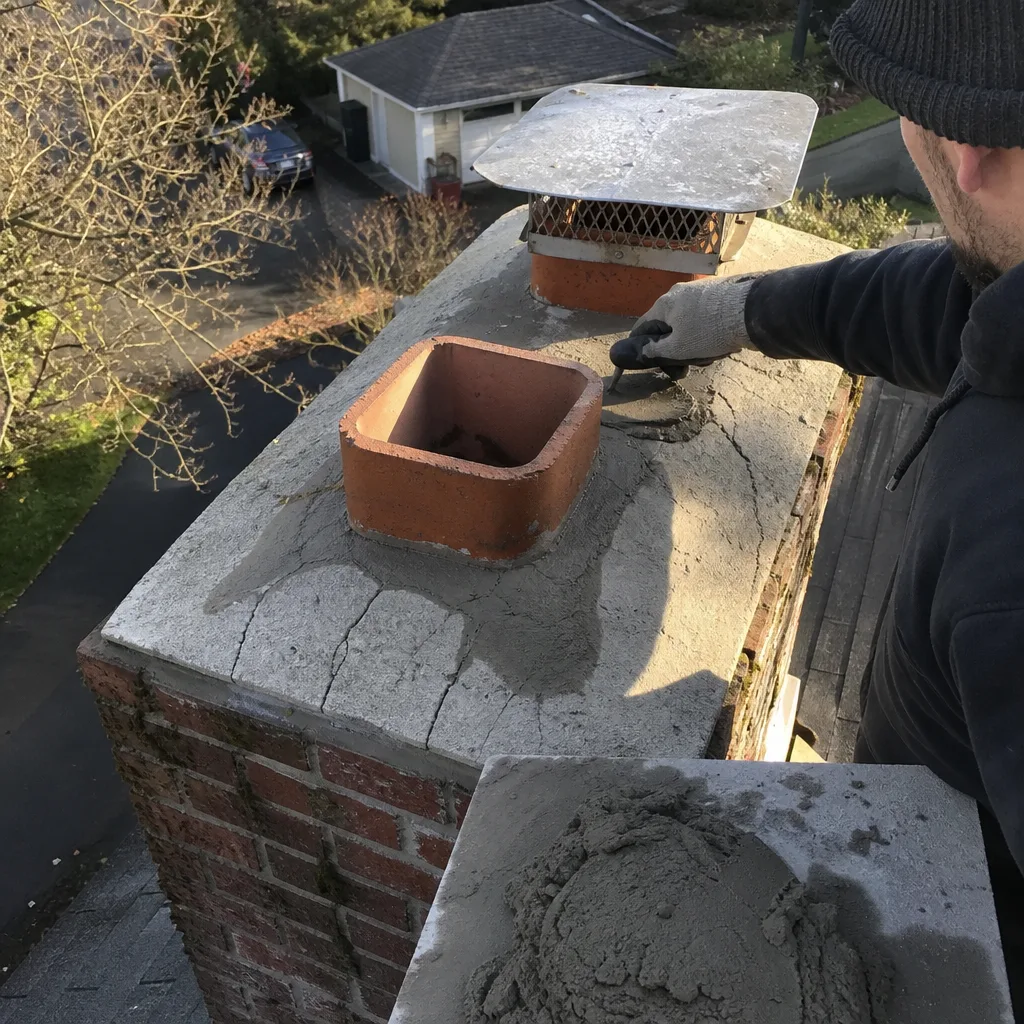
Camera/Level 2 findings: Crown surface cracking, wash slope adequacy, overhang dimension, drip edge function, bonding to flue liner termination. Crown failure is the single largest moisture intrusion vector in Olympia masonry chimneys. We replace or repair crowns using HeatShield CrownSeal and Gelco fabrication materials sourced through our Haven buying network.
Cap and Spark Arrestor
DIY reachable: None from interior. Visual from ground if roof geometry permits.
Camera/Level 2 findings: Mesh integrity, hood clearance from flue tile, flange seal to crown, fastener corrosion, wildlife exclusion function. Cap specification varies by flue type; DuraFlex and Olympia Chimney termination components require matching to liner material (stainless, aluminum, or terracotta) for thermal expansion compatibility.
Damper Assembly
DIY reachable: Blade face, handle mechanism.
Camera/Level 2 findings: Frame-to-throat seal, blade warp, pivot pin wear, throat lintel condition. A warped damper blade that seats at 3/16-inch gap leaks conditioned air continuously and admits downdraft. Thermal imaging during operation confirms seal performance; visual inspection does not.
When DIY Cleaning Actually Makes Sense
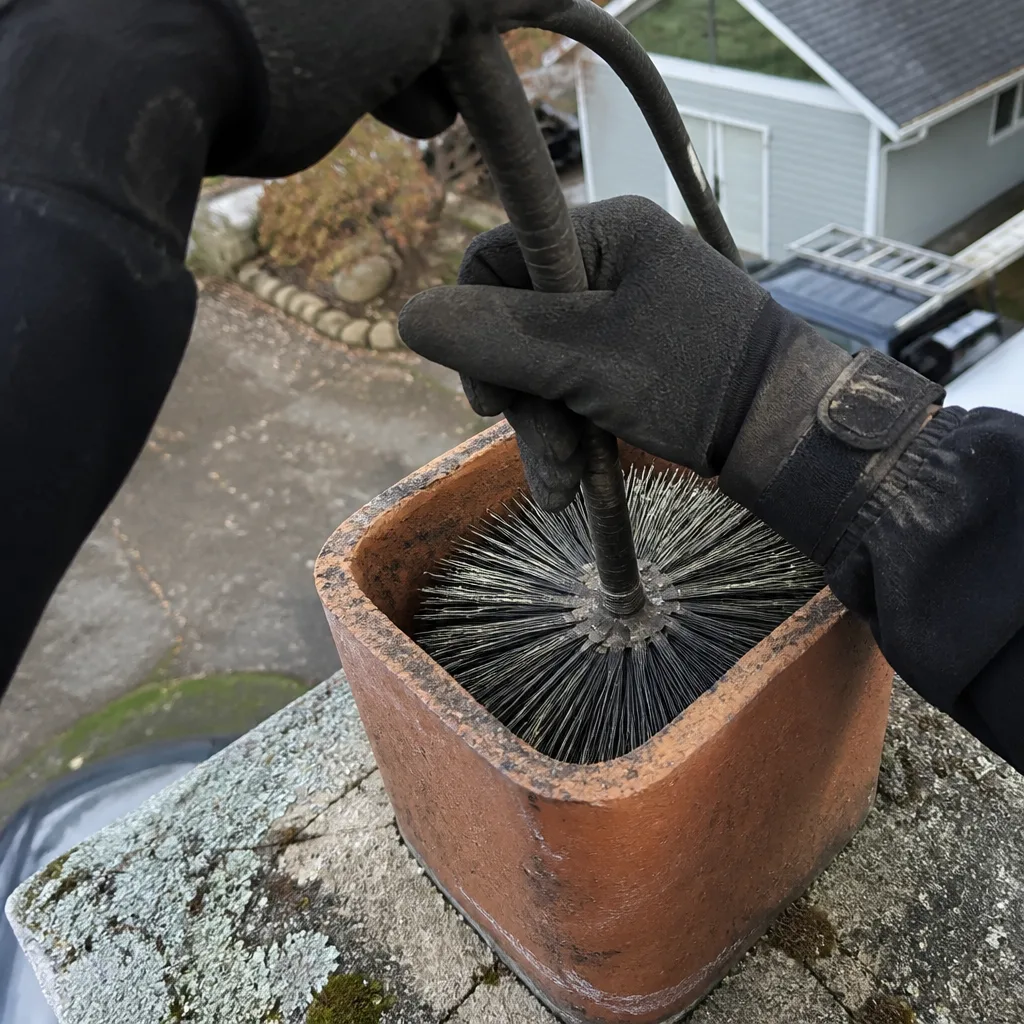
Despite the limitations mapped above, there are Olympia homes for which DIY chimney cleaning is a rational, safe choice. The conditions are specific and must all be verified before starting, not assumed.
- Single-flue, straight-run masonry construction. No offsets, no bends, no multiple flues sharing a wall. The brush must travel in a straight vertical line from firebox to cap. Angled or offset flues require sectional rods with joint articulation that homeowner kits rarely provide reliably.
- Documented clean history with annual professional inspection. A Level 2 inspection within the past 12 months confirmed liner integrity, crown condition, and Stage 1 creosote only. The DIY cleaning is maintenance between professional evaluations, not replacement of them. The documentation exists and is available.
- Seasoned hardwood fuel, exclusively. No softwood, no construction debris, no painted or treated wood. Moisture content below 20% by meter measurement. Burning practices that maintain flue temperatures above 250°F at the top of the flue during active combustion.
- No moisture history. No visible efflorescence on exterior masonry, no water staining in the firebox, no musty odor during non-burning season, no crown or flashing repairs in the past 10 years.
- Appropriate equipment. Brush diameter matched to flue within 1/2 inch, sufficient rod length with positive-lock connections, HEPA-rated vacuum (not shop vacuum), N95 or P100 respiratory protection, drop cloths sealing the firebox opening, and a second person for communication and emergency assistance.
- No insurance or transaction requirement. No pending home sale, no fireplace rider on homeowner’s policy requiring certified maintenance records, no property management agreement mandating professional service.
When all six conditions are satisfied, DIY cleaning extends the interval between professional services at modest cost. When any condition fails, the DIY route introduces risk without corresponding benefit.
The Insurance Documentation Problem with DIY Cleaning
This section addresses a question most DIY guides omit entirely: what happens after the cleaning, if something goes wrong.
Homeowner’s insurance policies covering fireplace or chimney-related fire damage universally require evidence of “regular maintenance” for full coverage. The definition of regular maintenance varies by carrier, but the documentation standard does not. Adjusters look for:
- Date-stamped service records from a licensed or certified chimney professional
- Written scope of work performed, with technician signature or company stamp
- Pre- and post-service condition documentation (photos, inspection reports)
- Warranty or guarantee language for the work performed
DIY cleaning produces none of these. A homeowner’s handwritten log, photographs of a brush in a flue, or receipts for equipment purchase do not satisfy adjuster requirements. In disputed claims - and chimney fires generate disputed claims because origin determination is technically complex - the absence of professional documentation shifts burden of proof to the policyholder. The adjuster’s working assumption becomes that maintenance was inadequate, and the claim may be denied or reduced proportionally.
We have provided expert documentation review for insurance disputes in Thurston County, though we do not perform this service for fires originating in chimneys we did not service. The pattern is consistent: DIY-cleaned chimneys that experience fires show pre-existing conditions (liner cracks, crown failure, improper clearances) that a Level 2 inspection would have identified. The cleaning did not cause the fire. The cleaning created a false sense of security that delayed professional evaluation of underlying hazards.
For homeowners in Olympia’s newer developments - the master-planned communities off Kaiser Road in West Olympia, or the infill construction in the Woodland neighborhood - this documentation gap carries additional weight. These properties often carry mortgage requirements for maintained fireplaces, and resale transactions increasingly include chimney inspection contingencies. A DIY cleaning history, undocumented, becomes a liability at closing.
True Cost Comparison: DIY Kit vs. Professional Sweep
The economic comparison requires honest accounting of all costs, including those deferred or hidden. Our chimney cleaning cost breakdown for Olympia details the complete cost structure for a homeowner committed to DIY chimney cleaning.
DIY Kit: Complete Acquisition Cost
| Item | Cost Range | Notes |
|---|---|---|
| Brush and rod set (appropriate diameter) | $45-$85 | Wire brush for masonry, poly for metal liner; wrong material damages liner |
| HEPA vacuum (rental or purchase) | $80-$350 | Standard shop vacuum recirculates respirable silica and creosote particulate |
| Respiratory protection (N95 minimum, P100 preferred) | $15-$40 | Disposable or reusable with replacement cartridges |
| Drop cloths, sealing tape, lighting | $30-$60 | Firebox opening must be sealed during brushing; debris is significant |
| Ladder or roof access equipment | $0-$200 | Cap inspection and removal requires roof access; fall risk is real |
| Protective clothing and eyewear | $25-$50 | Creosote is a skin irritant and carcinogen with chronic exposure |
| Total first-year DIY cost | $195-$785 | Upper bound assumes HEPA vacuum purchase; lower bound assumes rental and existing ladder |
Amortization assumption: if the homeowner cleans annually for 10 years and replaces brushes every 3 years, the effective per-cleaning cost drops to approximately $35-$75. This assumes no equipment upgrades, no ladder replacement, and no costs associated with injury or damage.
Professional Level 2 Sweep: Documented Cost
Professional Chimney Cleaning & Sweep in Olympia ranges from $275-$425 for a standard single-flue masonry fireplace with Level 2 inspection, documented photo record, and written report. Variation depends on roof access difficulty, flue condition requiring additional mechanical cleaning (chain flail or rotary system for Stage 3 creosote), and travel distance for properties outside the I-5 corridor.
The professional service includes:
- NFPA 211 Level 2 inspection with interior camera scan
- Mechanical cleaning appropriate to creosote stage (brushing, rotary, or chemical treatment)
- Smoke chamber evaluation and cleaning when accessible
- Crown, cap, and exterior condition assessment
- Damper function check and adjustment
- Documented photo record under Haven Standard Clause 4
- Written scope, written price, written warranty before work begins
- 365-Day Done Right Promise on all work performed
Break-even analysis: At the DIY amortized rate of $35-$75 per cleaning, the professional service costs 4-12 times more per event. However, the professional service includes inspection value that DIY cannot replicate. If we assign even conservative value to the Level 2 inspection component ($150-$200 as a standalone service), the net cleaning cost differential narrows to approximately $125-$275 per event. For a homeowner burning 3+ cords annually in Olympia’s climate, professional service every 1-2 years with DIY maintenance in between may optimize cost and safety. For the occasional burner (less than 1 cord), annual DIY cleaning is likely unnecessary overkill, and biennial professional service may suffice.
The honest economic conclusion: DIY becomes cheaper only at high frequency over long duration, and only if nothing goes wrong. A single undetected liner crack that leads to a house fire, or a single denied insurance claim, eliminates decades of supposed savings.
Common Mistakes to Avoid
- Using a brush mismatched to flue material. Wire brushes on stainless steel liners score the metal and create corrosion initiation points. Poly brushes on heavy glazed creosote load the bristles without removing material. Match the brush to the liner and the deposit stage.
- Cleaning without inspecting the cap first. In Olympia’s wildlife corridors, we’ve found squirrel nests, raccoon latrines, and starling colonies that a brush would compact into a complete flue blockage. Always verify cap condition before inserting rods.
- Assuming a clean flue means a safe system. The brush removes visible creosote from the flue interior. It does not evaluate liner condition, crown integrity, or clearance to combustibles. These are the factors that determine actual fire safety.
- Using a standard shop vacuum. Fine creosote particulate passes through standard filtration and recirculates in living spaces. Creosote contains polycyclic aromatic hydrocarbons with documented carcinogenicity. HEPA capture is not optional.
- Working alone. Chimney cleaning involves roof work, confined space exposure to hazardous material, and physical strain with overhead rod manipulation. A second person provides communication, emergency assistance, and objective assessment of whether conditions are safe to continue.
- Cleaning an unlined flue. Pre-1950s Olympia construction, particularly in the Bigelow Highlands and North Eastside, includes unlined brick flues. Brushing accelerates mortar joint erosion in these systems. Verify liner presence and condition before any mechanical cleaning.
- Ignoring the smoke chamber. The area above the damper collects creosote in proportions equal to or greater than the flue itself. No brush kit reaches it. A clean flue with a loaded smoke chamber is not a safe system.
When to Call a Professional
Call a certified chimney professional when any of the following apply: your flue has offsets or bends; you’ve never had a Level 2 inspection with camera documentation; you burn softwood or mixed fuel; you’ve noticed moisture staining, efflorescence, or odors; your home is under contract, subject to insurance requirements, or managed by a property company; or you simply need to know - with evidence you can see - what condition your chimney is actually in.
Level Two Chimney Olympia offers free estimates in Olympia. Every estimate includes a written price, written scope, and written warranty before any work begins, under Haven Standard Clause 1. Our technicians are background-checked, uniformed, and assigned by name; you’ll receive a text when yours is en route. Chimney Repair in Olympia and Fireplace Services in Olympia are available when inspection findings warrant. Call (360) 464-2015 to schedule.
Frequently Asked Questions
A professional chimney sweep with NFPA 211 Level 2 inspection in Olympia typically costs $275-$425 for a standard single-flue masonry fireplace. This includes camera-scan documentation, a written report, and the 365-Day Done Right Promise. Heavy creosote requiring rotary mechanical cleaning, difficult roof access, or multi-flue systems increase the price proportionally. We deliver a written price before work starts - always, with no exceptions. Call (360) 464-2015 for an exact quote; estimates are free.
You can brush your own flue if you have a straight-run masonry fireplace, documented clean history, burn only seasoned hardwood, have no moisture history, own proper equipment including HEPA vacuum and respiratory protection, and have no insurance or transaction documentation requirements. These conditions are collectively rare in Olympia’s climate and housing stock. Most homeowners benefit from professional evaluation at least every 1-2 years. Explore our more guides & resources for additional homeowner support.
NFPA 211 recommends annual inspection; cleaning frequency depends on use and fuel. In Olympia, softwood burning and moisture exposure accelerate creosote formation. A household burning 2+ cords of mixed softwood annually should plan annual professional service. Occasional burners (less than 1 cord of seasoned hardwood) may extend to every 2-3 years with documented clean conditions.
Skipped cleaning allows creosote accumulation to progress from Stage 1 to Stage 2 and Stage 3. Stage 3 glaze creosote ignites at approximately 451°F - temperatures routinely achieved in normal fireplace operation. Chimney fires damage liners, expand cracks, and can extend to combustible framing through degraded mortar joints. Carbon monoxide infiltration through liner cracks poses chronic exposure risk even without fire. The hazard develops invisibly; detection requires camera inspection.
Liner replacement is warranted when inspection reveals cracked, spalled, or displaced terra cotta tiles; when the flue is unlined and serves a solid-fuel appliance; or when liner sizing is incompatible with the connected appliance’s venting requirements. We recommend nothing without camera evidence you can see yourself. Many liner concerns can be addressed with HeatShield resurfacing or stainless steel relining from DuraFlex rather than full reconstruction. A free second opinion on any written estimate is always available.
Level 1 is a visual examination of readily accessible portions of the chimney exterior and interior, appropriate for maintained systems with no changes. Level 2 includes video scanning of the flue interior, accessible portions of the attic and crawl space, and evaluation of all chimney components - mandatory at property transfer, after chimney fire or seismic event, or upon installation of new appliance. Level Two Chimney Olympia performs Level 2 as our default on every visit; we established this practice in 2009, before it became Haven Standard Clause 4.
DIY cleaning without professional documentation does not automatically void coverage, but it eliminates the maintenance records adjusters require to process chimney-related fire claims. In disputed claims, the burden of proof shifts to the policyholder. Professional service with written documentation, technician signature, and photo record provides defensible evidence of due diligence. For homes in Olympia’s higher-value neighborhoods - the Governor Stevens area, Bristol Heights, or the Capitol Campus vicinity - where replacement costs exceed policy baselines, this documentation gap carries significant financial exposure.
The Bottom Line
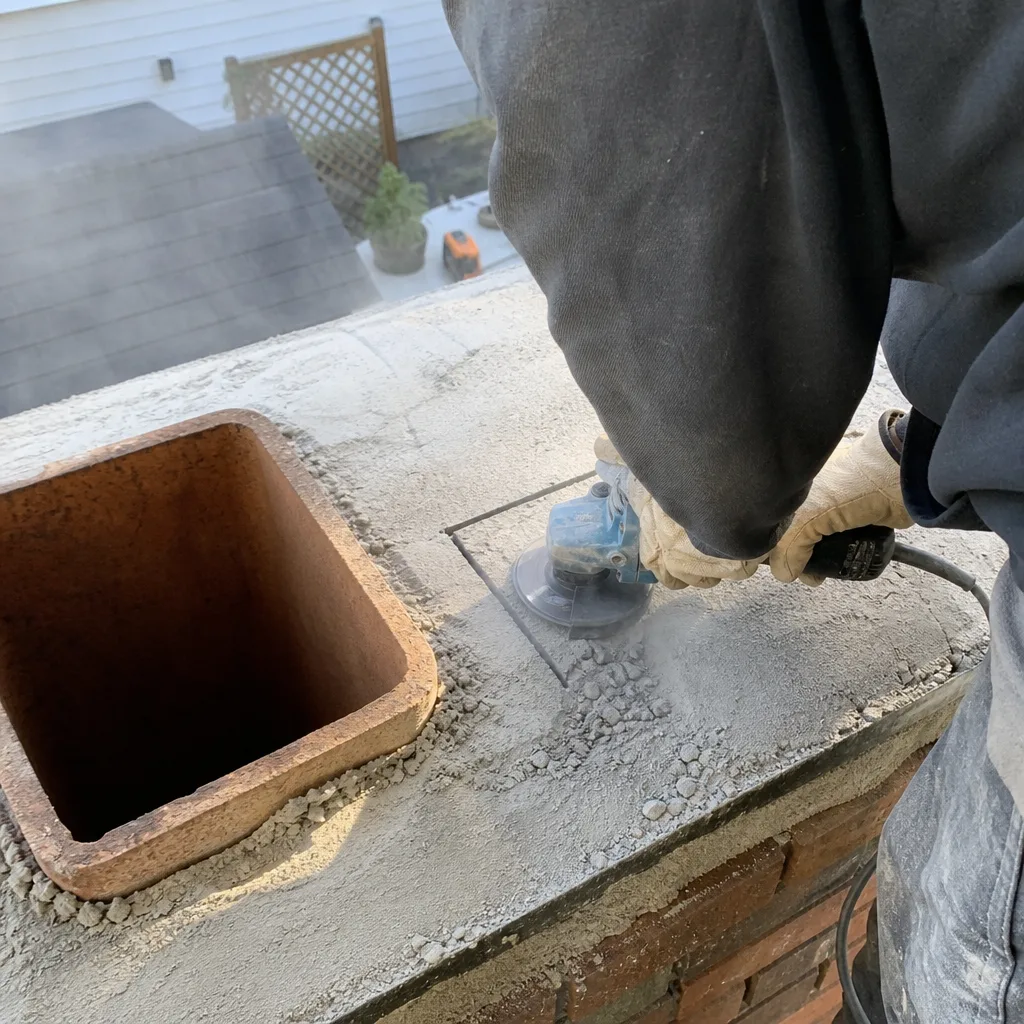
DIY chimney brushing is a maintenance task for a narrow set of conditions: straight flue, clean history, proper fuel, dry system, complete equipment, and no documentation requirements. In Olympia’s climate, that set is smaller than national guidance suggests. Moisture intrusion, softwood creosote hardening, wildlife intrusion, and the prevalence of uninspected older masonry make camera diagnosis the critical complement to any cleaning. The $45 brush kit cleans what it touches. It does not tell you what matters. For everything else - for knowing rather than hoping - professional inspection with documented evidence is the only route that closes the loop. We’ve completed 38,000+ inspections and cleanings since 2009, every one with a written price before work started and a documented record when done. The Haven Standard was built on that practice. It remains our practice today.
Written by Corrine Halstead, Owner at Level Two Chimney Olympia, serving Olympia since 2009.