
Last updated September 21, 2026
Level 1 sweep and inspection to the NFPA 211 annual standard - flue, crown, cap, and flashing checked and photographed
Chimney sweep logs do not sweep chimneys. They loosen some creosote - which then falls where a brush and vacuum still have to collect it.
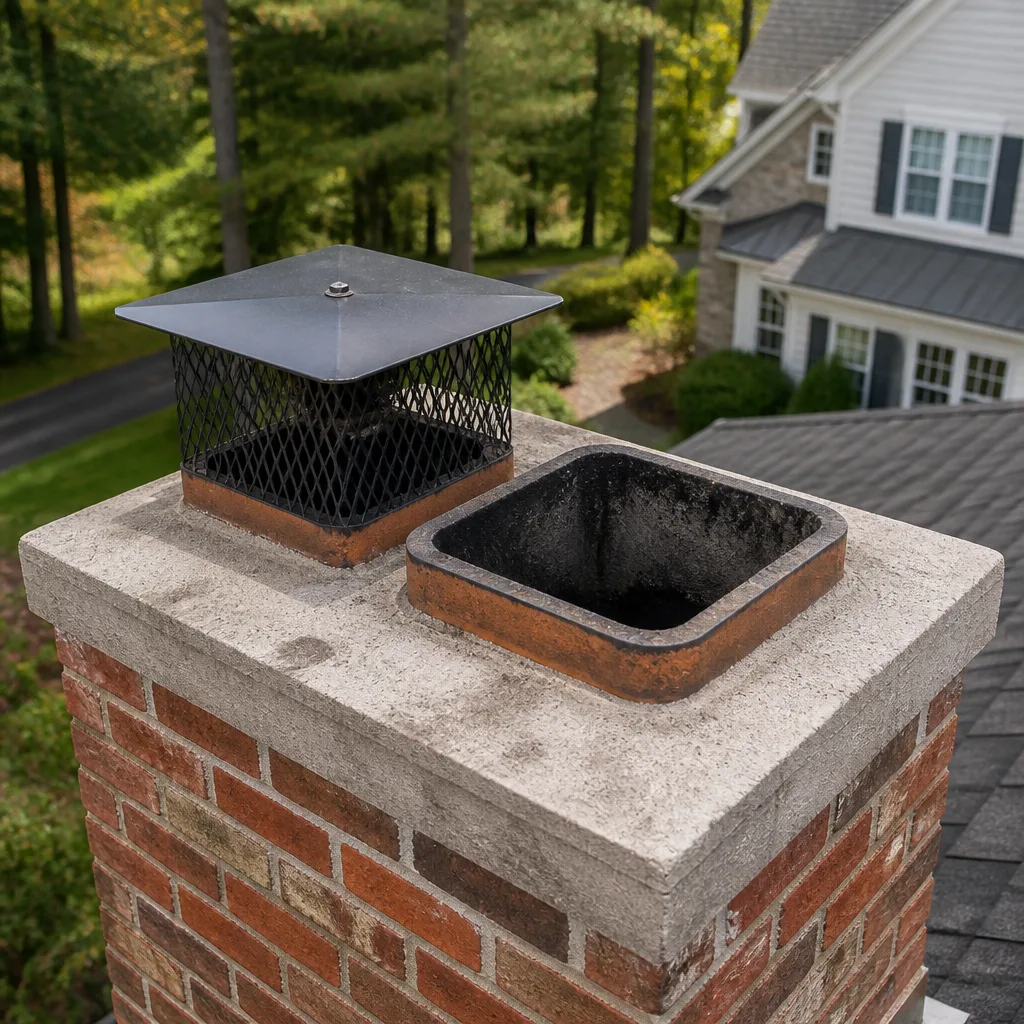
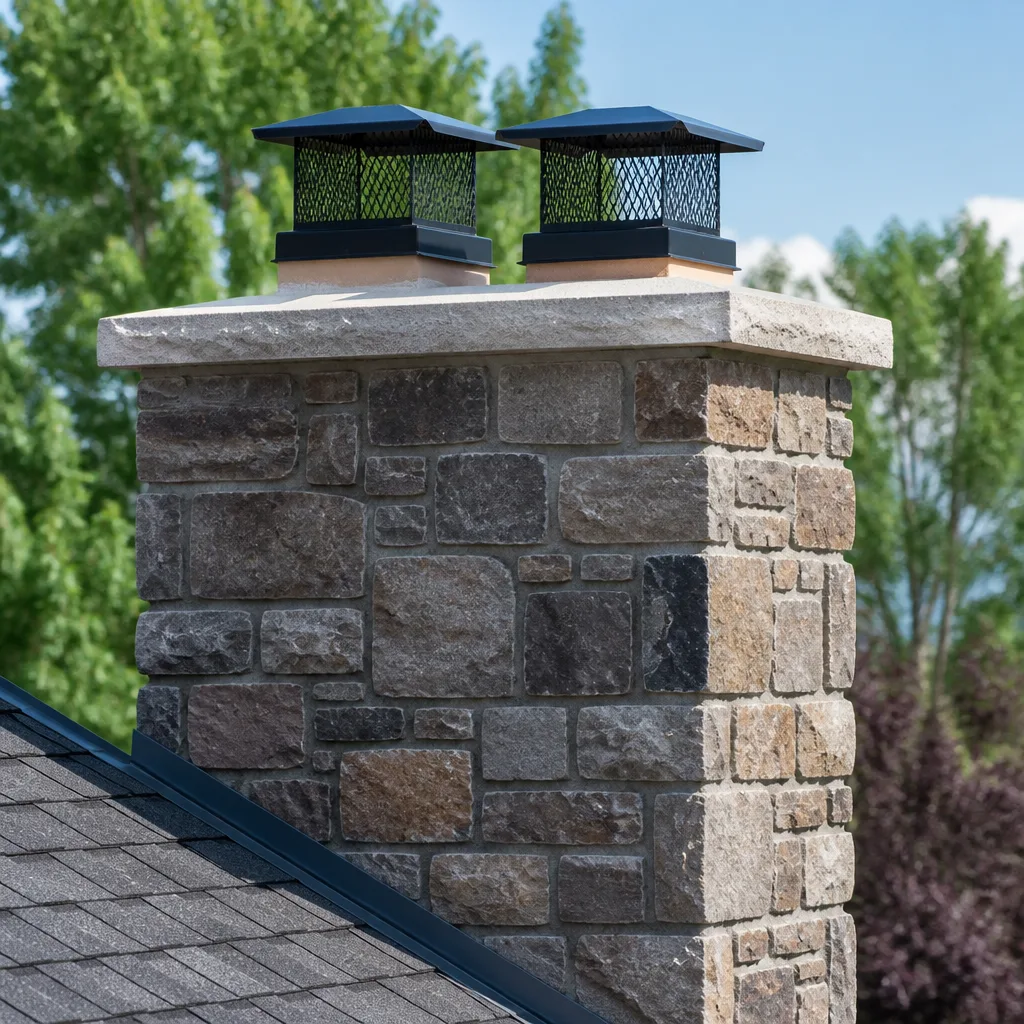
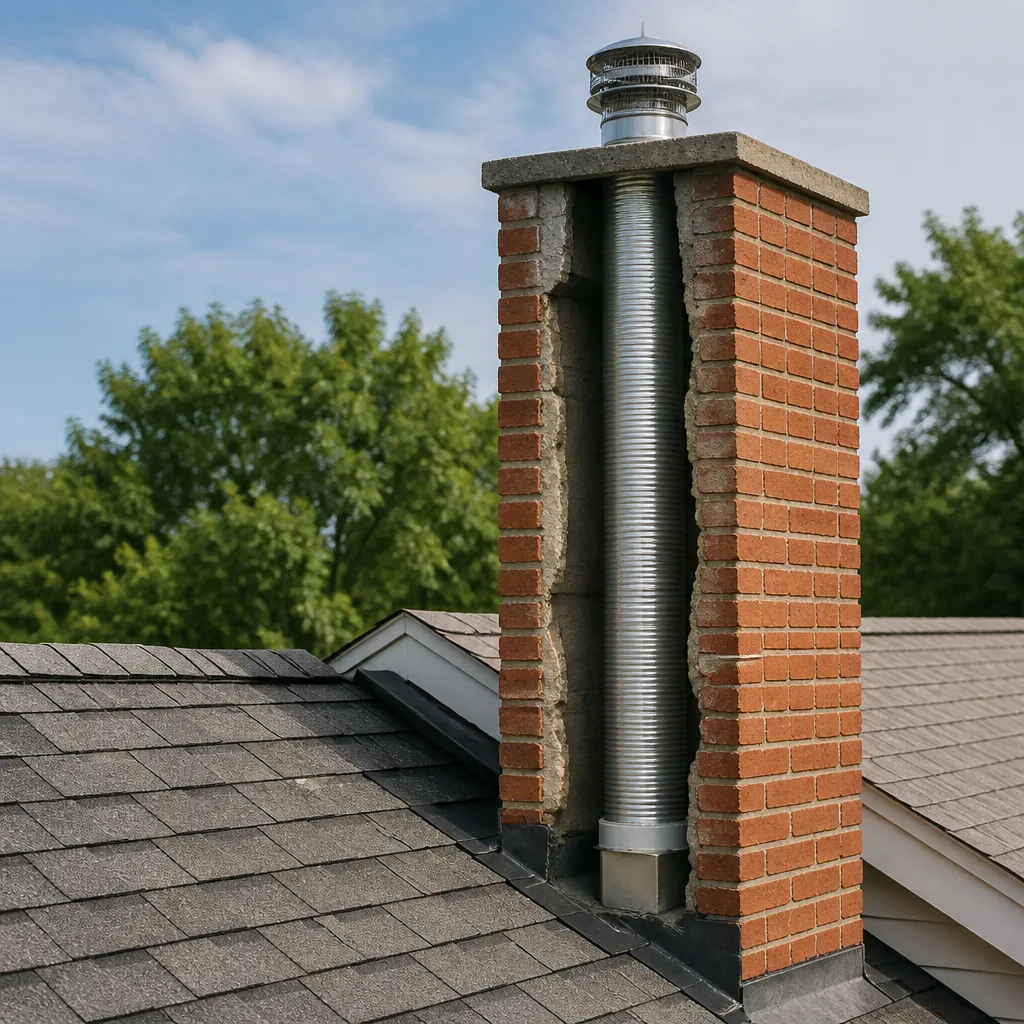
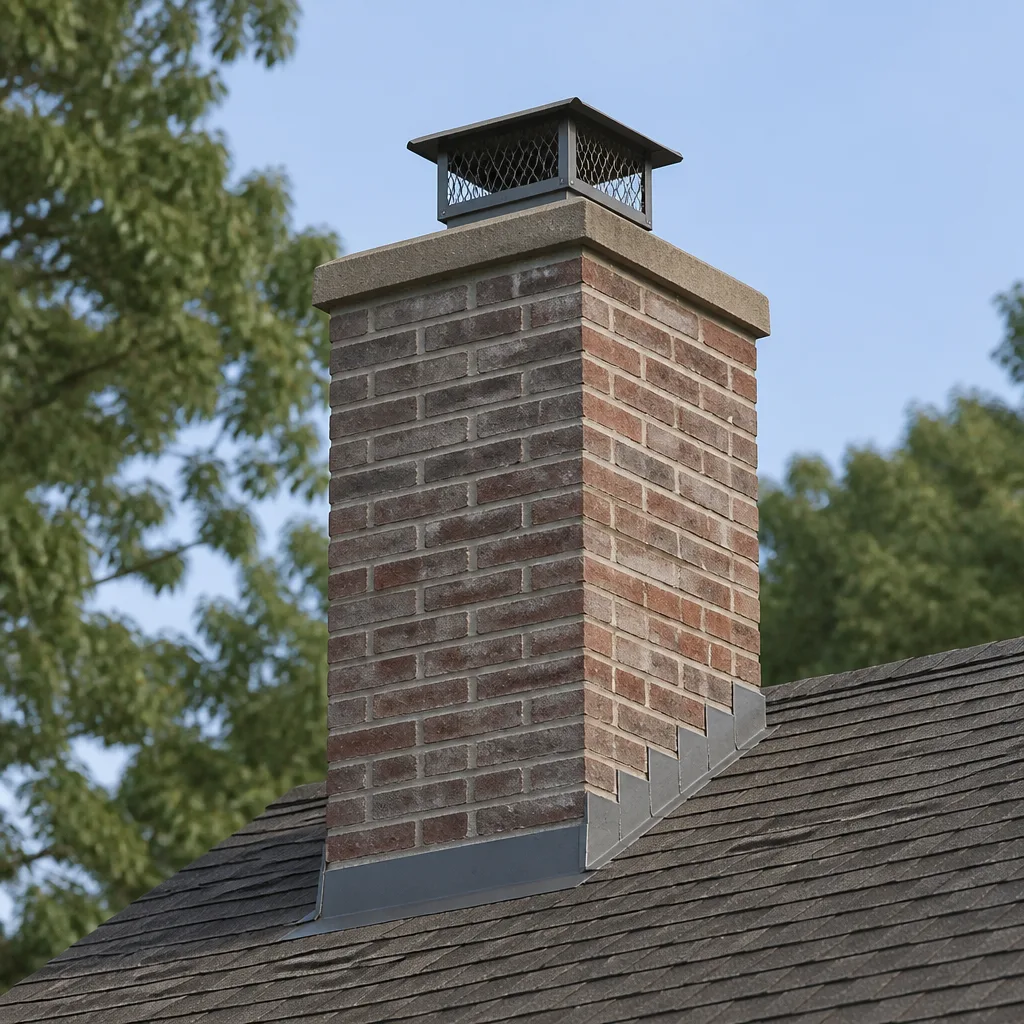
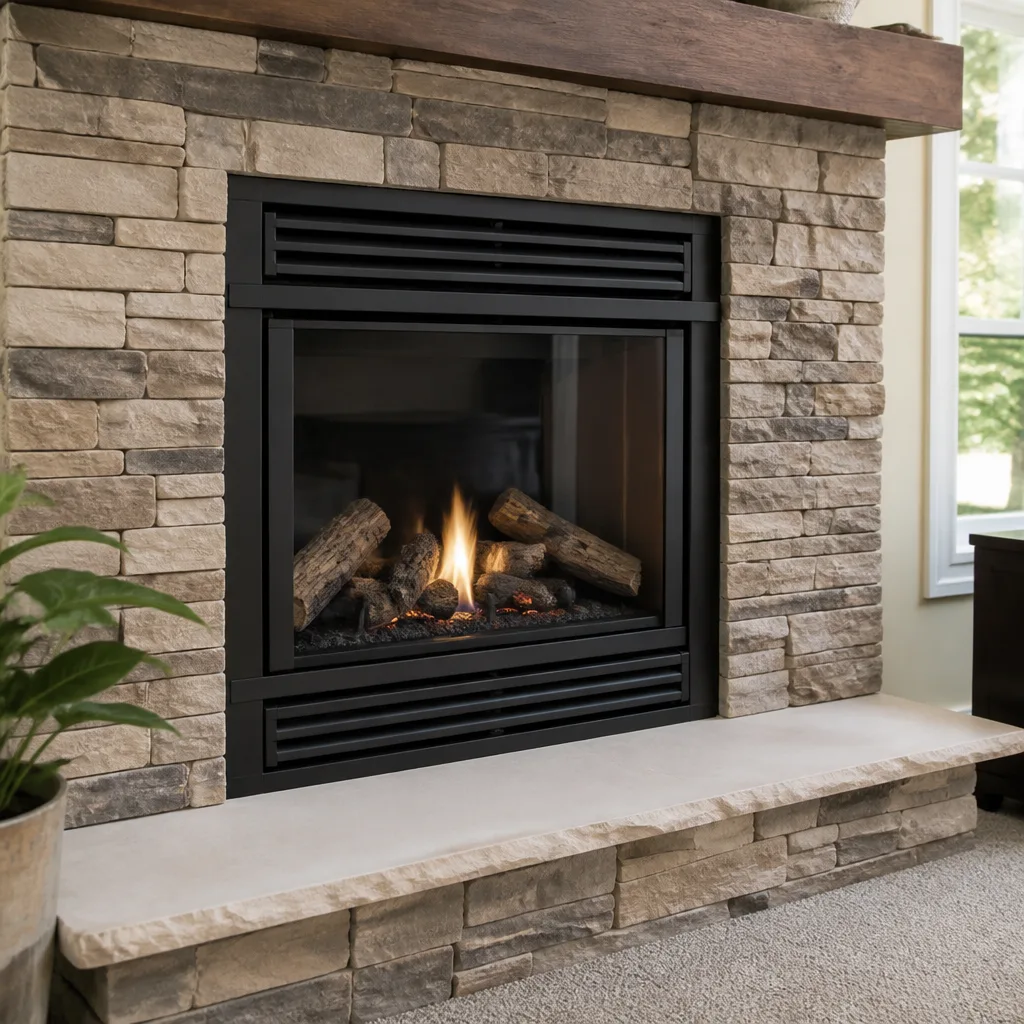
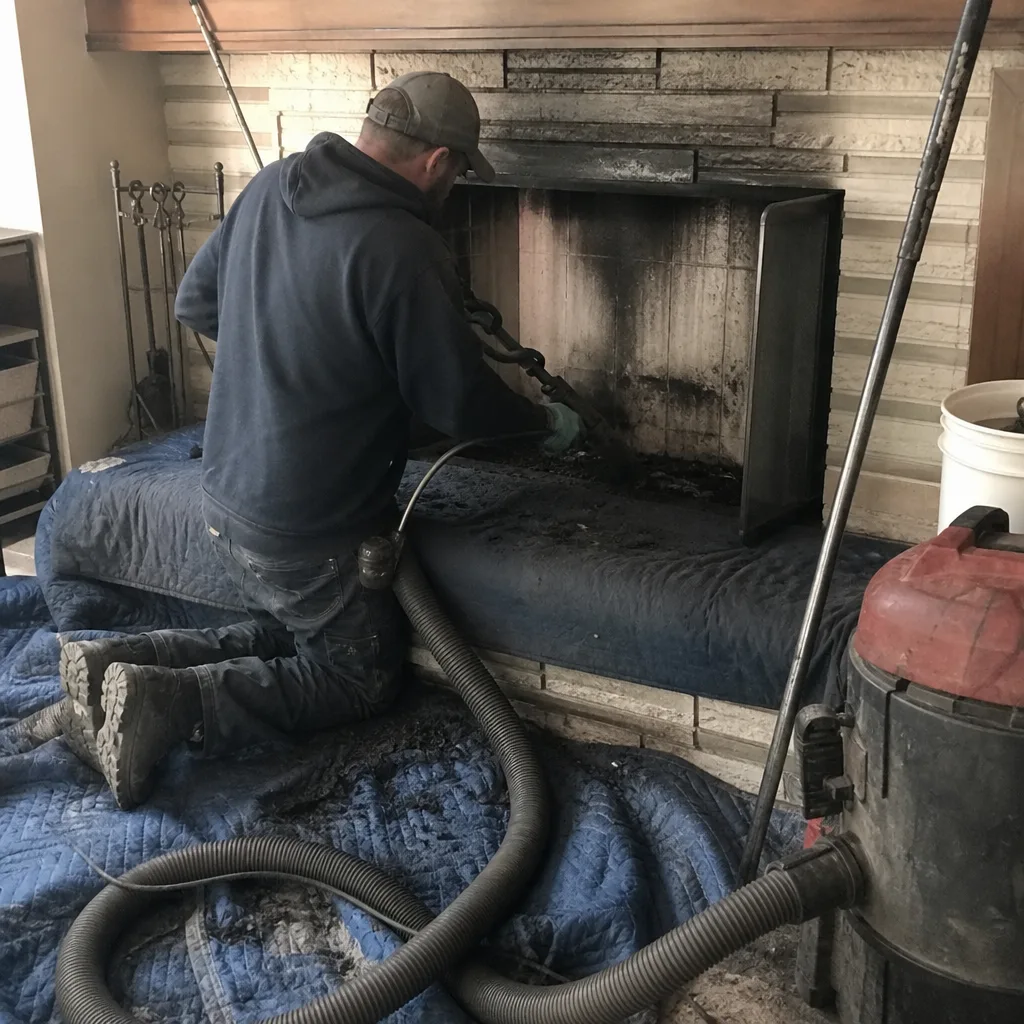 Before
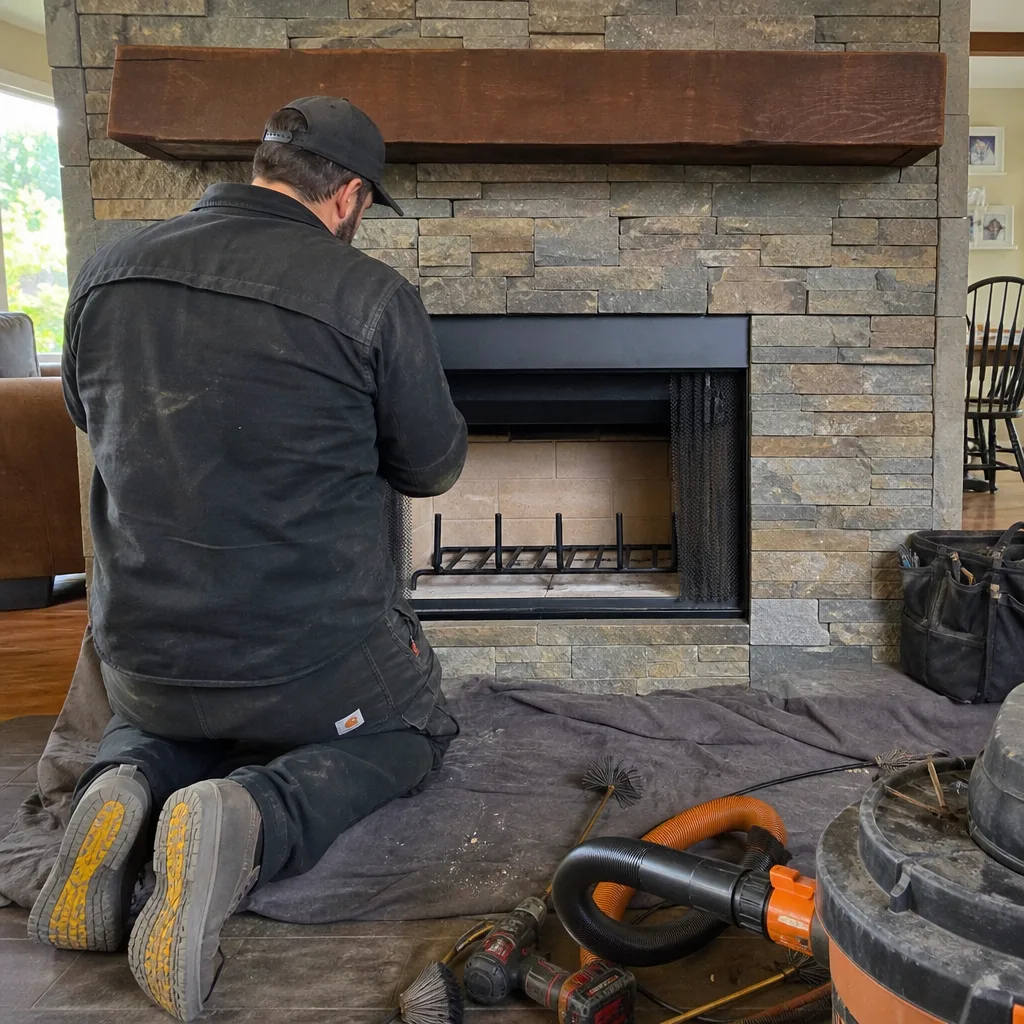 After
After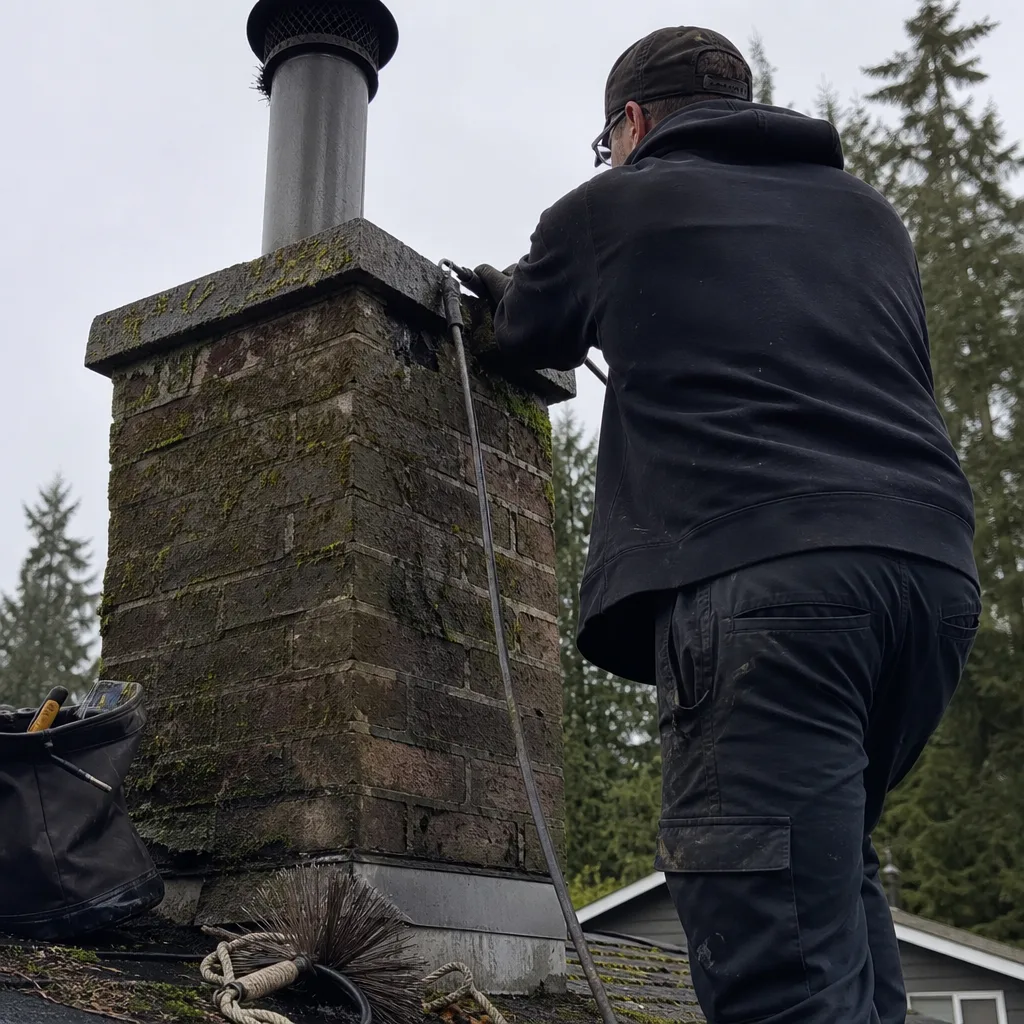 Before
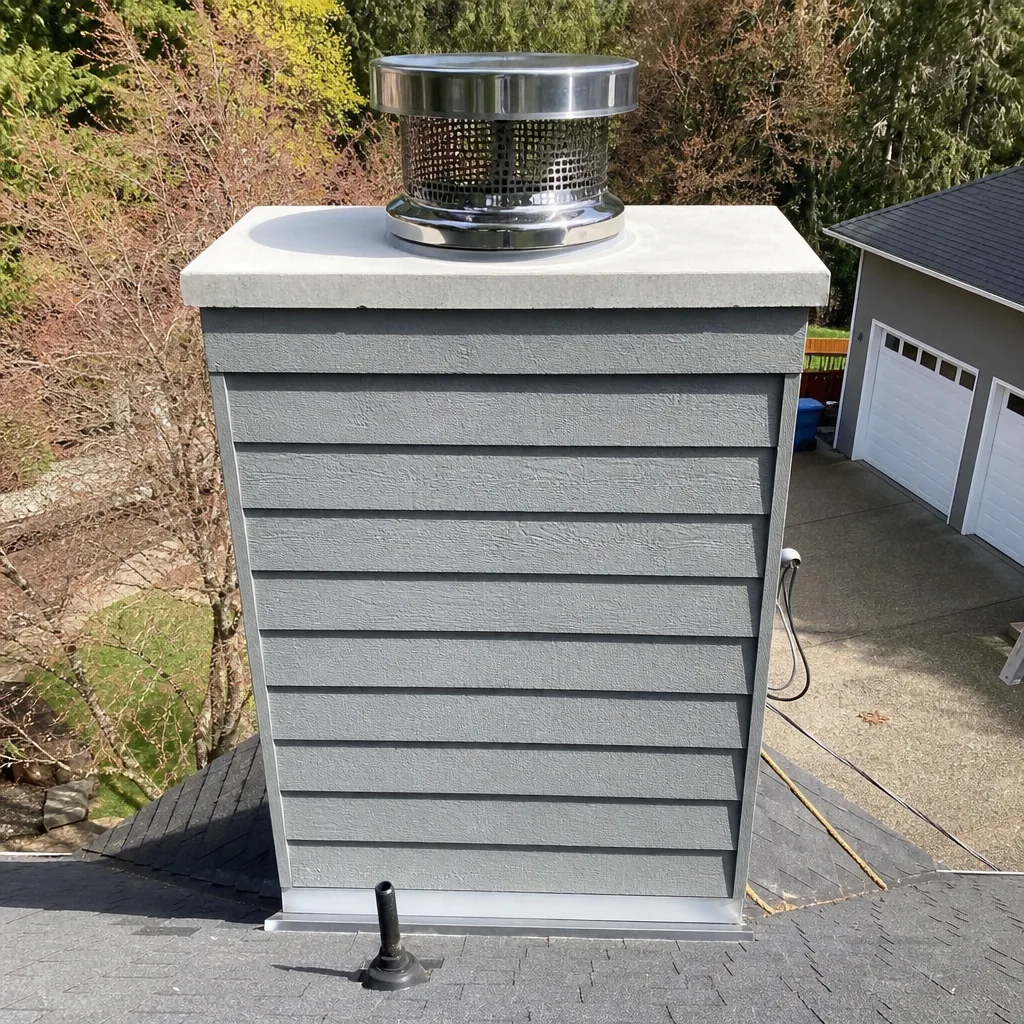 After
After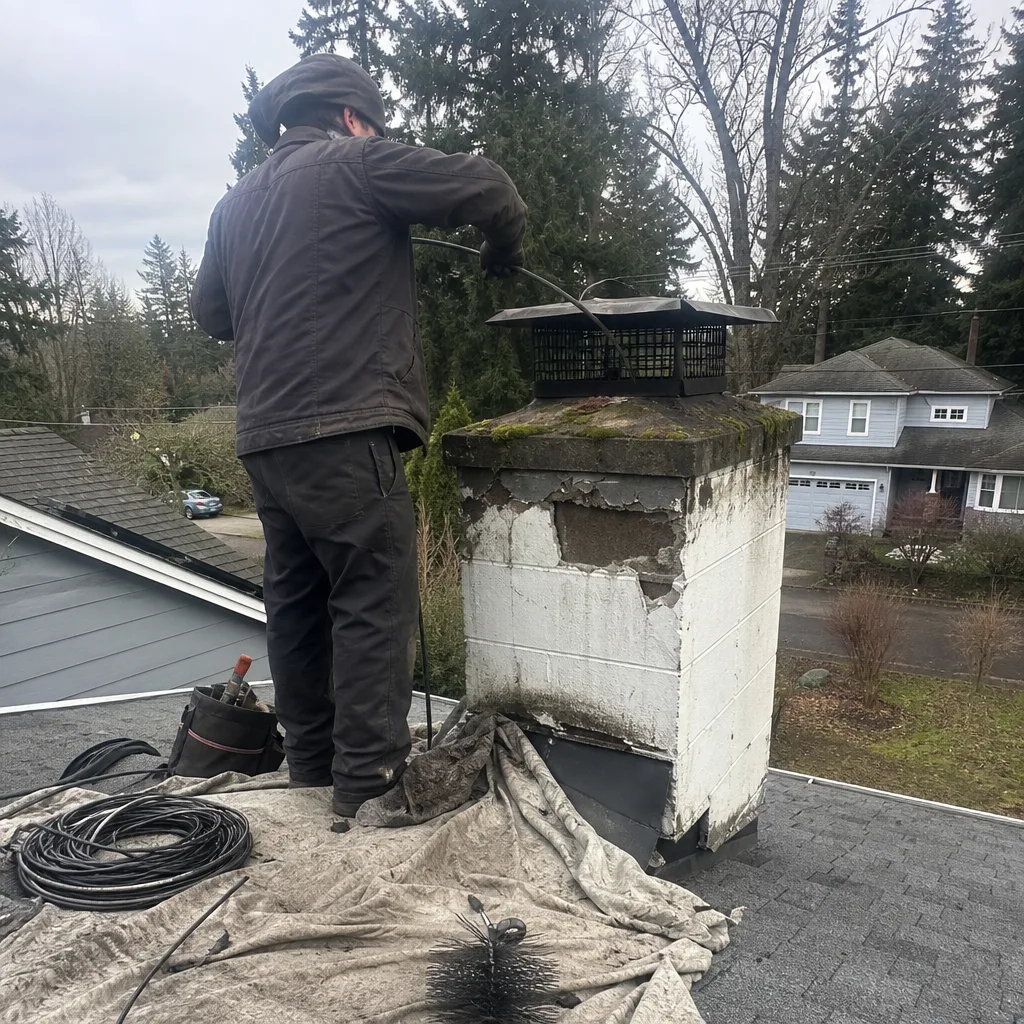 Before
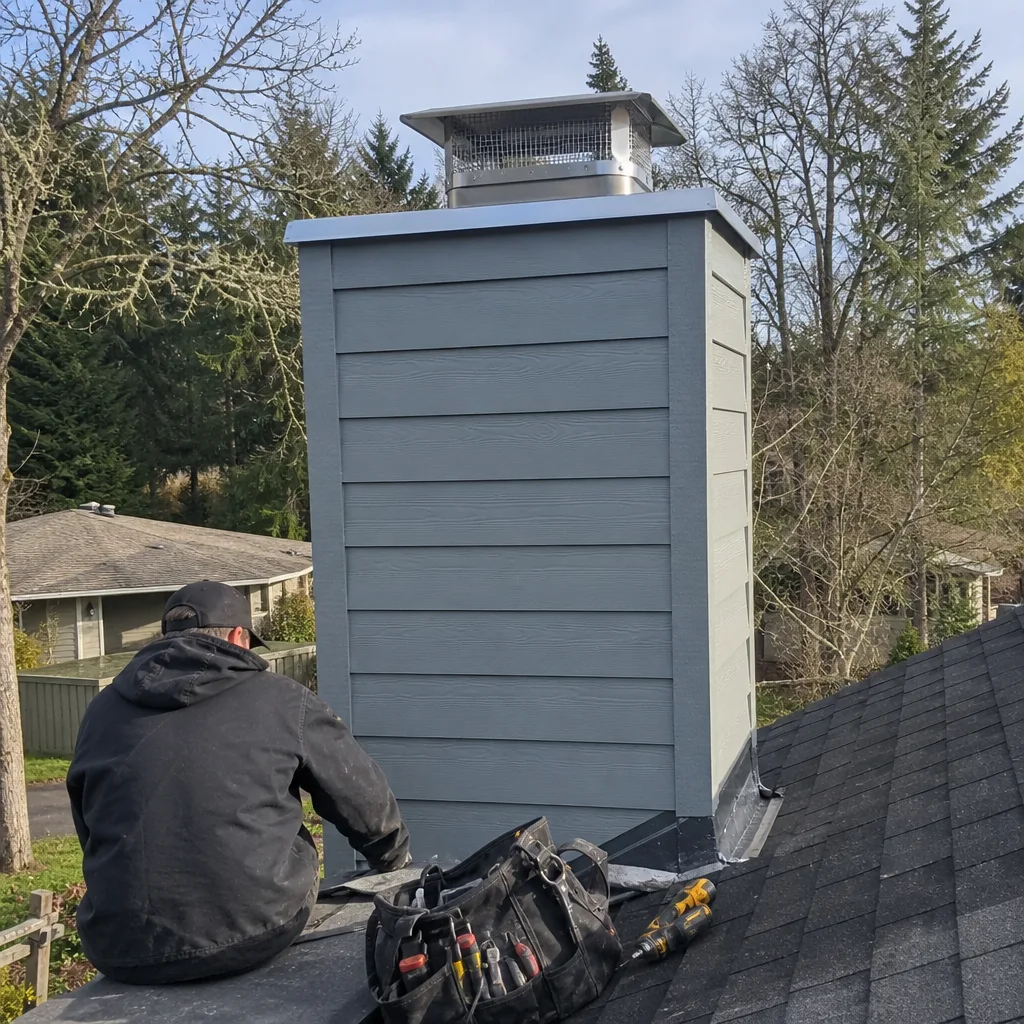 After
AfterHow to Hire a Chimney Cleaning Contractor in Olympia: A Step-by-Step Guide
CSIA certification is real, but it certifies training, not what a contractor actually does on your roof. Three Olympia homeowners in the same month can hire three CSIA-certified sweeps and receive three completely different levels of documented proof that anything happened. The worst chimney contractors in Olympia don’t fail on technical skill - they fail on documentation, and homeowners have no way to distinguish them from competent sweeps until a claim is denied or a reinspection reveals work that was never done. This guide - along with our more guides & resources - will show you exactly what to ask, what to verify, and what a legitimate chimney cleaning contract in Olympia must include before anyone touches your flue.
Quick Answer
To hire a chimney cleaning contractor in Olympia, verify their Thurston County business license and liability insurance through state lookup tools, confirm they perform NFPA 211 Level 2 camera inspections with documented photo records, and require a written price with warranty terms before any work begins. The cheapest quote is often a brush-only sweep with no diagnostic component, which leaves dangerous conditions undetected in Olympia’s moisture-heavy climate.
Table of Contents
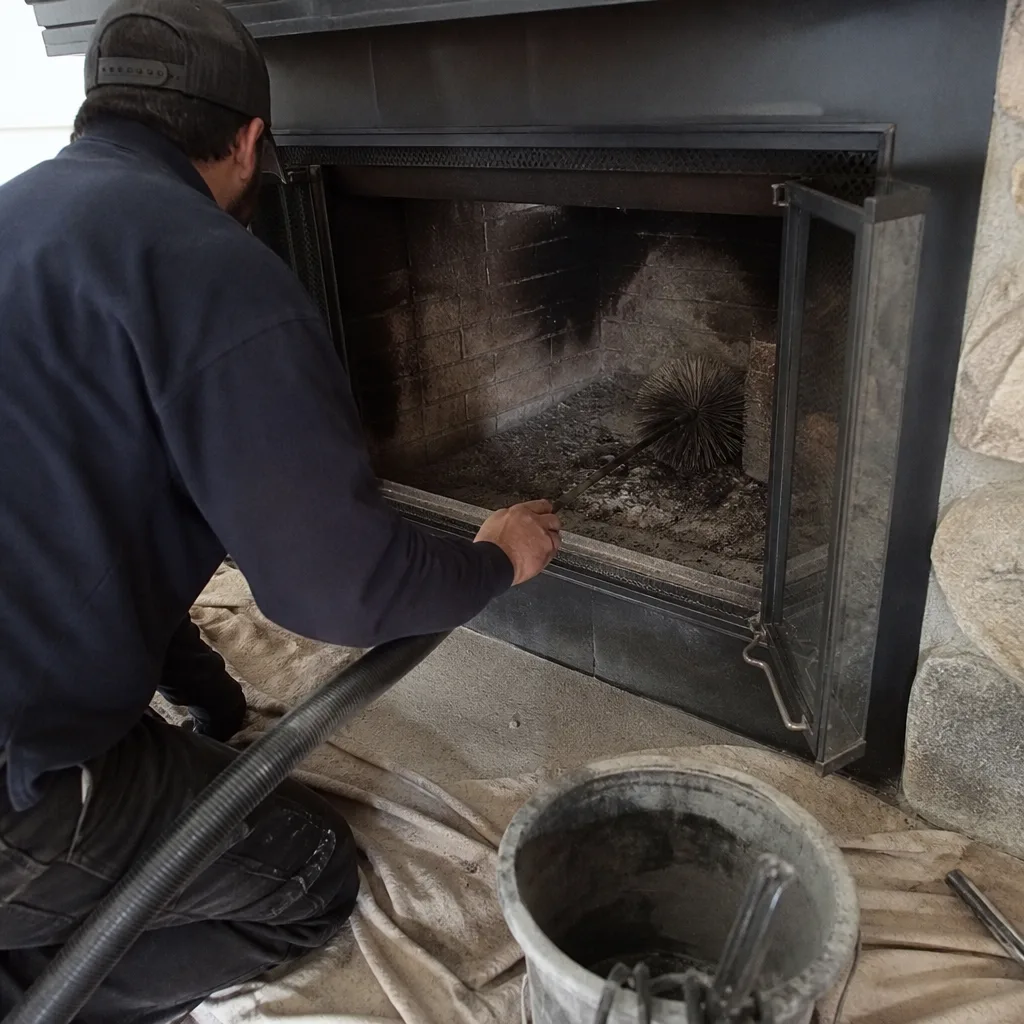
- Why Documentation Matters More Than Certification
- The Five Questions to Ask Before Booking
- How to Verify License and Insurance Without Calling Their Office
- Red Flags Specific to Chimney Work
- What a Written Chimney Contract Must Contain
- Evaluating Quotes: Why the Cheapest Sweep May Cost More
- Olympia-Specific Factors That Affect Your Chimney
- Common Mistakes to Avoid
- When to Call a Professional
- Frequently Asked Questions
 Before
 After
AfterWhy Documentation Matters More Than Certification
Homeowners in Olympia’s Westside or near Capitol Lake often start their search by looking for “certified” chimney sweeps. The Chimney Safety Institute of America (CSIA) certification is the most common credential, and it does mean the technician passed a training program. But here’s what certification does not guarantee: that your contractor will document what they found, that they’ll put a camera down your flue, or that you’ll receive written proof of either.
We’ve been cleaning and inspecting chimneys in Olympia since 2009, and we’ve reinspected flues after other companies left behind nothing but a handwritten receipt. In one case on Cooper Point Road, a homeowner had three years of “annual cleanings” from a CSIA-certified sweep with no photo record. When we ran our camera, we found a cracked flue liner with Class III creosote - a glazed, tar-like buildup that requires chemical treatment, not a standard brush - that had been building for years. The previous sweep had never documented liner condition. The homeowner had no recourse.
Documentation is what separates a cleaning from a diagnostic service. A legitimate chimney contractor in Olympia should deliver:
- A written scope of work before any tools touch your chimney
- Camera footage or still captures from inside the flue liner
- A documented pre-condition report showing what existed before work began
- A written warranty with specific terms and duration
- A final record with technician name, date, and materials used
Clause 4 of the Haven Standard requires a photo record on every job. We made this our default practice in 2009, years before insurers or regulators asked for it, because a chimney is a concealed system. You cannot see the inside of a flue liner from your living room. Without documentation, you’re buying trust, not service.
The Five Questions to Ask Before Booking
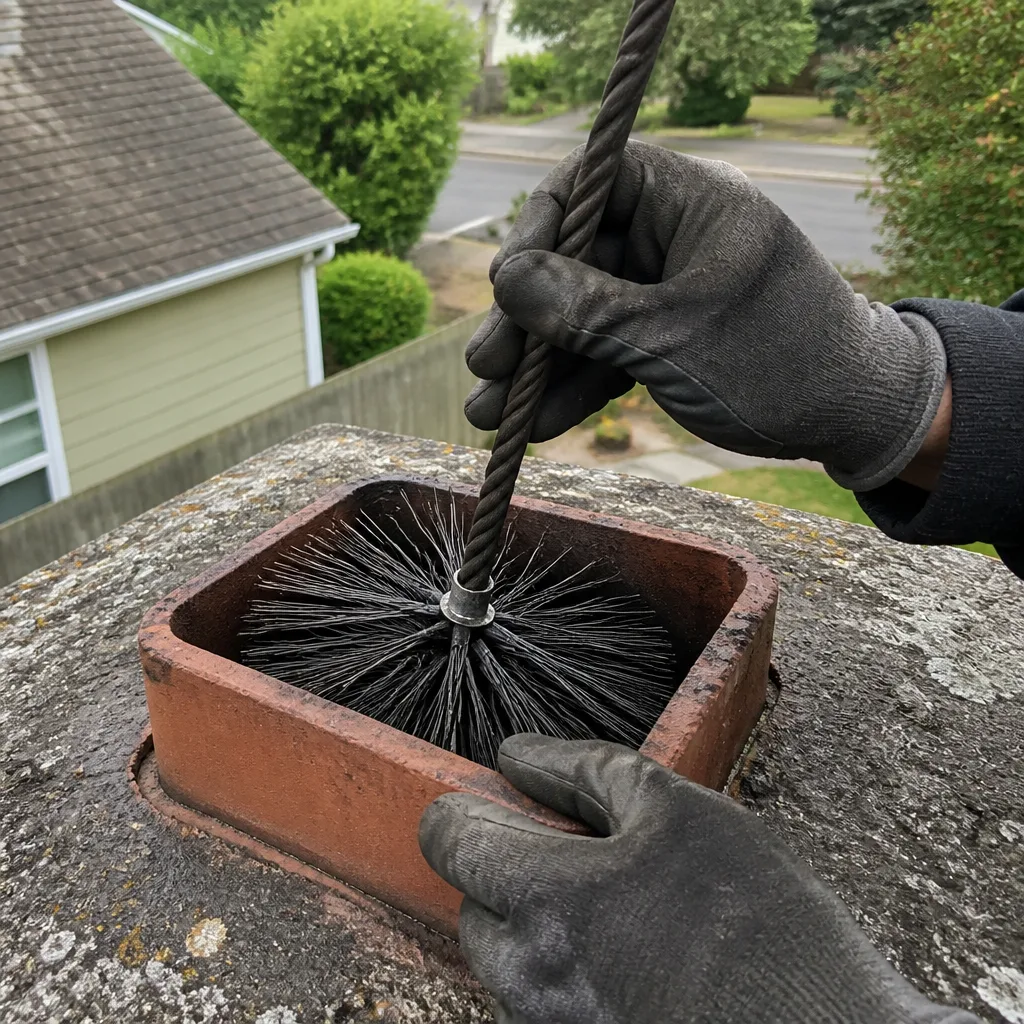
These five questions cut through marketing language and reveal whether a contractor operates with documentation standards or performs flashlight inspections that leave you exposed. Ask them in this order before you schedule.
1. “Do you send a written price before work starts, and does it include a warranty term?”
The answer must be yes to both parts. A verbal quote over the phone is not a price - it’s an estimate that will change when the technician arrives. A written price delivered before work begins, with a specific warranty term, is Clause 1 of the Haven Standard: “Have it in writing.” At Level Two Chimney Olympia, we email or text a written scope, written price, and written warranty before we load the truck. If a contractor says “we’ll figure it out when we get there,” you’re signing a blank check.
2. “Will I receive camera footage or still captures from the liner scan?”
The flue liner is the critical safety component of your chimney. It’s a clay, ceramic, or stainless steel tube that contains combustion gases and protects your home’s structure from heat transfer. A camera inspection - NFPA 211 Level 2 - is the only method that reveals cracks, gaps, deterioration, or creosote buildup inside this concealed space. Ask specifically: “Do you use a chimney camera, and will I receive the images?” If the answer mentions “visual inspection” or “we look from the top,” you’re getting a Level 1 inspection at best. That’s a flashlight look. It’s insufficient for most Olympia homes built before 1990, which often have original clay flue tiles that degrade from thermal cycling in our wet winters.
3. “What does your cleaning include, and what do you charge if you find repairs needed?”
A standard chimney sweep in Olympia should include: inspection of the firebox, smoke chamber, damper, flue liner, and exterior crown and cap; brushing of the flue to remove soot and creosote; debris removal; and a basic function check. But the critical follow-up is repair pricing. Some contractors lowball the sweep price, then quote inflated repair costs once they’re on your roof. Ask for their standard repair rates - liner work, crown sealing, cap installation - in writing. At Level Two, we maintain flat-rate pricing for common repairs, sourced through our buying network with DuraFlex, HeatShield, and Olympia Chimney materials, so the price doesn’t change based on your neighborhood or your urgency.
4. “Is your technician background-checked, and will you provide their name before arrival?”
You’re admitting a stranger to your home with access to your roof and fireplace. A legitimate contractor assigns a named technician, runs background checks, and notifies you when they’re en route. This is standard under the Haven Standard’s “Verified crews” and “Arrive on schedule” principles. If a company sends whoever is available that day with no advance notice, that’s a security gap, not a convenience.
5. “Can you provide a documented record that satisfies my insurance company if I file a claim?”
This is the question most Olympia homeowners never think to ask - until they need it. After a chimney fire or carbon monoxide event, your insurer will request proof of maintenance. A handwritten receipt with “chimney sweep – $189” is rarely sufficient. You need a dated record with technician name, work scope, pre-condition documentation, and warranty language. Ask a prospective contractor to show you a sample report before you book. If they can’t produce one, they don’t produce them.
How to Verify License and Insurance Without Calling Their Office
Contractors can say anything on a website. Verification takes five minutes using public tools, and it protects you from unlicensed operators who disappear after deposit collection. Here’s the exact process for Olympia:
- Verify the business license. Go to the Washington State Department of Revenue’s Business Lookup tool at dor.wa.gov. Search the company name or Unified Business Identifier (UBI). A legitimate Thurston County contractor will show “Active” status with a physical address in Washington. Note the registration date - a brand-new registration with no history is not automatically disqualifying, but it requires additional scrutiny.
- Check for complaints. Search the Washington State Attorney General’s Consumer Protection division and the Better Business Bureau for the company name. Look for patterns: multiple complaints about no-shows, price changes after arrival, or refusal to provide documentation. One complaint is noise. Three with similar details is signal.
- Verify liability insurance. Request a Certificate of Insurance (COI) directly from the contractor. Do not accept “we’re fully insured” as answer. The COI should name the business exactly as it appears on their contract, show general liability coverage of at least $1 million, and list coverage dates that include your service date. For extra verification, call the insurance agency listed on the certificate - not the contractor - to confirm the policy is active. This takes two minutes and eliminates operators who let coverage lapse.
- Chimney Cleaning & Sweep in Olympia should only be performed by contractors who pass this verification. Our license information is displayed on every page of our site, and we provide COIs on request without delay because we maintain continuous coverage.
- Confirm workers’ compensation. Use the Washington State Department of Labor & Industries Verify tool at lni.wa.gov. Search the contractor’s name. If they employ technicians, they must carry workers’ comp. If they’re a sole operator with no employees, they may be exempt, but this should be stated clearly. A worker injured on your roof without coverage becomes your homeowner’s insurance problem.
These steps apply to any contractor working in Olympia, from Tumwater to Lacey to the homes along Budd Inlet. The operators who resist verification are the ones with something to hide.
Red Flags Specific to Chimney Work
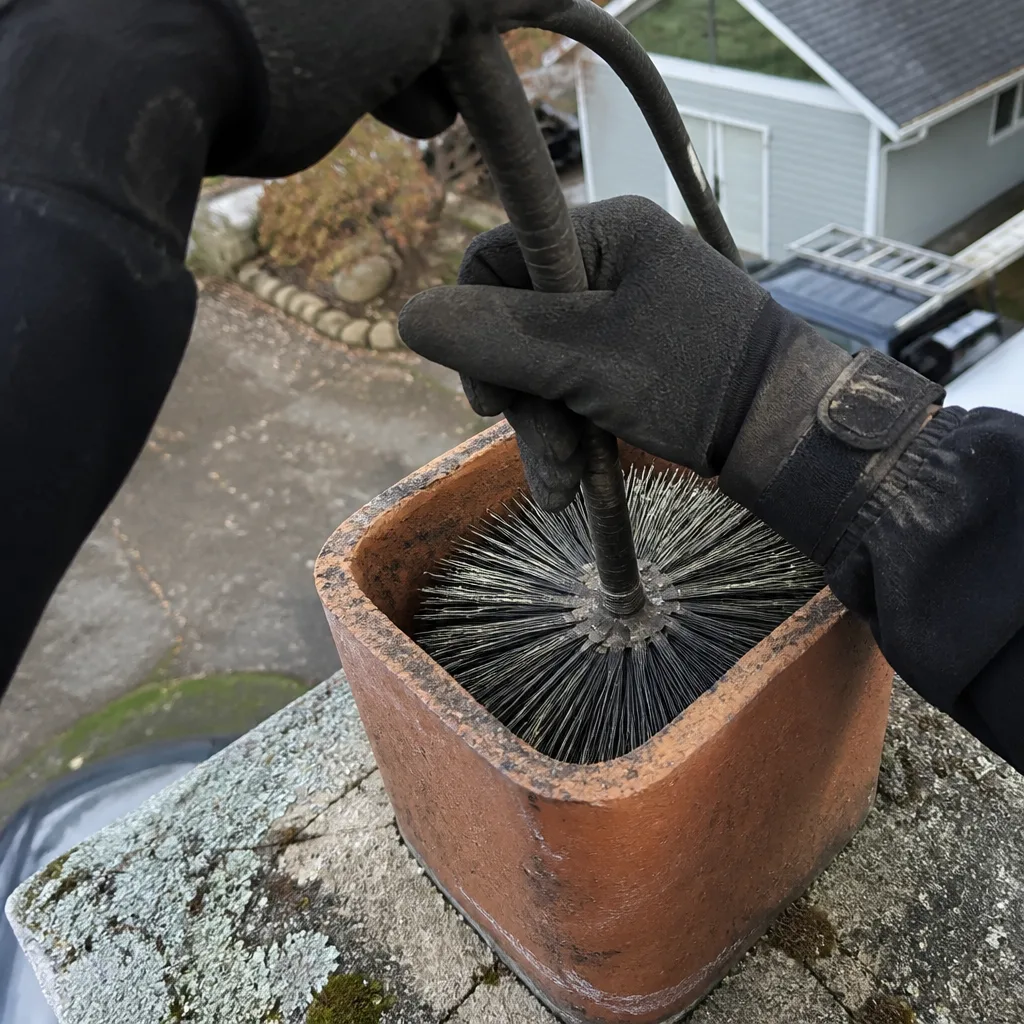
Generic contractor-hiring advice covers obvious signs: no business address, cash-only demands, pressure to decide immediately. Chimney work has its own warning signs that homeowners in Olympia miss because they seem plausible.
Quoting a firm price before seeing the flue
A contractor who quotes $189 for “a standard sweep” without asking about your chimney’s age, fuel type, last service date, or current symptoms is guessing - or planning to upsell. The actual condition of your flue liner, the class of creosote present, and the accessibility of your roof all affect scope and price. A legitimate contractor asks questions first, then provides a written price range or flat rate based on typical conditions, with a clause for what happens if the inspection reveals unexpected damage. In Olympia’s older neighborhoods like Bigelow Highlands or Eastside, original clay flue tiles from the 1960s and 70s often require more than a standard brush. A contractor who doesn’t account for this possibility in their initial quote is either inexperienced or dishonest.
Offering a “free inspection” that excludes camera equipment
The free inspection is a common lead-generation tool, but in chimney work, it’s often a sales tactic. A true NFPA 211 Level 2 inspection requires a chimney camera. If the “free inspection” is a visual look from the fireplace opening and roof top, you’re receiving a Level 1 inspection that cannot detect the conditions most likely to cause chimney fires or carbon monoxide intrusion. The contractor then uses this incomplete information to sell services you may not need - or misses conditions that genuinely require attention. We’ve reinspected chimneys in Olympia where a “free inspection” declared the system “fine,” and our camera found cracked liner segments and dangerous creosote glazing.
Discounting 40% on the spot
A technician who drops the price dramatically while standing in your living room is not being generous. They’re revealing that the original quote was inflated, or they’re cutting scope to hit a number you’ll accept. Either way, the documentation suffers. A written price under the Haven Standard is fixed before arrival. It doesn’t change because you hesitated or mentioned a competitor. If a contractor’s pricing is that flexible, it’s not pricing - it’s negotiation, and you’re the mark.
Refusing to put findings in writing
Verbal reports of “you need a liner” or “the crown is shot” with no photos, no written scope, and no material specifications are worthless for insurance, resale, or future reference. Every legitimate finding can be documented. A contractor who won’t document is a contractor who can’t defend their diagnosis.
Push for immediate same-day work
Chimney repairs often require specific materials and curing times. A contractor who pushes to “take care of everything today” may be using generic materials that don’t match your system, skipping proper preparation, or avoiding the documentation step that would reveal corners cut. Quality chimney work in Olympia’s climate requires materials suited to wet conditions - proper crown sealants, stainless steel caps with adequate overhang, liners rated for your appliance type. These aren’t impulse purchases.
What a Written Chimney Contract Must Contain
A proper chimney cleaning contract is not a receipt. It’s a legal record that protects you, satisfies insurance requirements, and documents the condition of a critical home system. After 38,000+ inspections and cleanings since 2009, we’ve seen what happens when homeowners lack this documentation. Here’s what your contract must include:
| Required Element | Why It Matters | What to Look For |
|---|---|---|
| Date of service | Establishes maintenance timeline for insurance and warranty claims | Exact date, not month-only |
| Work scope in plain language | Defines what was and wasn’t done | “Sweep flue liner,” “inspect smoke chamber,” “camera scan with photo record” - not just “chimney service” |
| Technician name and license | Accountability and traceability | Printed name, not initials; state license or company ID number |
| Documented pre-condition | Proves what existed before work began | Photo captures or written description of liner, crown, damper condition |
| Materials used | Verifies quality and compatibility | Brand names like DuraFlex, HeatShield, or Olympia Chimney; not “standard liner” or “sealant” |
| Warranty language with term | Defines remedy if work fails | Specific duration (365 days, 10 years, lifetime) and what is covered (parts, labor, both) |
| Total price and payment terms | Prevents balance disputes | Final number matching pre-work quote, with deposit and balance structure |
This documentation becomes essential when you sell your Olympia home. Buyers and their inspectors increasingly request chimney maintenance records. A documented photo record from 2019 showing a sound liner carries weight that a faded receipt does not. Insurance companies, too, are tightening requirements. After a chimney fire in the Boston Harbor area last winter, the homeowner’s claim was initially questioned because their “annual cleaning” consisted only of a credit card charge with no scope description. They had no proof of what was inspected.
Clause 4 of the Haven Standard requires this documentation on every job. We don’t consider a job complete when the truck leaves; we consider it complete when the customer has their written price, their photo record, their warranty, and their technician’s name. That’s the standard that became our name.
Evaluating Quotes: Why the Cheapest Sweep May Cost More
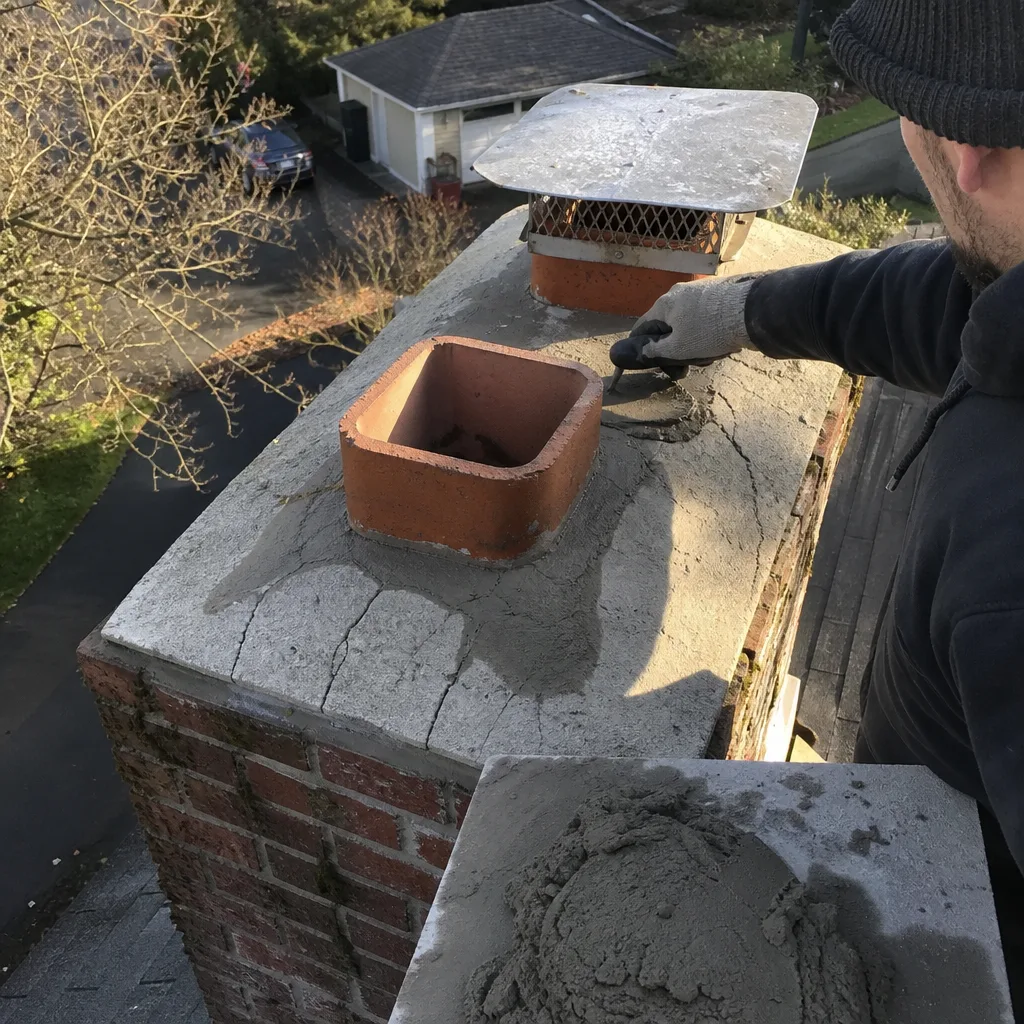
The chimney sweep market in Olympia ranges from $150 brush-only services to $400+ full diagnostic cleanings. For a detailed breakdown, see our Chimney Cleaning Cost Breakdown: The Olympia Homeowner’s Reference for 2026. The price gap reflects real differences in scope, and choosing wrong can cost thousands in undetected damage or unnecessary repairs.
A brush-only sweep - the cheapest option - removes loose soot and superficial creosote from the flue liner. It does not include camera inspection of the liner interior, evaluation of the smoke chamber (the area above the firebox that funnels gases into the flue), or assessment of the exterior crown and cap. For a newer Olympia home with a stainless steel liner, gas appliance, and recent construction, this may be adequate if performed annually. For homes in historic neighborhoods like South Capitol or along the waterfront with original masonry chimneys, clay flue tiles, and wood-burning fireplaces, it’s dangerously incomplete.
Here’s how to evaluate what you’re actually buying:
- Ask for the inspection level. NFPA 211 defines three levels. Level 1 is visual, no tools. Level 2 requires a camera and covers accessible portions of the chimney structure. Level 3 involves demolition of building materials to access concealed areas. A “cleaning” without specified inspection level is likely Level 1 or unclassified.
- Ask what’s excluded. Some low-priced sweeps exclude the smoke chamber, exclude the damper mechanism, or charge extra for the camera “if needed.” The camera is always needed for a complete assessment. Excluding it is excluding the diagnosis.
- Calculate the reinspection cost. If the cheap sweep misses a cracked liner and you need a full Level 2 inspection six months later to diagnose draft problems, you’ve paid twice. In our experience on the Westside and near Priest Point Park, homeowners who start with a documented Level 2 cleaning avoid the second visit entirely because conditions are caught early.
- Factor repair pricing transparency. A contractor who won’t state standard repair rates before arrival is likely to inflate them once they’ve invested travel time. We publish our approach: written price before work starts, flat-rate repair pricing, materials from known manufacturers like Gelco and Famco procured through our buying network. No surprises.
The 365-Day Done Right Promise on every Level Two job means if our diagnosis or cleaning misses something, we make it right. That promise is stamped on the written warranty, not offered verbally and forgotten. Cheap sweeps don’t back their work because their work isn’t documented enough to back.
Olympia-Specific Factors That Affect Your Chimney
Olympia’s climate and building stock create conditions that generic chimney advice misses. Our Seasonal Chimney Cleaning Care for Olympia: Year-Round Homeowner’s Guide covers these factors in depth. Understanding them helps you evaluate whether a contractor actually knows this market or is applying a national template.
Moisture and freeze-thaw cycles. Olympia receives 50+ inches of annual rainfall, with winter temperatures that cycle above and below freezing. Water penetrates masonry through crown cracks, cap gaps, or spalling brick faces. When it freezes, it expands, widening cracks and accelerating deterioration. A contractor who doesn’t specifically examine crown integrity and cap fit - with documentation - is missing the primary failure mode for Olympia chimneys. We’ve replaced crowns in the Wildwood and Governor Stevens neighborhoods where years of undetected water intrusion destroyed the chimney top.
Wood-burning prevalence in older neighborhoods. Many homes built between 1910 and 1970 in Olympia’s core neighborhoods rely on wood heat as primary or supplemental source. These systems produce Class I, II, or III creosote depending on burn habits and wood moisture. Class III creosote - glazed, hardened, requiring chemical treatment or rotary removal - is common in chimneys cleaned infrequently or burned with unseasoned wood. A standard wire brush won’t remove it. A contractor who doesn’t classify creosote type during inspection is planning to brush and hope.
Seismic considerations. The Puget Sound region’s seismic activity affects chimney structural integrity over time. Older masonry chimneys, especially unlined or partially lined systems in pre-1950s homes near Capitol Lake or the isthmus, may have shifted or cracked from minor quakes that caused no other visible damage. Camera inspection reveals liner displacement and mortar joint separation that visual inspection cannot.
Local fuel transitions. Many Olympia homeowners have converted wood fireplaces to gas inserts or pellet stoves. These conversions require proper liner sizing and termination clearances. A contractor unfamiliar with conversion-specific requirements - common with sweeps who only brush flues - may miss critical venting mismatches that create carbon monoxide risks. Fireplace Services in Olympia should include evaluation of appliance-to-liner compatibility, not just cleaning.
Thurston County burn bans and insurance requirements. During air quality burn bans, insurance coverage for chimney-related incidents may require proof of recent professional service. Documentation from a recognized standard - NFPA 211 Level 2 with photo record - satisfies this requirement. A receipt from a brush-only sweep does not.
Common Mistakes to Avoid
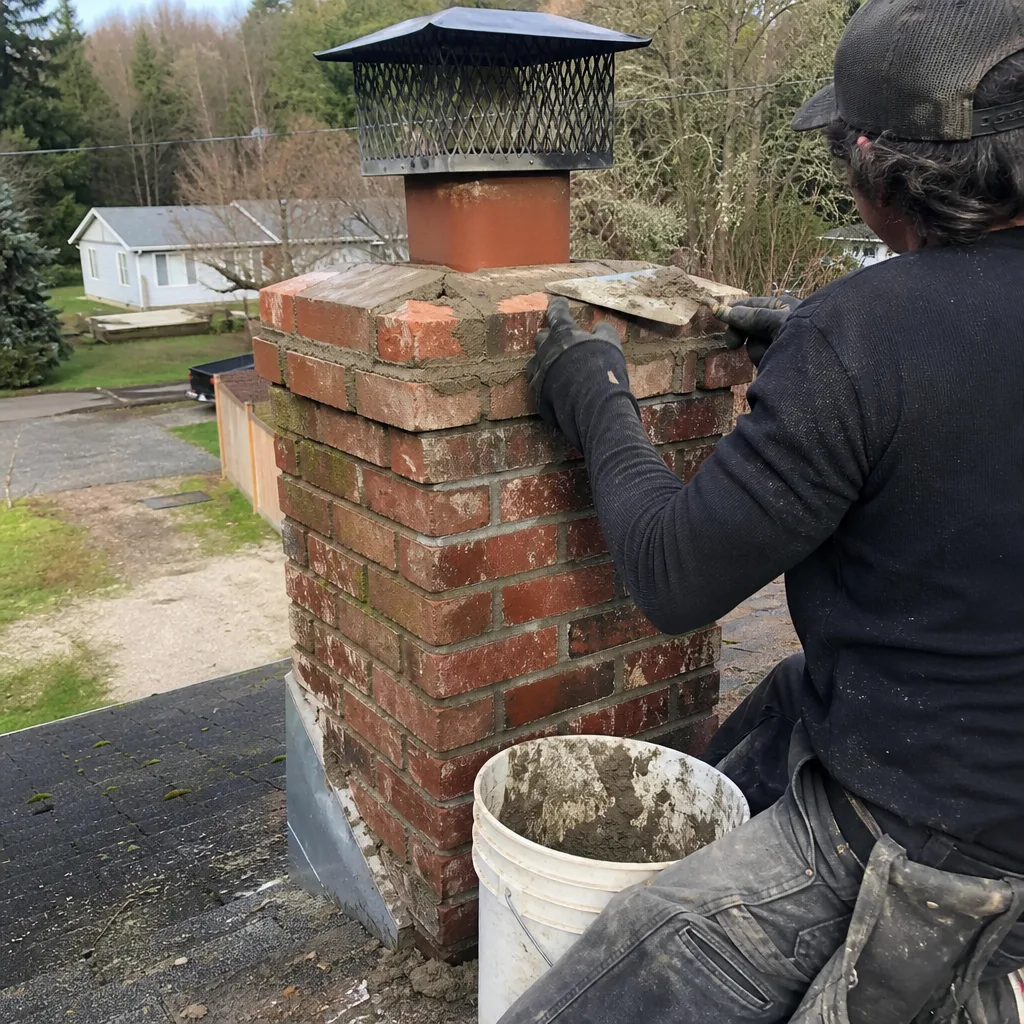
- Hiring based on lowest price without comparing scope. A $150 sweep that excludes camera inspection and smoke chamber evaluation is not comparable to a $350 service that includes both. Compare documentation deliverables, not just dollars.
- Assuming CSIA certification guarantees documentation. Certification verifies training completion. It does not verify that a contractor will put a camera down your flue, provide photos, or write a warranty. Ask specifically for these deliverables.
- Neglecting to verify insurance independently. Calling the insurance agency listed on a Certificate of Insurance takes two minutes. Skipping this step leaves you exposed if a worker is injured or your property is damaged.
- Accepting verbal quotes that change on arrival. “It’ll probably be around $200” becomes $400 with mandatory “extras.” A written price before work starts, under Haven Standard Clause 1, prevents this. We email ours; you approve before we dispatch.
- Waiting until burning season to schedule. Olympia’s best sweeps book solid by October. Scheduling in September or earlier ensures you can verify documentation standards and compare contractors without urgency pressure. It also allows time for repairs before first frost.
- Failing to request sample documentation. A legitimate contractor has previous reports they can show you. Ask to see a redacted sample. If they can’t produce one, they don’t produce them consistently.
- Ignoring neighborhood-specific risks. Homes near Budd Inlet or in low-lying areas like the Port Peninsula experience higher ambient moisture, accelerating crown and cap deterioration. A generic sweep doesn’t account for this. A local contractor documents exterior condition with this context in mind.
When to Call a Professional
Call a chimney professional immediately if you notice: smoke backing up into your living space; a strong, acrid odor from the fireplace when not in use; visible cracks in the exterior brick or mortar; white staining (efflorescence) on the chimney exterior indicating moisture intrusion; or rust on the damper or firebox. These symptoms indicate conditions that a brush-only sweep cannot address and that worsen with use.
Even without symptoms, Level Two Chimney Olympia recommends NFPA 211 Level 2 inspection and cleaning annually for wood-burning systems, and every two to three years for gas or pellet systems with normal use. In Olympia’s moisture-heavy climate, the exterior components - crown, cap, flashing - benefit from annual visual checks even when the flue itself is clean.
Level Two Chimney Olympia offers free estimates in Olympia - call (360) 464-2015. Every estimate includes discussion of your specific chimney type, fuel, and usage pattern, with a written price delivered before any commitment. Our live phone support runs 24 hours a day, 7 days a week, because chimney concerns don’t follow business hours.
Frequently Asked Questions
A professional chimney sweep in Olympia typically ranges from $200 to $400 for a complete service including NFPA 211 Level 2 camera inspection, documented photo record, and written warranty. Brush-only services without camera documentation may cost less but leave dangerous conditions undetected, particularly in older homes with original clay flue tiles. Call (360) 464-2015 for an exact quote - estimates are free.
You need a new flue liner only if inspection reveals cracks, gaps, or deterioration that compromise its ability to contain combustion gases and protect surrounding structure. A camera scan is the only method that definitively evaluates liner condition. We’ve found liners in Olympia homes that appeared sound from the firebox but showed dangerous degradation three feet up, invisible without camera documentation. Never accept a liner replacement recommendation without photo evidence you can see for yourself. Our Free Second Opinion on any written estimate lets you verify.
Wood-burning chimneys in Olympia should be swept and inspected annually due to creosote accumulation and moisture-related exterior deterioration. Gas and pellet systems typically require service every two to three years with normal use, though annual inspection is prudent in coastal moisture conditions. Homes in neighborhoods like Boston Harbor or along Eld Inlet, where salt air accelerates metal component corrosion, may benefit from more frequent exterior checks. The NFPA 211 standard provides the baseline; your specific burn habits and local climate determine whether more frequent service is warranted.
Skipped maintenance leads to creosote buildup, which ignites at approximately 451°F and can reach temperatures exceeding 2,000°F during a chimney fire, damaging liners and spreading to structural components. Moisture intrusion from deteriorated crowns or caps causes mortar joint failure, brick spalling, and eventual chimney collapse in advanced cases. Carbon monoxide, an odorless, lethal gas, can leak through cracked liners or improper venting connections. In Olympia’s wet climate, exterior deterioration accelerates significantly without annual inspection. These are not hypothetical risks - we’ve documented each in local homes. Call (360) 464-2015 for an exact quote - estimates are free.
A chimney sweep is the physical removal of soot, creosote, and debris from the flue and firebox. A chimney inspection is the systematic evaluation of the entire system - flue liner, smoke chamber, damper, firebox, exterior crown, cap, and flashing - for safety and function. NFPA 211 defines three inspection levels; Level 2, required during home sale or after chimney fire or structural change, includes camera examination of the flue interior. A legitimate service combines both: sweep to remove hazardous buildup, inspection to detect conditions requiring repair. One without the other is incomplete.
Verify their business license address through the Washington State Department of Revenue lookup - it should show a Thurston County or adjacent location, not a regional dispatch center or out-of-state headquarters. Ask which Olympia neighborhoods they serve regularly; local contractors know specific conditions like the clay soil settlement issues in Westside historic homes or the wind exposure on Cooper Point. Request their standard service area; contractors based in Tacoma or Seattle may charge travel fees or decline callback service. Level Two Chimney Olympia is independently owned and operated, with technicians assigned to Olympia-area routes who know local building stock and conditions.
The Bottom Line
Hiring a chimney cleaning contractor in Olympia comes down to documentation, not promises. Verify license and insurance through state tools. Demand a written price with warranty terms before work begins. Confirm camera inspection with photo record delivery. Evaluate whether the quoted scope matches your chimney’s actual condition and local climate risks. The cheapest sweep is rarely the least expensive choice when undetected damage or missing documentation creates costs later. A contractor who documents everything - what was found, what was done, what was warranted - gives you proof, not just assurance. That’s the standard that protects your home, your insurance coverage, and your peace of mind.
Written by Corrine Halstead, Owner at Level Two Chimney Olympia, serving Olympia since 2009.