
Last updated September 21, 2026
Level 1 sweep and inspection to the NFPA 211 annual standard - flue, crown, cap, and flashing checked and photographed
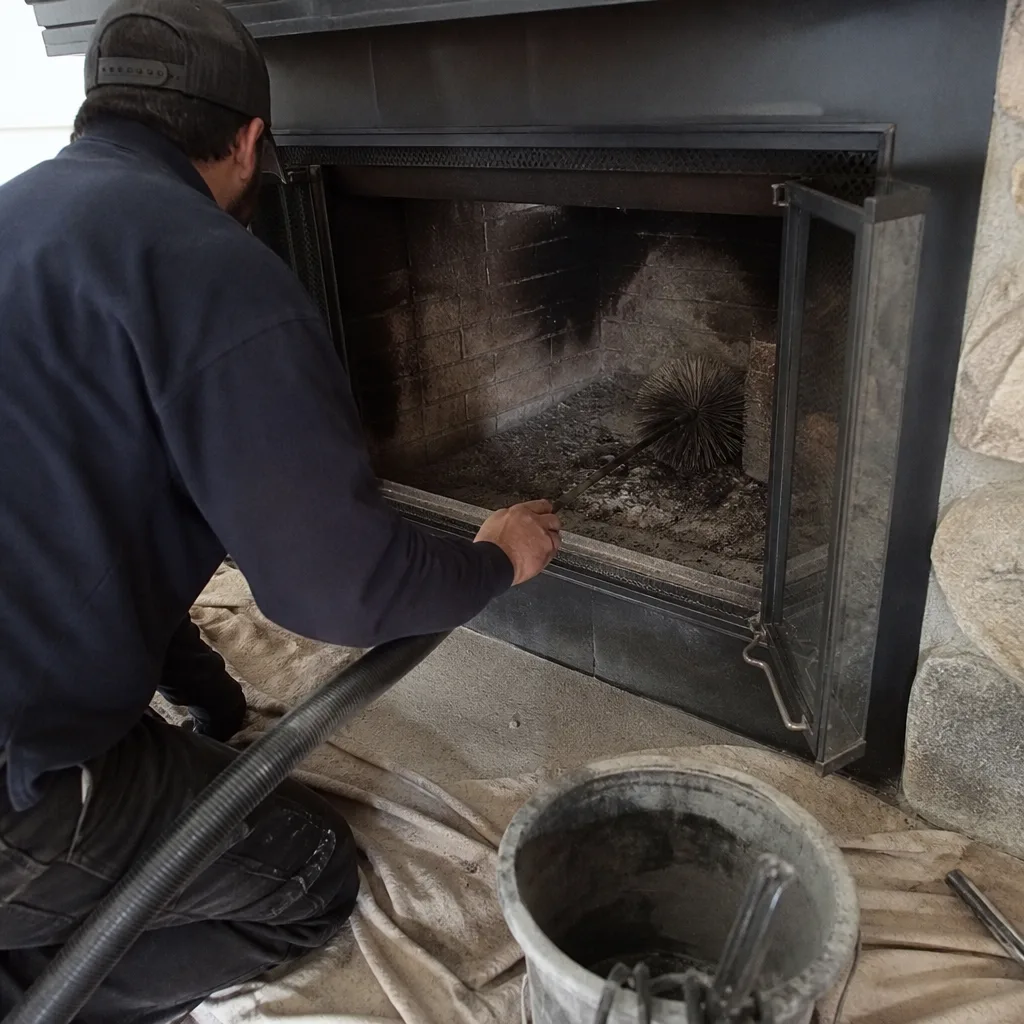
Chimney sweep logs do not sweep chimneys. They loosen some creosote - which then falls where a brush and vacuum still have to collect it.
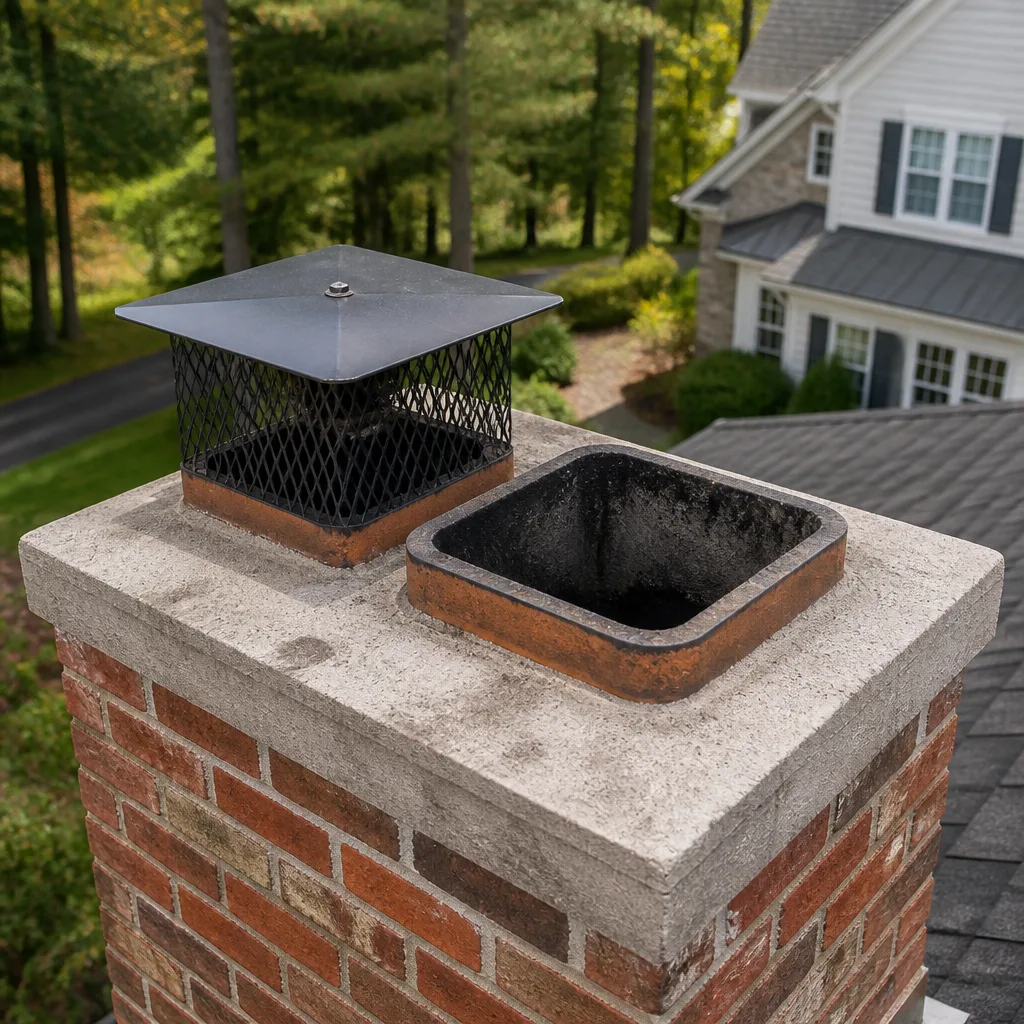
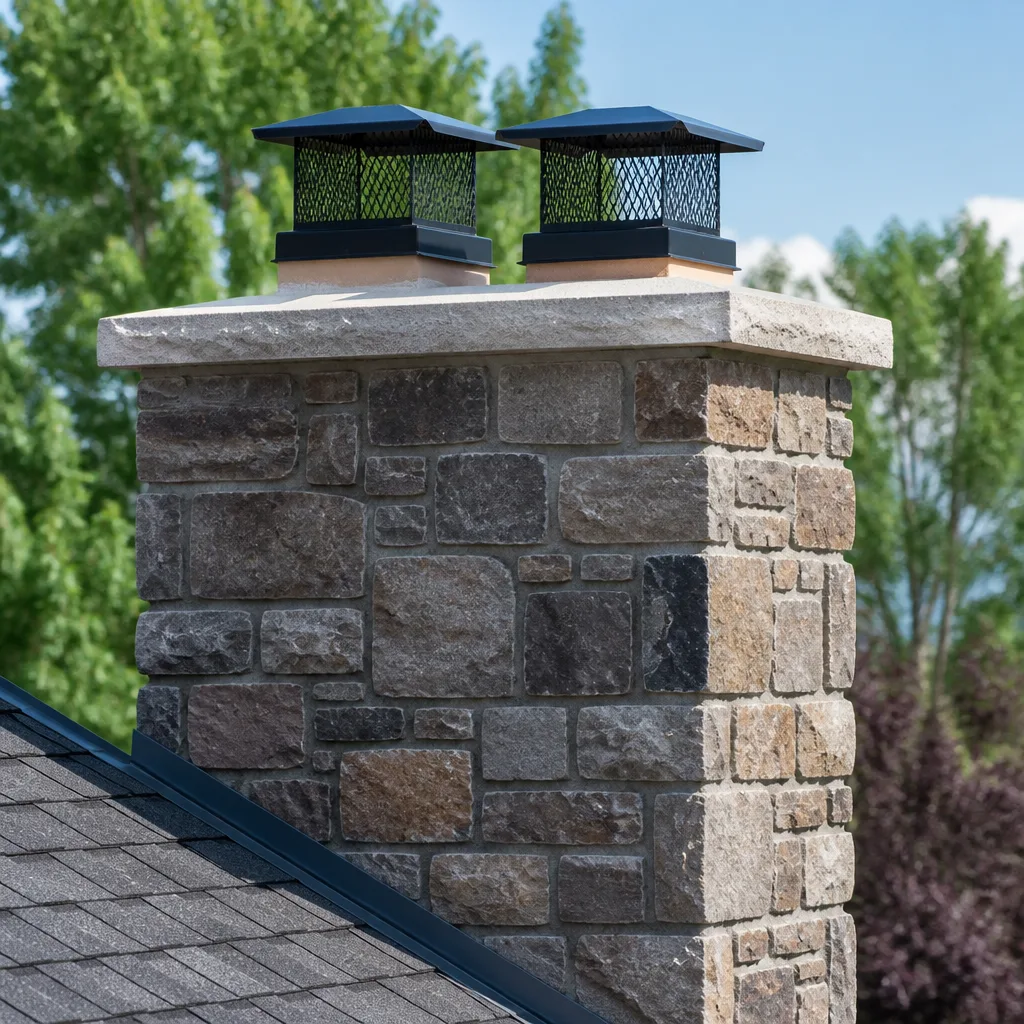
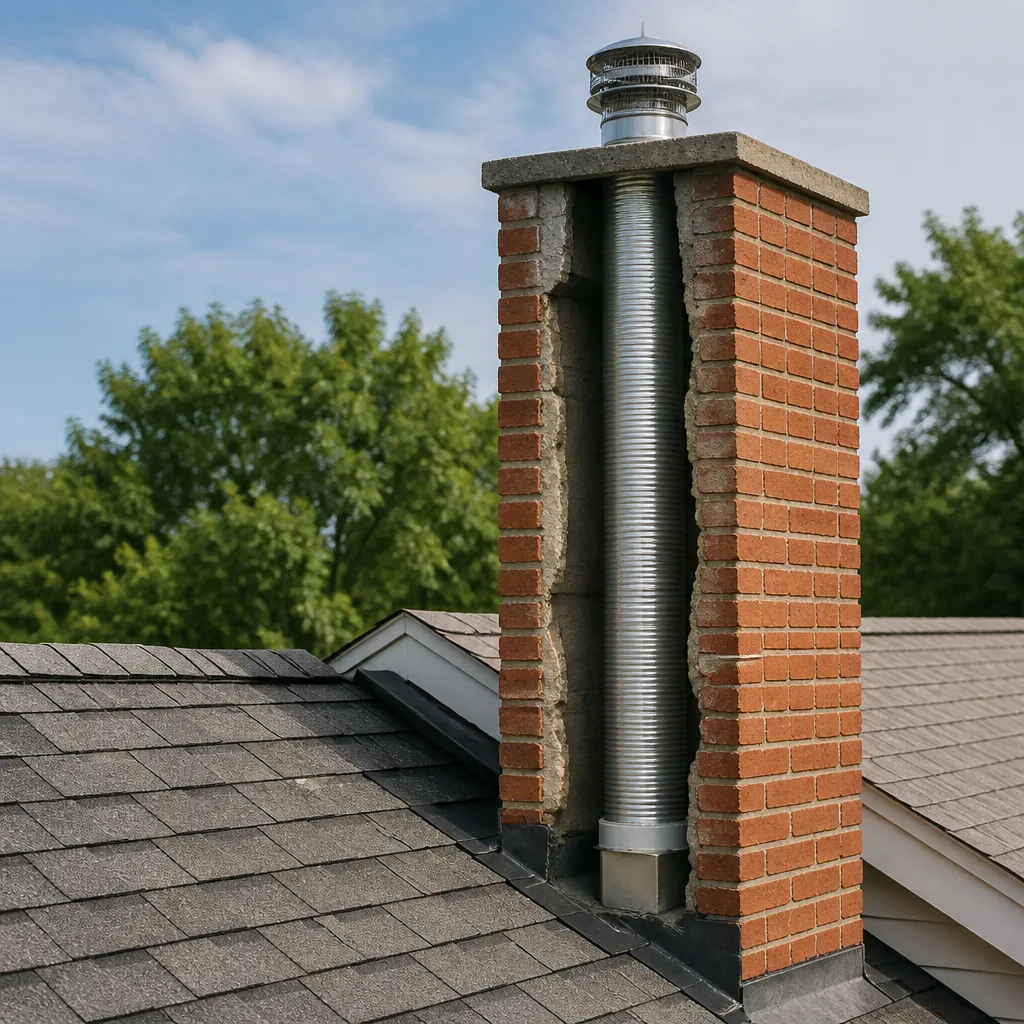
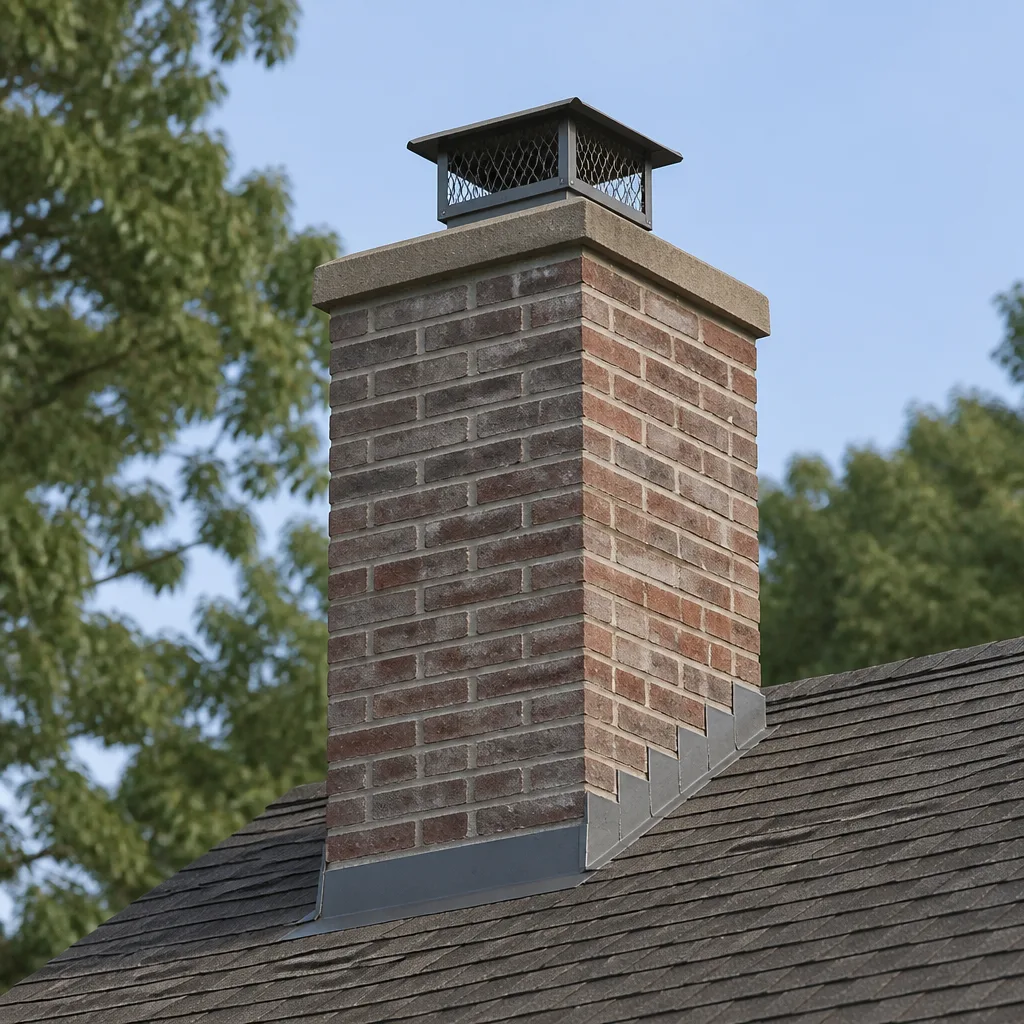
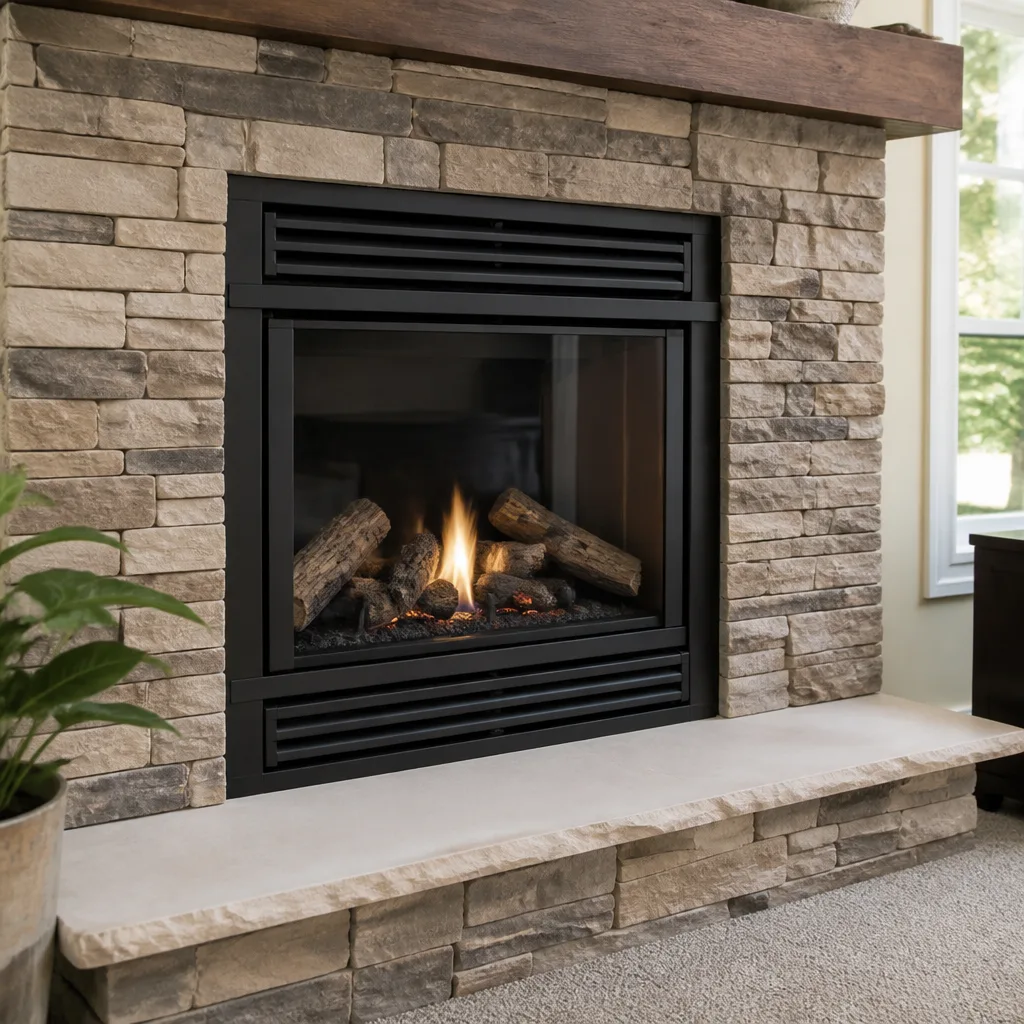
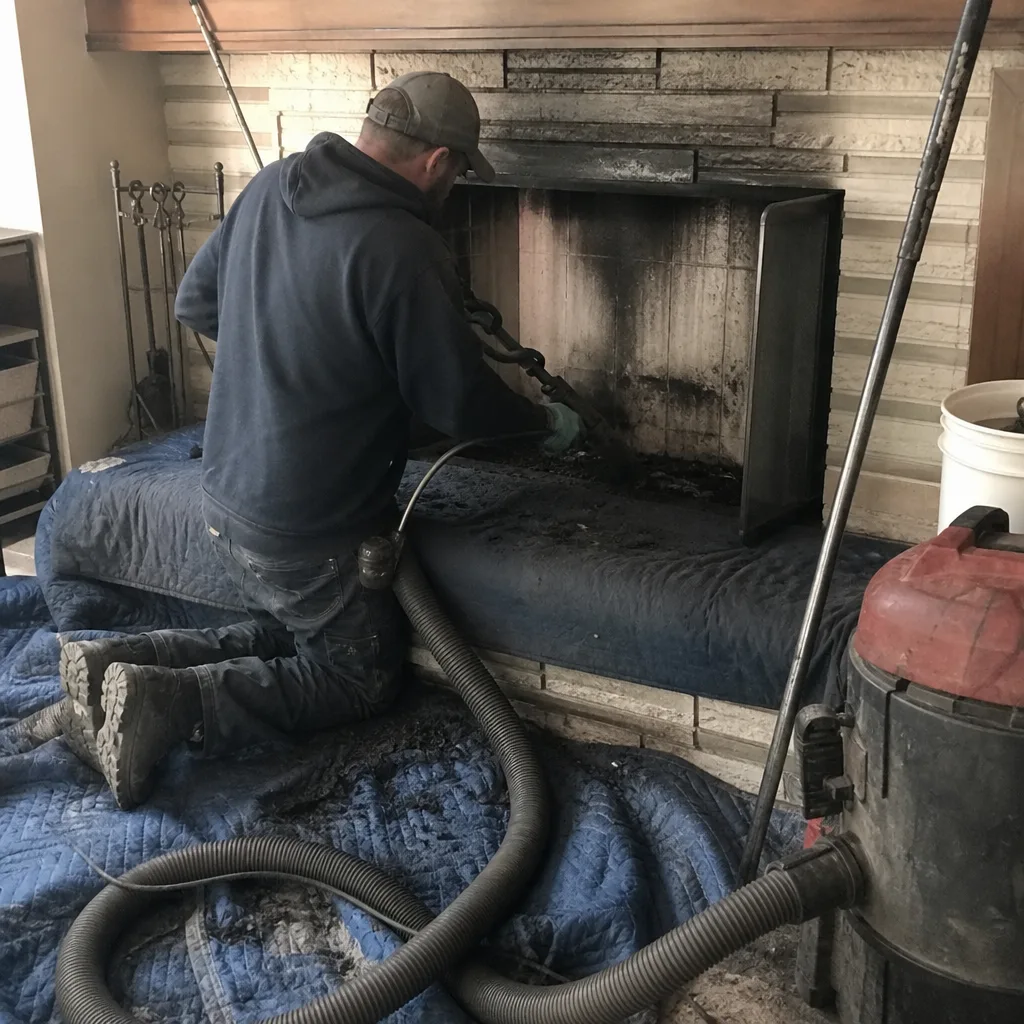 Before
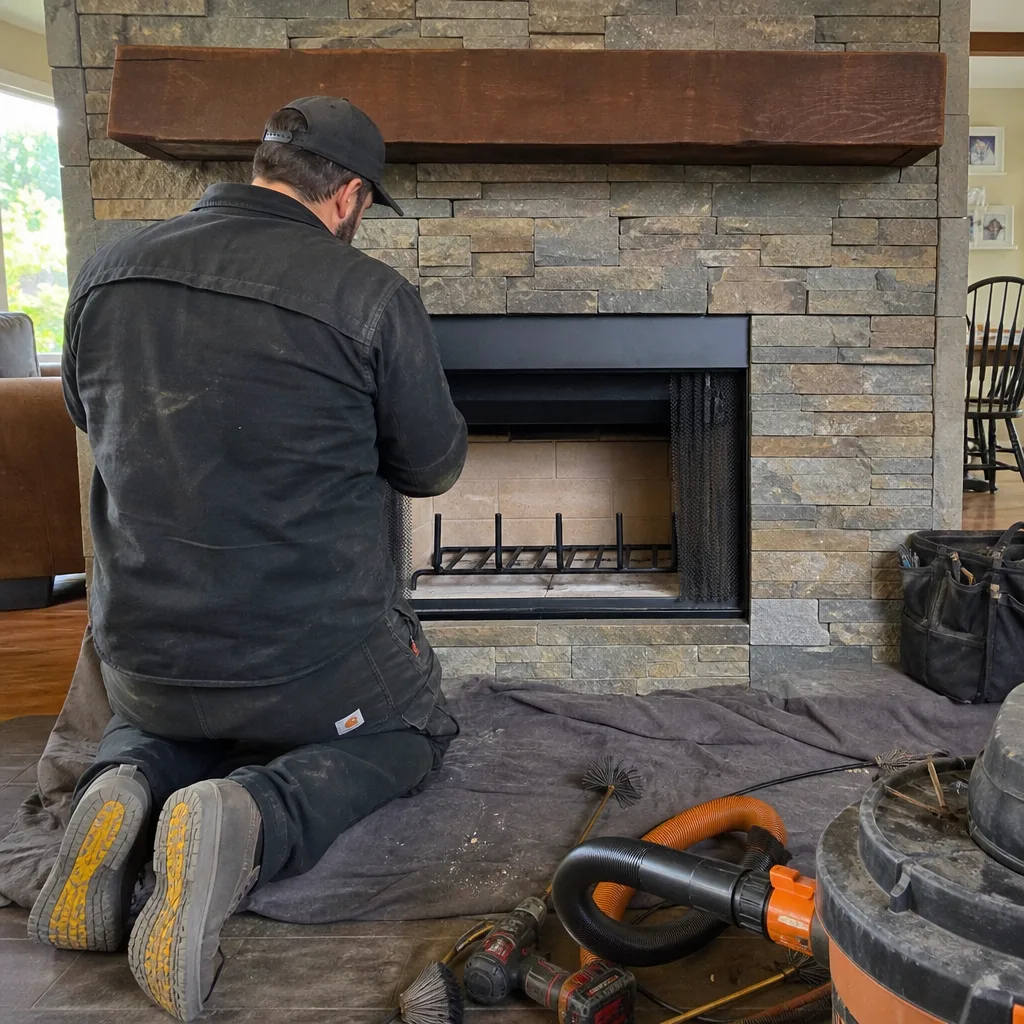 After
After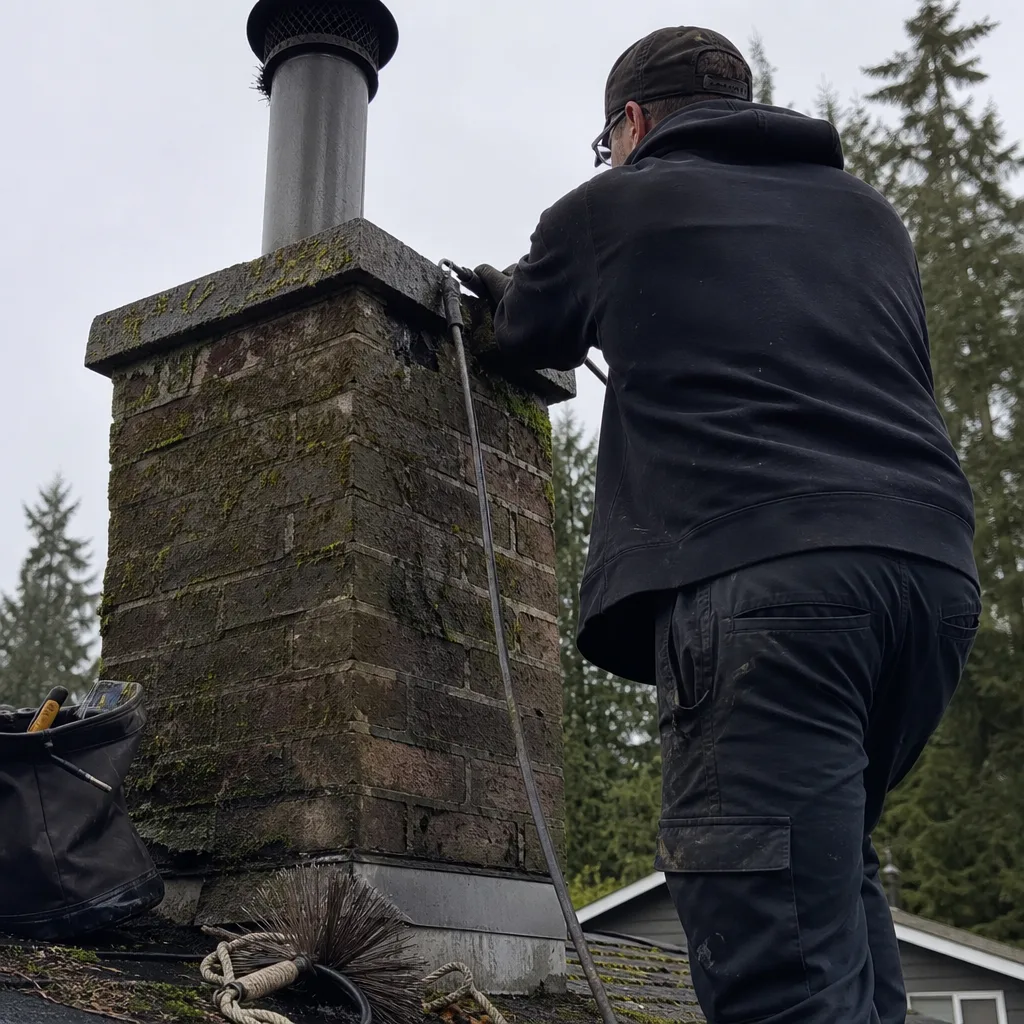 Before
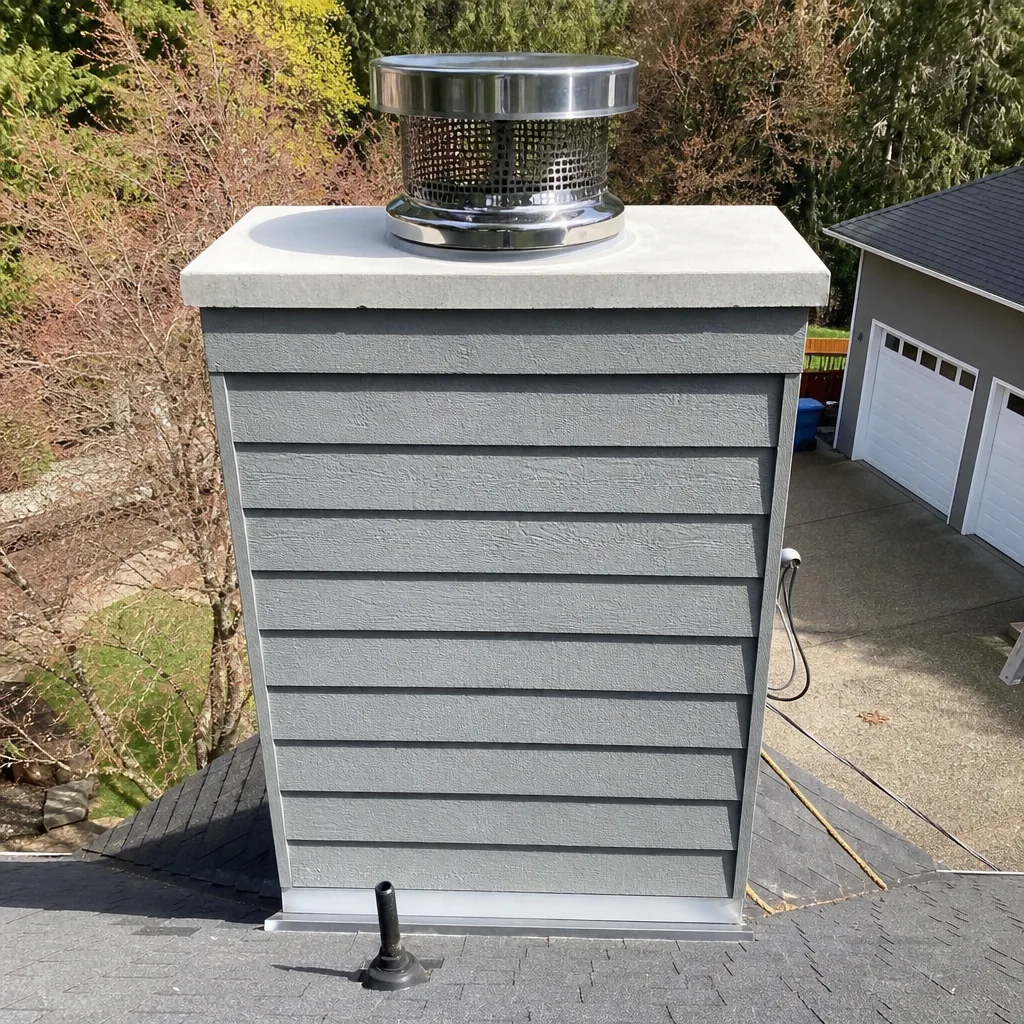 After
After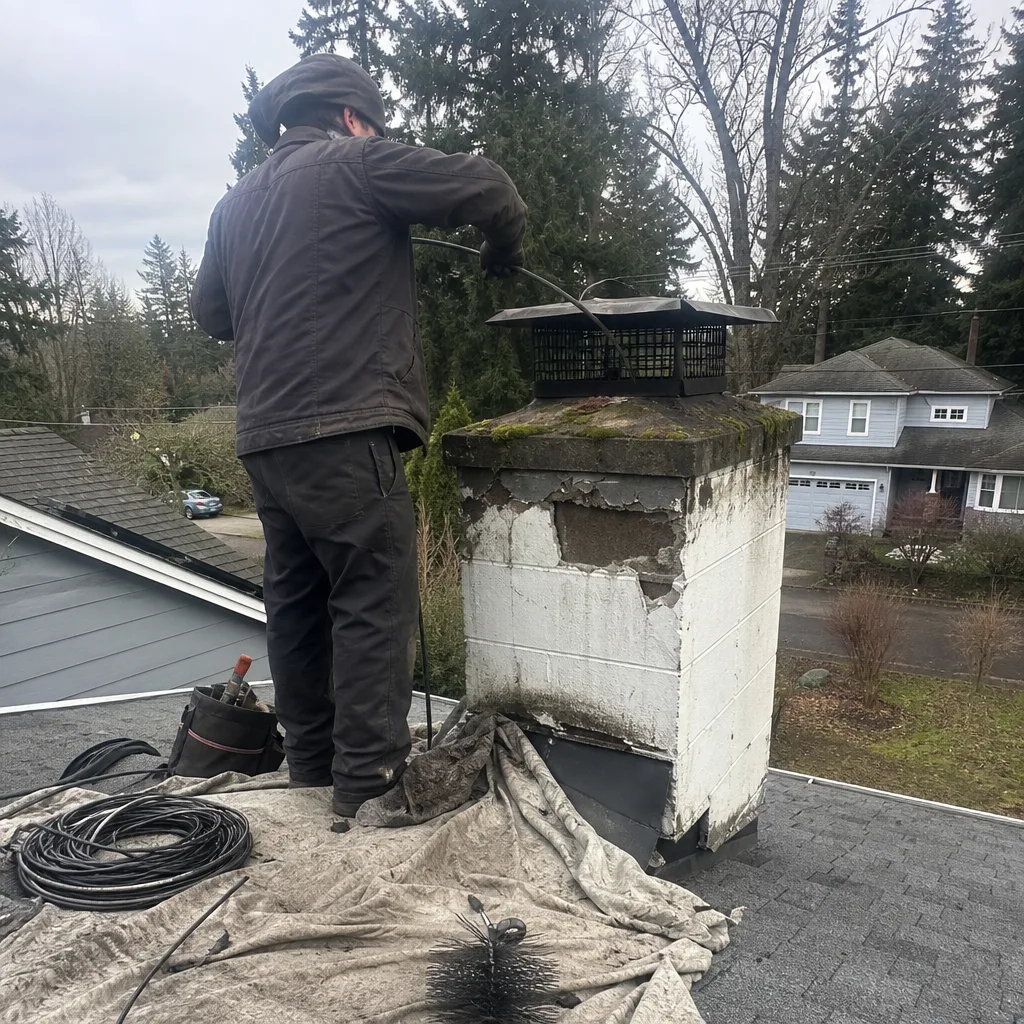 Before
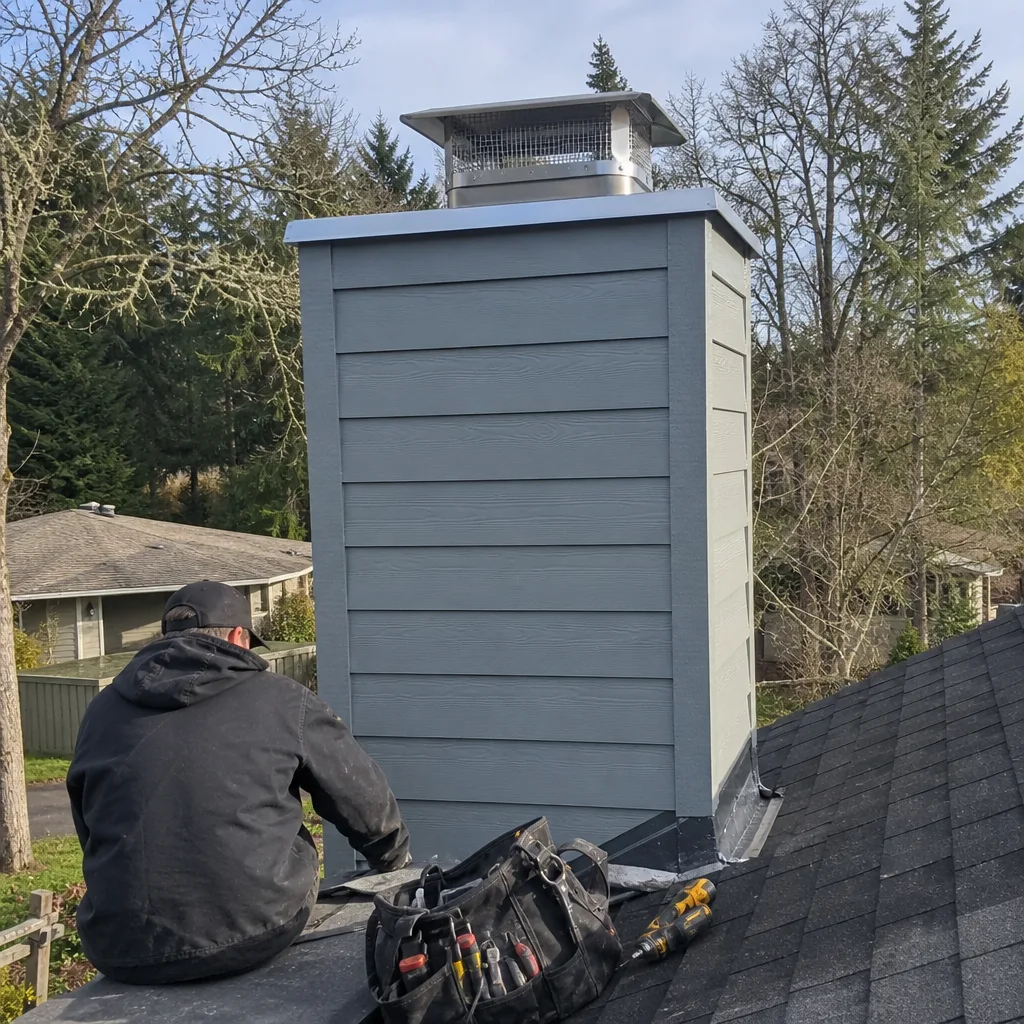 After
AfterSeasonal Chimney Cleaning Care for Olympia: Year-Round Homeowner’s Guide
Most guides tell you to clean your chimney in fall. In Olympia, that’s already too late. By October, every certified sweep in Thurston County is booked two to three weeks out, and you’re lighting fires in a flue that sat damp all summer with last winter’s creosote still inside. We’ve inspected over 38,000 chimneys since 2009, and the pattern is consistent: the homeowners who avoid emergency mid-winter calls are the ones who treat September as their diagnostic month, not their “maybe I should think about it” month. This guide maps what to do, when to do it, and what to watch for each month of the year in Olympia’s marine climate - or browse more guides & resources for year-round chimney care.
Quick Answer
Olympia homeowners should schedule a Level 2 camera inspection in September before the burning season begins, perform a mid-season check of damper function and exterior masonry in January, and book a post-season assessment in April to document flue condition before summer moisture sets in - see our Chimney Cleaning & Sweep Maintenance Checklist for Olympia Homeowners for the full seasonal breakdown. Cleaning frequency depends on use - annually for regular wood burners, every two to three years for occasional fires - but inspection should happen every year without exception in this climate.
Table of Contents
- Why Olympia’s Fire Season Follows Weather, Not the Calendar
- Month-by-Month Action Calendar for Thurston County Homeowners
- Why Summer Is the Diagnostic Window, Not a Dead Period
- The Specific Creosote Risk in October and November
- Spring Post-Season Inspection as Insurance Documentation
- Maintaining Damper Condition Through Olympia’s Wet Season
- What Chimney Services Cost in Olympia and What Affects Price
- Common Mistakes to Avoid
- When to Call a Professional
- Frequently Asked Questions
- The Bottom Line
 Before
 After
AfterWhy Olympia’s Fire Season Follows Weather, Not the Calendar
The standard advice - “sweep before the first fire” - assumes a predictable autumn cooling. In Olympia, the transition from shoulder season to burning season can happen in a single weekend in late September, or it can hold off until mid-November. We’ve seen both in the same decade. What doesn’t change is the moisture.
Olympia averages 50-plus inches of annual rainfall, concentrated October through May. Your flue liner absorbs that moisture through the masonry during the off-season. When you light the first fire in a cold, damp flue, the thermal shock hits wet terracotta or stainless steel with uneven expansion. That’s when hairline cracks from last winter propagate. It’s also when condensation on the flue walls turns fresh soot into liquid creosote - the most dangerous stage of buildup.
The Thurston County fire marshal’s data shows residential chimney fires cluster in two waves: early November, when first fires ignite accumulated creosote, and late January, when sustained cold drives heavy use in systems that haven’t been mid-season checked. Both are preventable with timing that respects Olympia’s climate, not a national calendar.
Our recommendation: anchor your maintenance to observable local conditions, not dates. When the maple leaves in Priest Point Park start turning, that’s your cue. Not because fall is romantic - because it’s your last reliable window before the rains consolidate and every sweep’s schedule fills.
Month-by-Month Action Calendar for Thurston County Homeowners
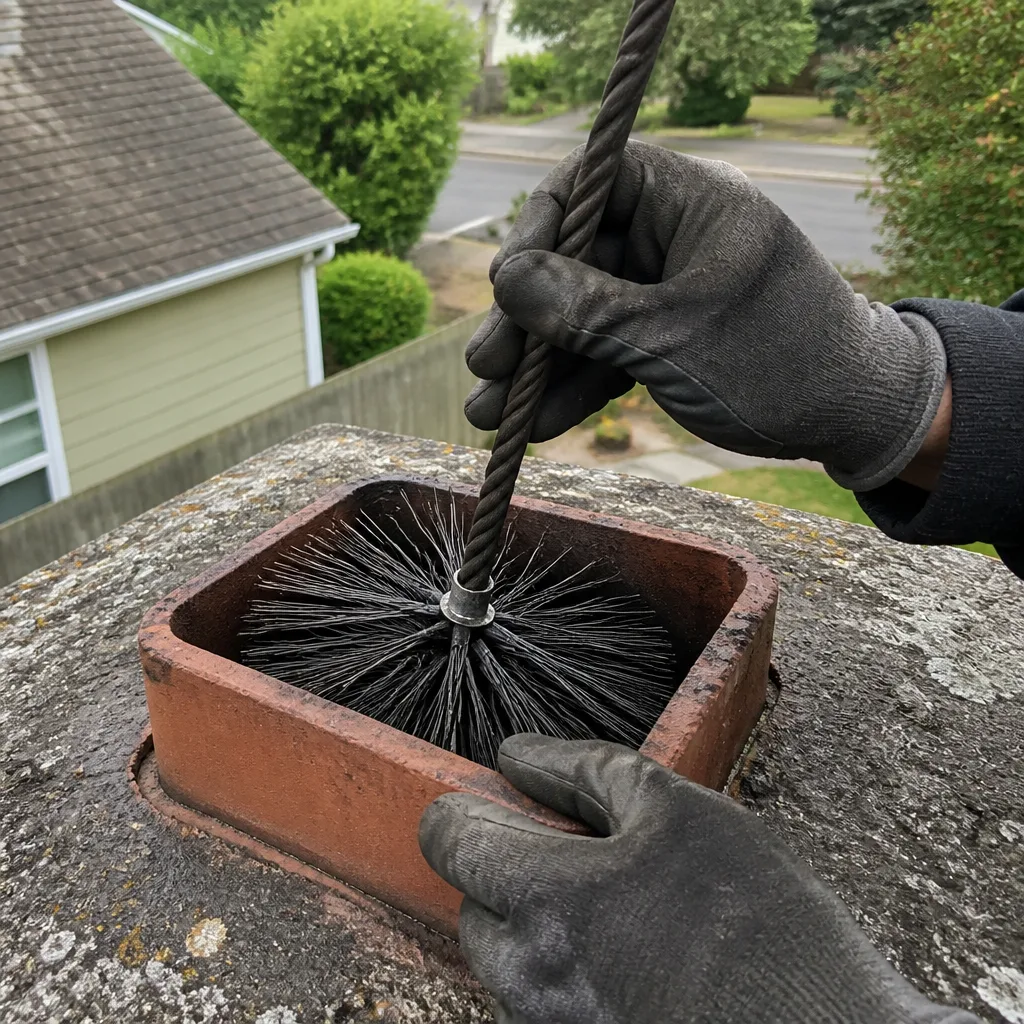
Here’s what we actually do, and what we tell homeowners in Olympia, Lacey, and Tumwater to do, based on sixteen years of watching this market’s patterns.
January: Mid-Season Function Check
You’re two months into burning. This is when throat dampers start sticking from creosote drip, and when exterior masonry shows its first stress cracks from freeze-thaw if water got in during December rains. Walk outside after a hard burn and look for:
- Spalling - flaking or popping of brick faces, especially on the south and west exposures that get the most wind-driven rain
- Efflorescence - white powder on brick or mortar, indicating water migration through the masonry
- Smoke chamber residue smell when the fire dies down, suggesting incomplete draft or partial blockage
If your damper requires more than light hand pressure to open or close, or if you feel grit in the track, that’s creosote glazing. Don’t force it. A stuck damper in January usually means Class II or III creosote has bonded the plate to the frame. We see this most in homes near Budd Inlet where the added humidity slows flue drying between fires.
February-March: Burn Smart, Document Use
Keep a simple log: dates, approximate hours, wood species. This isn’t obsessive. If you burn two to three cords of Douglas fir through the winter, you’ll need cleaning before next season. If you burned half a cord of seasoned alder on weekends, you might defer. The log also matters for insurance if you have a chimney fire - documented maintenance history supports your claim.
Watch for draft reversal on calm, warm February days. Olympia’s temperature inversions can trap exhaust in the flue when outdoor air is warmer than the chimney mass. If smoke enters the room on startup, open a window to establish pressure differential before relighting. Persistent reversal suggests a height or obstruction issue, not weather.
April: Post-Season Assessment
This is the most underutilized month in chimney maintenance. The flue is warm, expanded, and fully sooted - every condition visible at its most revealing. Schedule a Level 2 inspection now and you get:
- A documented photo record of liner condition before summer moisture begins its work (Haven Standard Clause 4 requires this record on every job)
- Time to schedule any needed repairs during the sweep’s off-peak season
- An inspection report dated April 202X that establishes baseline condition for your insurer if August storms damage the crown or flashing
We’ve had Olympia homeowners use April inspection reports to successfully dispute claims denials after wind-driven rain entered through crown cracks that formed after the documented date. Without that April baseline, you’re arguing from absence of evidence.
May-June: Exterior Masonry and Cap Review
The rains are slowing but not stopped. This is when to address crown sealing, flashing repair, and cap replacement if needed. Materials matter in this climate: we source caps and sealants through our Haven buying network from Copperfield and Gelco specifically for marine-environment durability. A galvanized cap from a hardware store will show rust at the seams by year three in Olympia. Stainless or copper from a chimney-specific supplier won’t.
Check for vegetation. The blackberries that colonize every untended corner of Thurston County will root in mortar joints with surprising speed. Remove them before root expansion cracks the brick.
July-August: The True Diagnostic Window
Detailed in the next section. Book your major repair work now if April revealed needs.
September: The Critical Inspection
Two to three weeks before you intend to burn. Not October. September. Here’s why the timing matters:
- Contractor availability: most Olympia-area sweeps can book within a week in September, two to three weeks in October, and into November for emergencies
- Flue condition: the liner has been drying all summer, so cracks are visible without thermal expansion masking them
- Creosote state: last winter’s buildup is dry and brittle, easier to remove completely
- Repair runway: if you need liner work, crown repair, or damper replacement, there’s time to complete it before first frost
We start September with a full schedule and end it with a waitlist. The homeowners who call September 1st get their choice of appointment times. The ones who wait until the first cold morning in October are competing with everyone else who just smelled their neighbor’s fire.
October-November: First Fires and Immediate Observation
Light your first fire small and short. Watch for:
- Smoke spillage at startup - indicates blocked flue or cold plug
- Unusual odors - wet creosote smells sharp and acrid, not like normal wood smoke
- Water dripping or hissing - summer moisture still evacuating through the liner
- Slow draft establishment - more than five minutes to clear smoke from firebox
Any of these: stop burning and call for inspection. We’ve pulled bird nests, partial chimney swift colonies, and once a complete raccoon latrine from flues that were clear in April. Wildlife doesn’t consult your maintenance calendar.
Why Summer Is the Diagnostic Window, Not a Dead Period
The industry treats summer as the slow season. For diagnostic quality, it’s the best season. Here’s what we can see in July and August that disappears by October:
Liner cracks without thermal stress. When the flue is at ambient temperature, cracks in terracotta or stainless steel show at their true width. After the first fire of fall, thermal expansion can close hairline fractures enough to escape visual detection. We photograph every flue in summer inspections at multiple focal depths because the crack you can’t see in October is the one that admits carbon monoxide at peak draft in January.
Efflorescence mapping. White salt deposits on exterior brick indicate water migration paths through the masonry. In summer, with no evaporation from recent rain, the pattern is stable and photographable. By October, new moisture has altered or masked it. We use summer efflorescence photos to trace leak sources that would otherwise require destructive investigation.
Wildlife intrusion before nesting completion. Chimney swifts arrive in Thurston County in late April and nest through July. By August, fledglings have left but nest material remains. Raccoons den in uncapped flues May through July. A July inspection finds active occupation before the animal has established a territory and become aggressive about defending it. We can remove and exclude humanely. Wait until September, and you’re often dealing with a maternal raccoon who will tear replacement caps off rather than relocate kits.
Crown integrity without water loading. The concrete crown at your chimney top is designed to shed water. In summer, it’s at its driest and most shrunken - cracks show at maximum width. After October rains, water absorption swells the concrete and temporarily seals hairlines. The crack that looks manageable in wet October may be a quarter-inch gap in August. We measure and photograph with a ruled scale; Haven Standard Clause 4 documentation includes these measurements for year-over-year comparison.
Summer is also when we schedule liner installations and rebuilds that would interrupt heating season. A full liner replacement with DuraFlex stainless or HeatShield cerfractory foam takes one to two days. In July, that’s an inconvenience. In December, it’s an emergency with hotel costs.
The Specific Creosote Risk in October and November
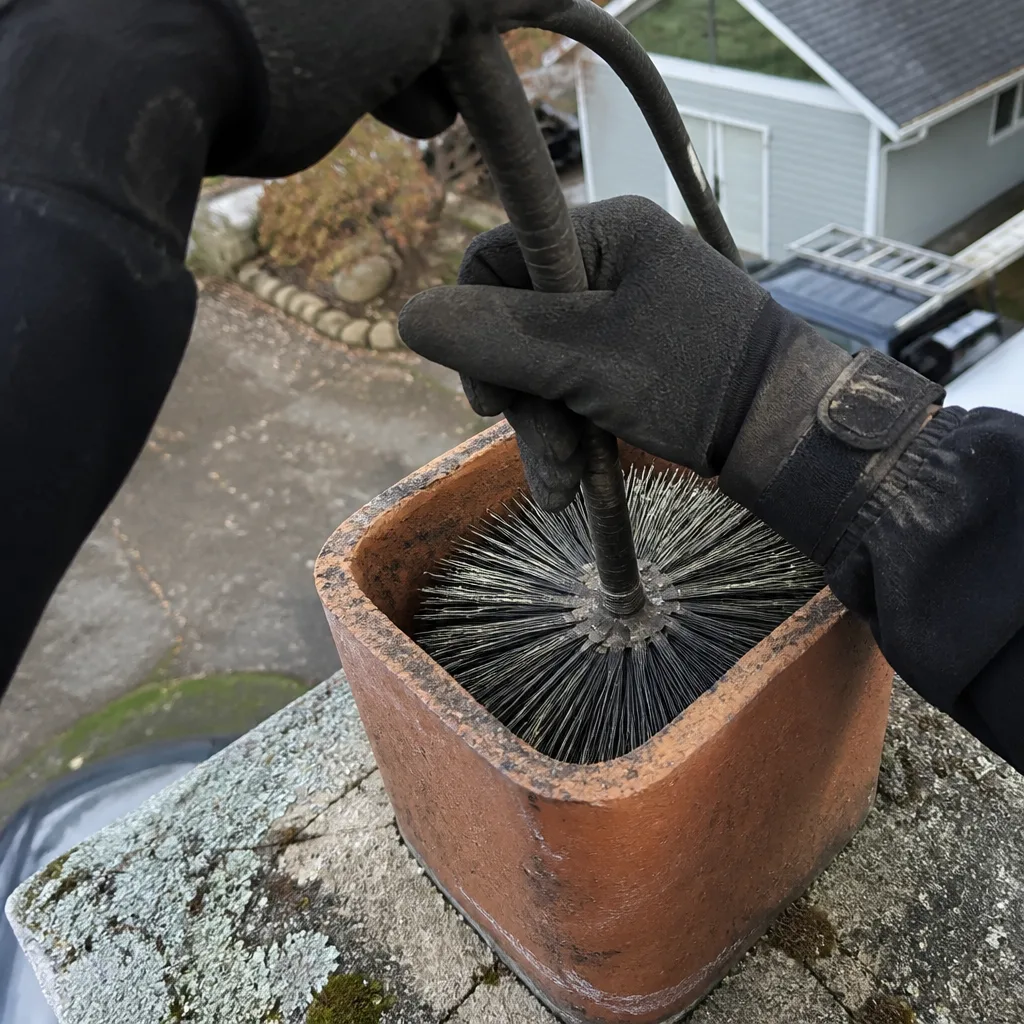
This is the information competitors consistently miss, and it’s the most dangerous gap in homeowner knowledge.
When you light the first fire of the season in a cold flue, the combustion gases hit liner walls that may be 40°F or below on an Olympia October morning. The water vapor in exhaust condenses on those cold surfaces. So do the tar aerosols. The result isn’t dry soot - it’s liquid creosote, Stage 1 in its most concentrated form, running down the flue walls and pooling in smoke chamber corners.
We’ve removed cups of liquid creosote from flues in November that had “been swept last year.” The sweep was fine. The problem was first-fire condensation in a flue that hadn’t been pre-warmed or inspected for summer moisture loading.
The risk compounds with wood choice. Olympia’s urban woodlots produce abundant soft maple and cottonwood, high-moisture species that burn cool and wet even when seasoned. Combine cool-burning wood with a cold flue, and you produce Stage 2 glazed creosote within the first two weeks of use. Stage 3, the hardened, fuel-dense form that drives chimney fires, follows by January if not addressed.
Prevention is specific:
- Pre-warm the flue before full fires in October: a rolled newspaper torch held at the damper for 60 seconds establishes draft and raises liner temperature
- Start with small, hot fires using dry kindling, not a full load of marginal wood
- Inspect the first week of November for creosote drip on the damper or firebox walls - liquid accumulation shows as black, shiny streaks
- Schedule mid-season cleaning if you burn more than one cord before January, regardless of annual schedule
The cost of missing this: a chimney fire in November or December runs $2,800-$6,400 in Olympia for suppression damage, liner replacement, and adjacent structure repair. A September inspection and preventive sweep runs a fraction of that - see our Chimney Cleaning Cost Breakdown: The Olympia Homeowner’s Reference for 2026 for detailed pricing - with a written price before work starts under Haven Standard Clause 1.
Spring Post-Season Inspection as Insurance Documentation
Insurance companies deny chimney-related claims on two grounds: lack of maintenance documentation, and pre-existing condition. An April inspection report with dated photographs addresses both.
Here’s how it works in practice. We complete your post-season inspection on April 15. The report shows: flue liner intact, no spalling, crown with hairline crack at northwest corner noted for monitoring, flashing secure. Photographs with date stamps are archived under Haven Standard Clause 4. On August 20, a windstorm drives rain into that crown crack, which has propagated to a structural split. Water enters the chase, damages ceiling drywall.
Your insurer inspects and notes crown damage. You provide the April report showing the crack was hairline and non-structural, with no water intrusion path. The August storm is the proximate cause. Claim proceeds.
Without that April baseline, the insurer’s adjuster argues the crack existed in neglect, water intrusion was gradual, and your failure to maintain the crown voids coverage. We’ve seen this exact scenario in the Eastside and South Capitol neighborhoods, where older homes with unlined brick chimneys are particularly vulnerable to moisture claims.
The inspection itself takes 45-60 minutes for a Level 2 camera scan. The documentation you receive: written condition report, photo record of flue interior, exterior masonry, crown, cap, and flashing, and a written scope with price for any recommended work. Nothing is recommended without camera evidence you can see yourself. If work can safely wait, we say so plainly and schedule follow-up.
Maintaining Damper Condition Through Olympia’s Wet Season
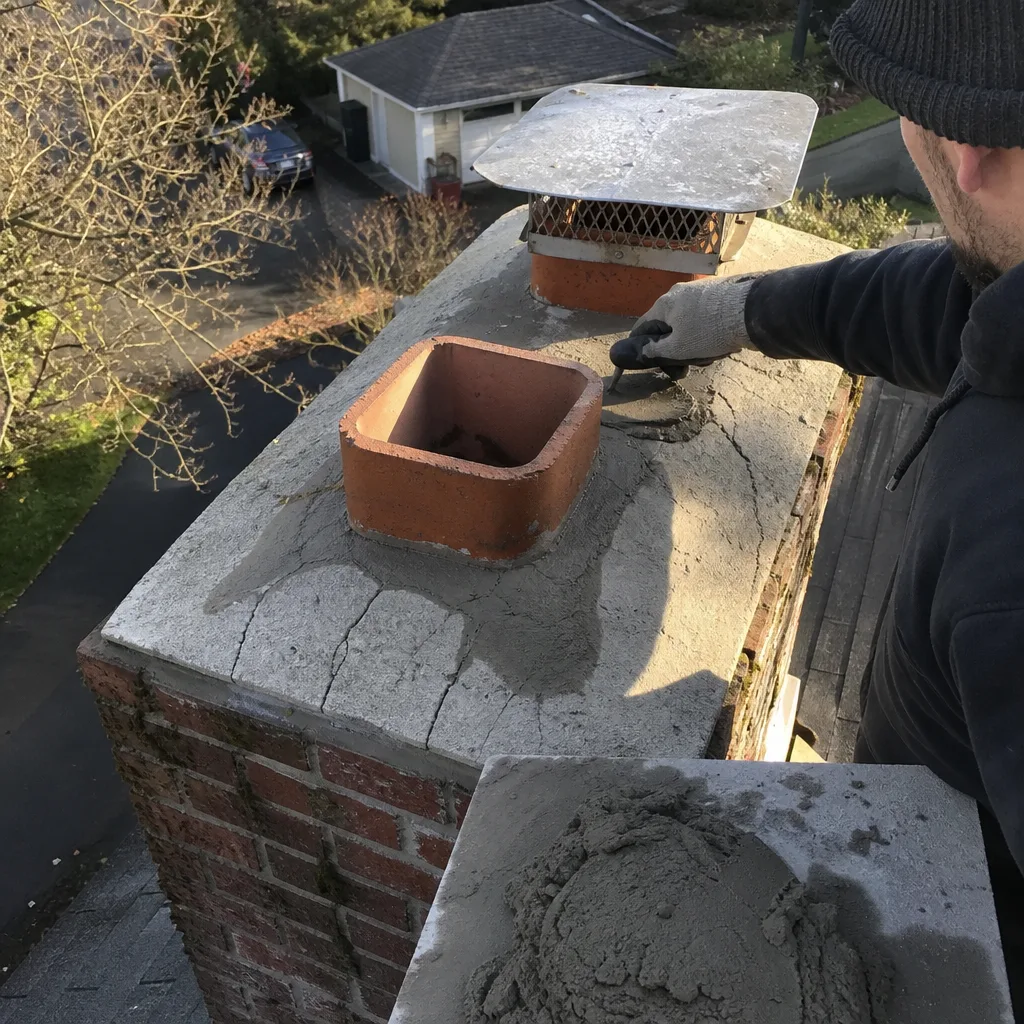
Every seasonal guide mentions the damper. Almost none address the specific failure mode we see in marine climates: corrosion bonding, not just soot accumulation.
Throat dampers in Olympia homes show a distinctive pattern. The cast iron or steel plate sits in a cast iron frame, with a pivot rod and handle assembly. Moisture enters from two directions: downward from rain penetration at the cap, and upward from house humidity condensing on the cold metal during non-burning months. The result is rust at the pivot points and along the plate edges where it contacts the frame.
By year three or four in this climate, a damper that opens and closes smoothly in September may be frozen shut by January. The homeowner forces it, the pivot rod shears, and now you’re heating a house with an open flue - or unable to open it for a fire without emergency service.
What to check, and when:
- September: Open and close the damper fully ten times. It should move freely with one finger on the handle. Any grittiness or catch points indicate early corrosion. Lubricate with graphite powder, never oil - oil attracts soot and gums in cold temperatures
- January: Check again after two months of use. Creosote drip often accumulates at the forward edge of the plate. If the damper won’t seat fully closed, you’re losing heated air up the flue 24 hours a day
- April: Final function check before the long off-season. If corrosion is advancing, schedule replacement before fall - top-sealing dampers from Gelco or lock-top models from our Haven supplier network eliminate the throat damper entirely and seal at the flue top where moisture can’t reach
Top-sealing dampers are particularly suited to Olympia’s climate. By sealing at the flue top with a silicone gasket, they prevent both rain entry and the humidity convection that corrodes throat assemblies. Installation requires a Level 2 inspection to confirm flue diameter and condition, but the elimination of throat damper maintenance is significant for homes where the chimney sees heavy use.
What Chimney Services Cost in Olympia and What Affects Price
We put prices on the page because “call for a quote” wastes your time and ours. These are the ranges we see in the Olympia market for work performed to NFPA 211 standards with documented photo records. Your specific price is written before any work starts - Haven Standard Clause 1, no exceptions.
| Service | Typical Range in Olympia | What Affects Price |
|---|---|---|
| Level 2 chimney inspection with camera scan | $189-$289 | Number of flues, roof accessibility, need for ladder work versus interior access |
| Chimney sweep and cleaning (single flue) | $159-$239 | Creosote class (I, II, or III), flue length, presence of obstructions |
| Inspection + sweep combined | $289-$389 | Combined service discount versus separate bookings |
| Stainless steel liner installation (DuraFlex) | $1,800-$3,400 | Flue length, diameter, number of bends, connection type |
| Crown repair or rebuild | $450-$1,200 | Extent of cracking, need for formwork, accessibility |
| Chimney cap replacement | $180-$450 | Material (galvanized, stainless, copper), size, screening type |
| Damper repair or replacement | $220-$680 | Throat damper service versus top-sealing conversion |
| Smoke chamber parging (HeatShield) | $1,200-$2,400 | Chamber size, condition, access |
Factors that increase cost in Olympia specifically:
- Steep roof pitches common in hillside neighborhoods like Governor Stevens and Bigelow Highlands - ladder work takes longer and requires additional safety setup
- Historic homes in South Capitol and Downtown with unlined brick flues that require careful camera navigation
- Tall chimneys on two-story homes built before 1980, common in the Eastside, where 30-plus foot flue runs require additional equipment
We don’t charge extra for photo documentation - it’s included on every job under Haven Standard Clause 4. We don’t charge for written estimates - they’re free, and we offer a free second opinion on any competitor’s written quote if you want comparison.
Common Mistakes to Avoid
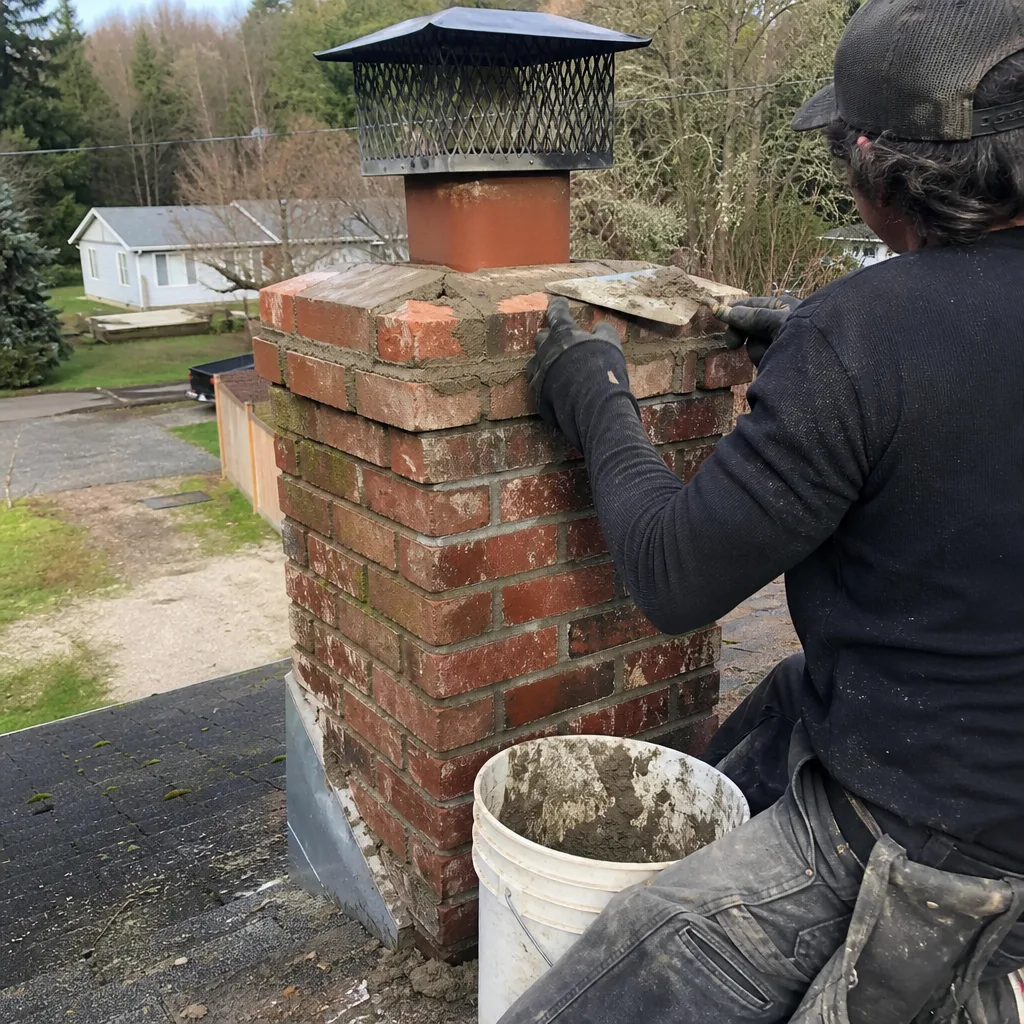
- Waiting for “fall” to schedule. In Olympia, fall is a backlog. By the time you feel cold enough to think about your chimney, every qualified sweep is booked. September is your month.
- Assuming “no smell, no problem.” Carbon monoxide and draft failure don’t announce themselves with odor. The absence of smell means nothing about flue safety.
- Using the chimney as a vent for the furnace without inspection. Many older Olympia homes have shared flues or adjacent flues for fireplace and furnace. The furnace venting can mask fireplace draft problems or deposit sulfur compounds that accelerate liner corrosion.
- Installing a hardware-store cap and calling it done. The galvanized caps sold at big-box retailers rust through in three years in this climate. We replace dozens annually. A stainless cap from a chimney supplier costs more upfront, lasts the life of the flue.
- Burning unseasoned wood from the backyard. Soft maple and alder cut last spring and burned this fall produces twice the creosote of properly seasoned hardwood. If you can’t split it and stack it for 12 months minimum, buy kiln-dried or verified seasoned cordwood.
- Ignoring the smoke chamber. The area above the damper and below the flue liner is where most chimney fires start. It’s invisible without a camera, and it’s where creosote accumulates thickest in systems with poor draft. A Level 2 inspection is the only way to see it.
- Skipping the April inspection because “we just had it done in fall.” Fall inspection establishes pre-season condition. April inspection documents post-season wear and summer baseline. They’re different inspections with different purposes. Both matter for maintenance history and insurance.
When to Call a Professional
Call for immediate inspection if you observe smoke spillage into the room at any point during operation, a loud cracking or popping sound from the flue during a fire, visible flames or glowing material at the chimney top, or water dripping into the firebox during rain. These are not maintenance-deferrable conditions.
Schedule non-urgent but prompt inspection if your damper sticks or won’t fully close, you notice new exterior masonry cracks or spalling, your fire establishes draft more slowly than last season, or you’ve changed your burning pattern significantly (new wood stove installation, converted to insert, etc.).
Level Two Chimney Olympia offers free estimates in Olympia - call (360) 464-2015. Every estimate includes a written scope, written price, and written warranty before any work begins. Live phone support runs 24 hours a day, 7 days a week. If you have a competitor’s written quote and want a second opinion, bring it - we review them at no charge.
Frequently Asked Questions
A professional chimney sweep for a single flue in Olympia typically costs $159-$239, depending on creosote class and flue accessibility. A Level 2 inspection with camera scan runs $189-$289, and combining both services usually falls in the $289-$389 range. Call (360) 464-2015 for an exact quote - estimates are free and include a written price before any work starts.
Annual sweeping is recommended for regular wood burners who use their fireplace or stove as a primary or significant secondary heat source. Occasional users - fewer than 20 fires per season - can extend to every two to three years, but annual inspection should still happen every year without exception in this wet climate. Moisture intrusion and wildlife occupation don’t care how often you burn.
You need a new liner when inspection reveals cracks, gaps, or deterioration that compromise containment of combustion gases. We don’t recommend liner replacement without camera evidence you can see yourself - Haven Standard Clause 4 requires the photo record precisely so you can evaluate the finding independently. If the liner is sound but shows surface spalling or joint gaps that can be addressed with HeatShield cerfractory foam, we’ll say so and price that option. If work can safely wait, we say that plainly too.
Skipped maintenance leads to three predictable outcomes: creosote accumulation to Class II or III, which ignites at 451°F and can reach 2,000°F in a chimney fire; liner deterioration that admits carbon monoxide into living spaces; and moisture intrusion that destroys masonry from inside, leading to rebuild costs far exceeding preventive maintenance. In Olympia’s marine climate, moisture damage accelerates significantly - we’ve seen uncapped flues require full rebuilds within five years of neglected maintenance.
We don’t recommend DIY chimney cleaning for most homeowners. The work requires roof access, proper brush sizing for your flue diameter, and - critically - camera inspection to verify the cleaning was complete and the liner is intact. Without camera verification, you’re guessing about the condition of a system that vents lethal gases through your home. For the cost difference between professional service and equipment rental, the risk-reward doesn’t favor DIY. If you’re determined to try, at minimum schedule a professional inspection afterward to confirm your work.
A Level 1 inspection is a visual examination of readily accessible portions of the chimney exterior and interior, performed without special tools. A Level 2 inspection includes everything in Level 1 plus camera scan of the flue interior, inspection of attics, crawl spaces, and basements where the chimney passes, and assessment of clearances to combustibles. In Olympia, where moisture damage and liner deterioration are common, Level 2 is the appropriate standard for real estate transactions, post-storm assessment, and annual maintenance of actively used systems. Level Two Chimney Olympia performs NFPA 211 Level 2 as our default - we don’t offer flashlight-only inspections.
September offers three advantages: contractor availability before the seasonal rush, flue liners at their driest and most revealing for crack detection, and runway for any needed repairs before first frost. By mid-October, Thurston County sweeps are typically booked two to three weeks out, and you’re competing with homeowners who just had their first cold morning. The September slot you skip is the October emergency you regret.
The Bottom Line
Olympia’s chimney maintenance calendar runs on moisture and temperature, not months on a wall. September inspection prevents October emergencies. Summer reveals what fall conceals. April documentation protects August claims. And the damper you ignore in May is the damper that fails closed in January, forcing an open-flue heating bill or an emergency service call.
We’ve completed more than 38,000 inspections and cleanings since 2009, every one with a written price before work started and a documented photo record when done. The Haven Standard isn’t a marketing phrase - it’s the inspection protocol we built our practice on, Clause by Clause, starting with written pricing and ending with the 365-Day Done Right Promise.
If you’re reading this in September, call this week. If you’re reading in another month, the calendar above tells you exactly what to do next. Either way, the next step is the same: (360) 464-2015 for a free estimate with written scope, written price, and written warranty before anyone starts.
Written by Corrine Halstead, Owner at Level Two Chimney Olympia, serving Olympia since 2009.