
Last updated September 21, 2026
Level 1 sweep and inspection to the NFPA 211 annual standard - flue, crown, cap, and flashing checked and photographed
Chimney sweep logs do not sweep chimneys. They loosen some creosote - which then falls where a brush and vacuum still have to collect it.
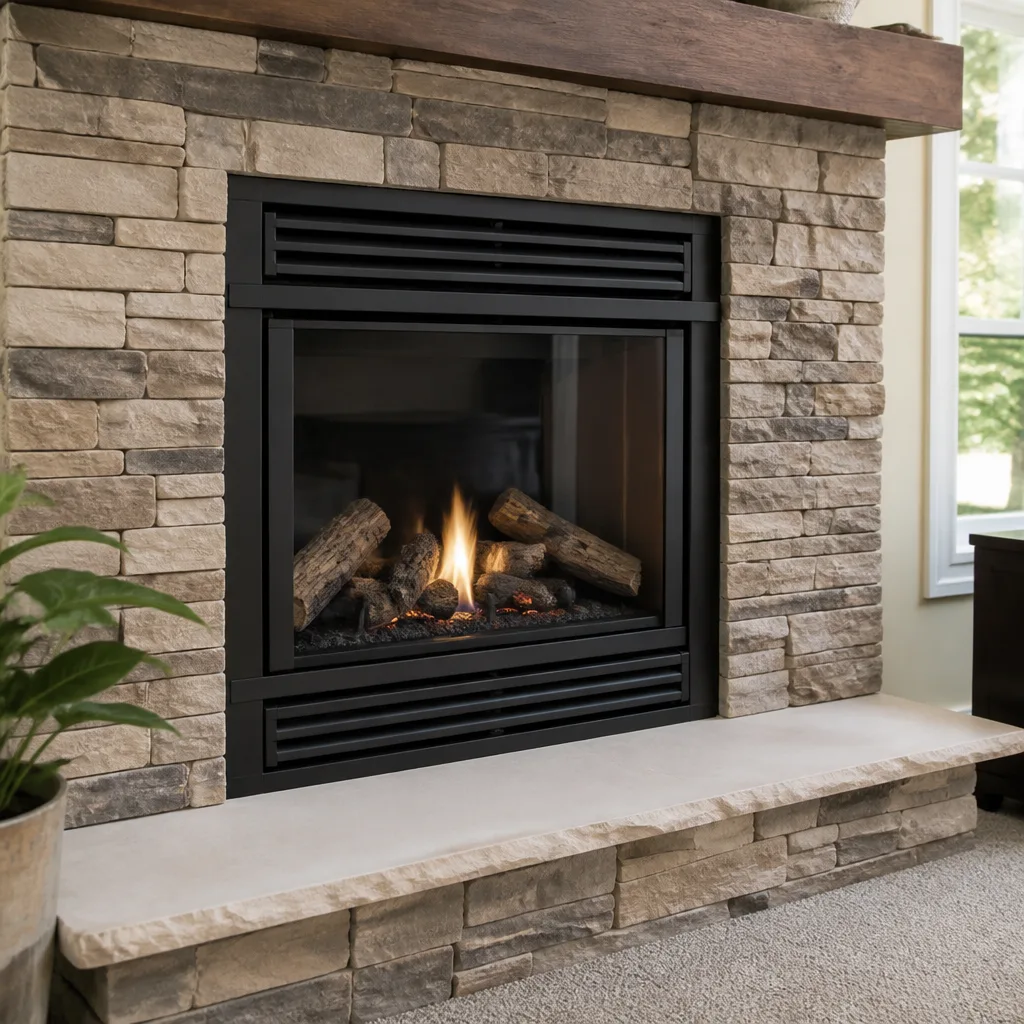
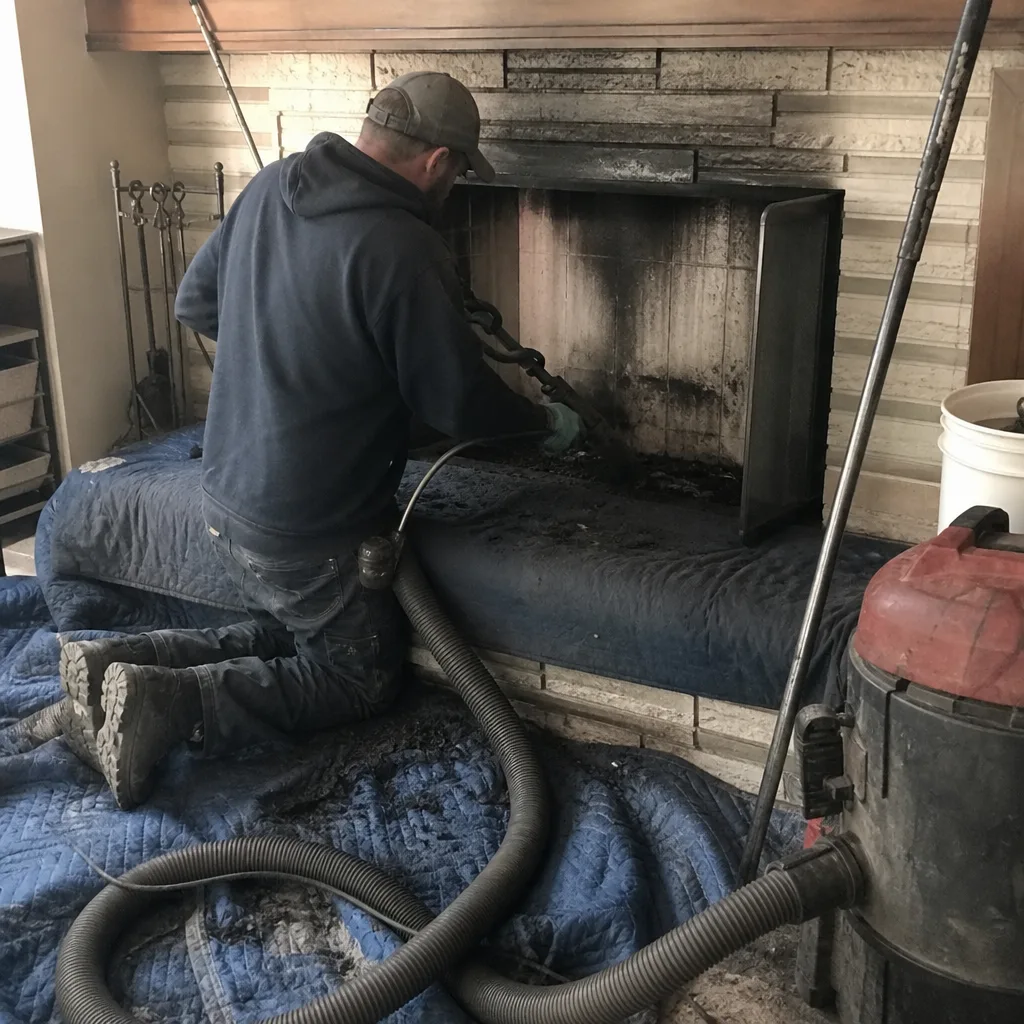 Before
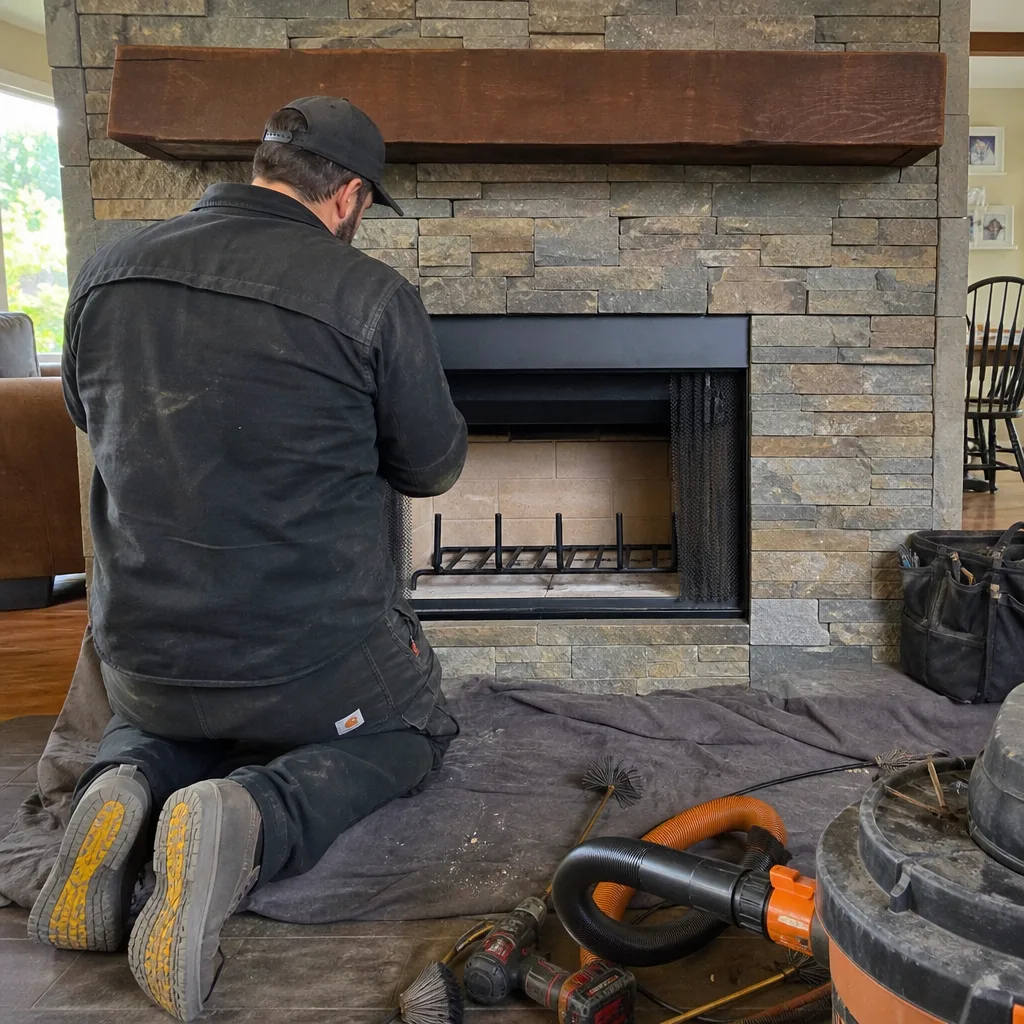 After
After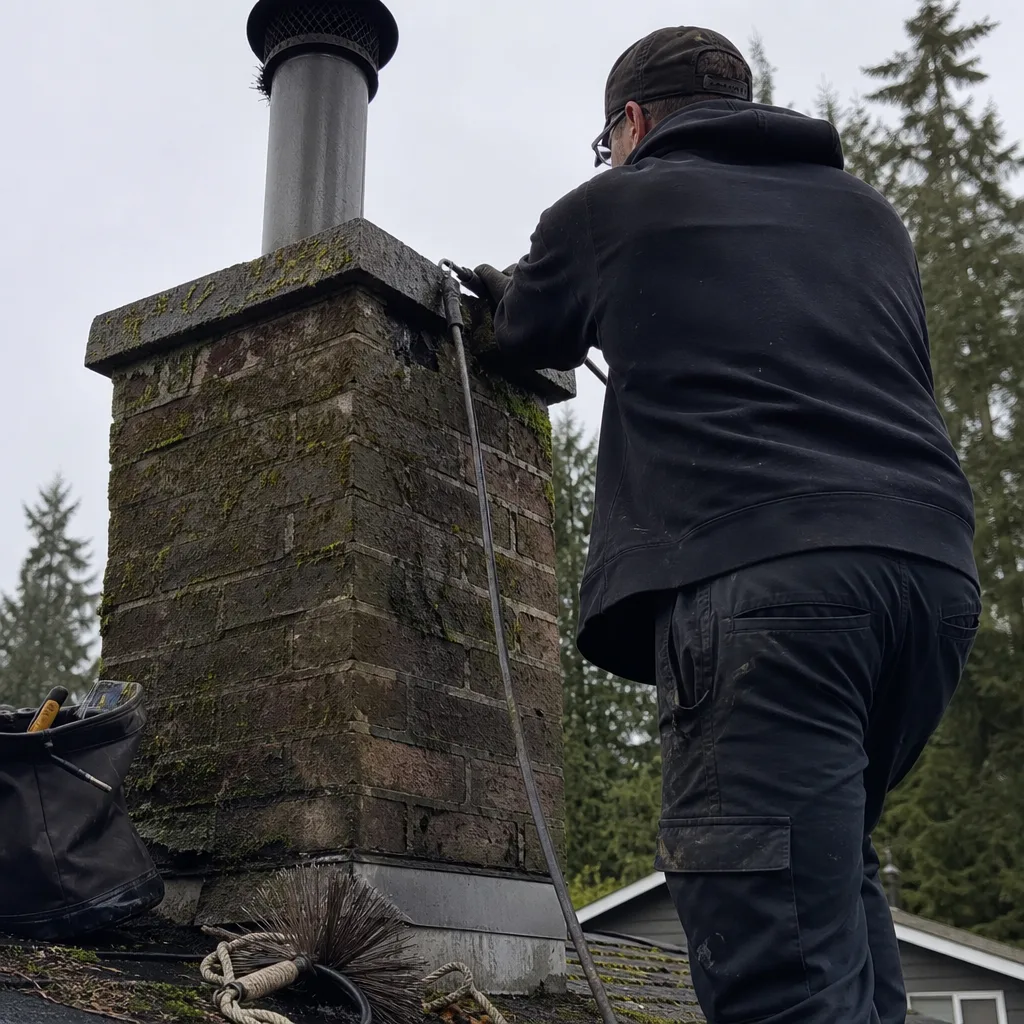 Before
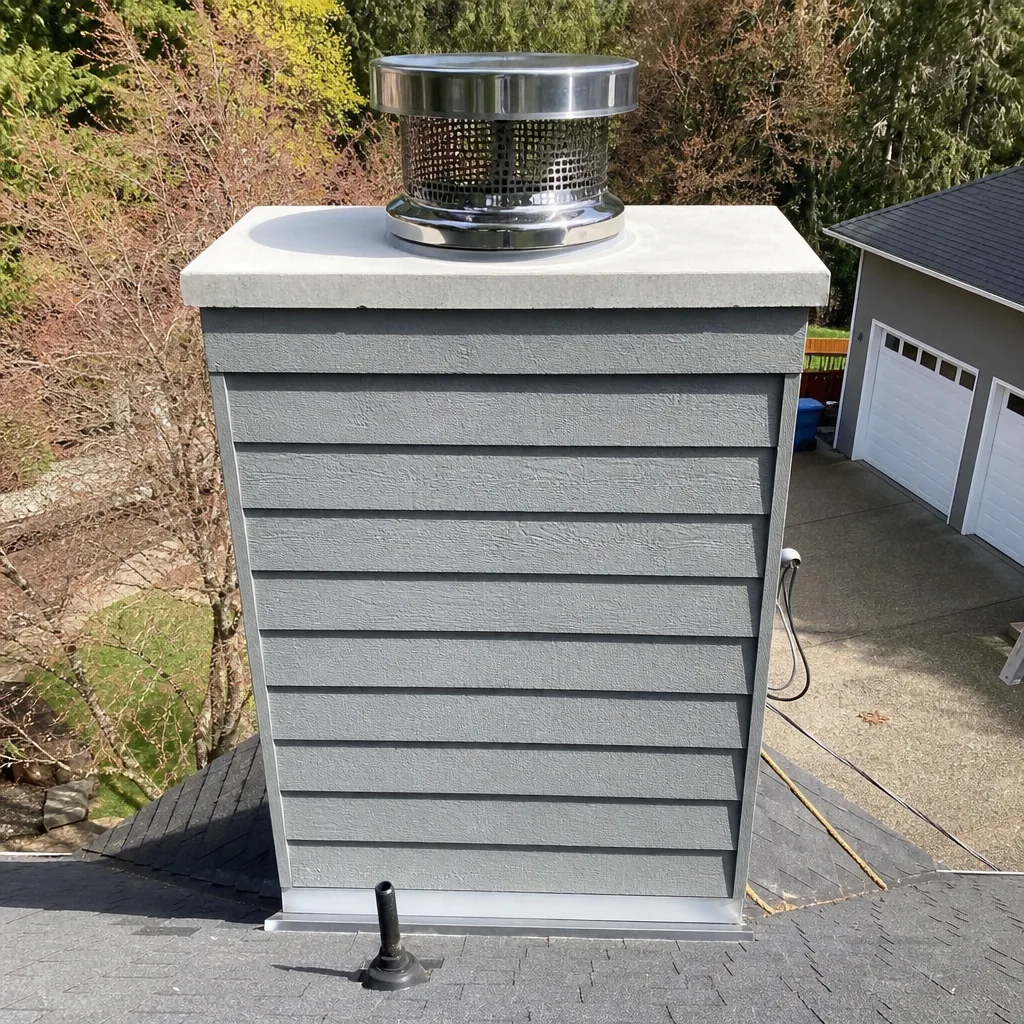 After
After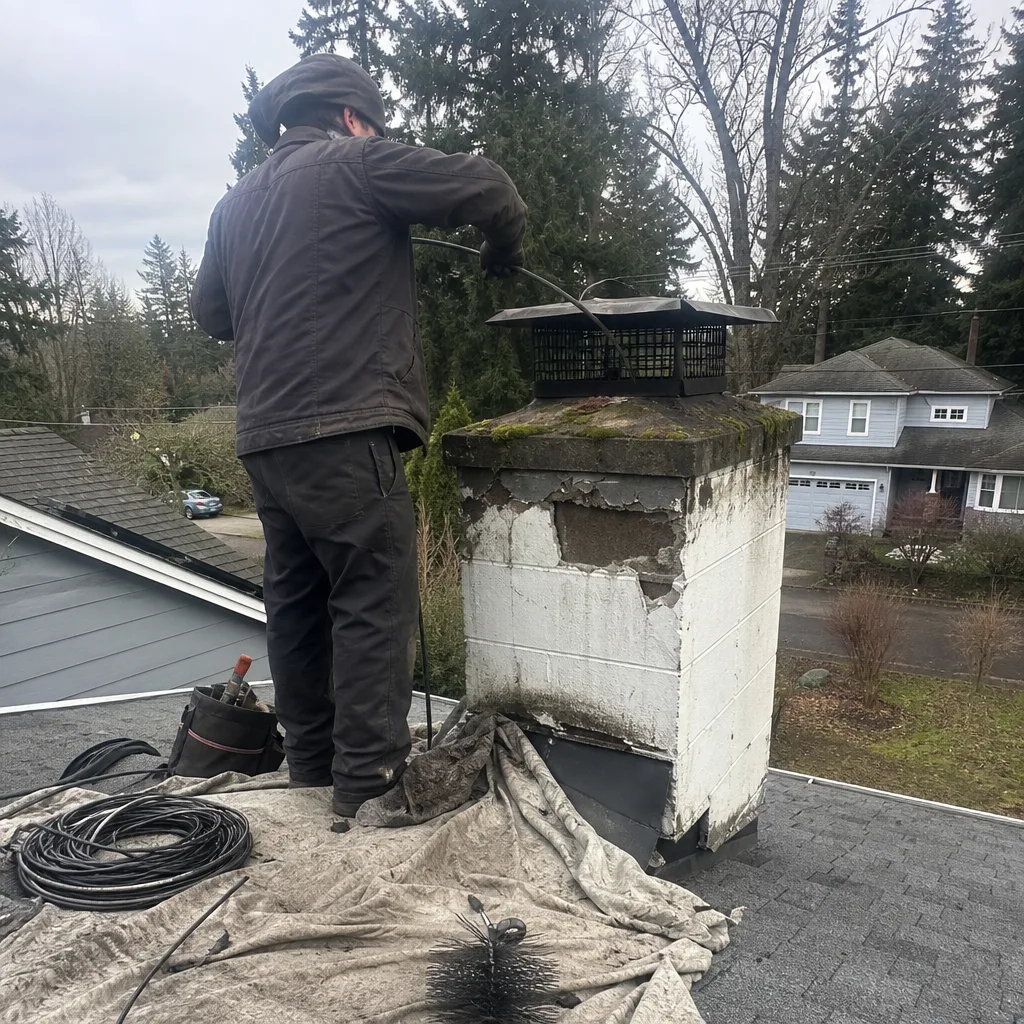 Before
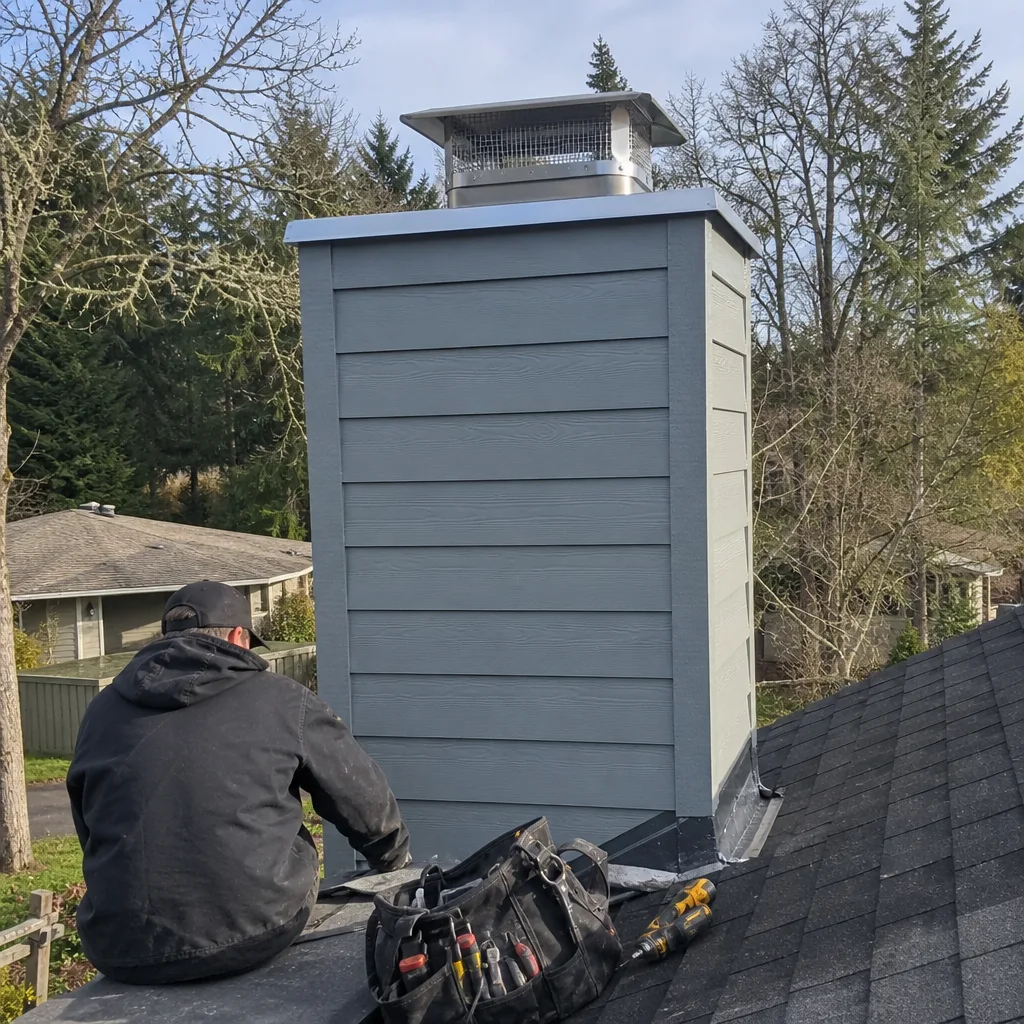 After
AfterChimney Cleaning & Sweep Maintenance Checklist for Olympia Homeowners
Hand a homeowner a generic chimney maintenance checklist and they’ll check “had it swept” without knowing whether the sweep found 1/8-inch glaze or a cracked tile. The checklist is the problem - it rewards showing up, not finding anything. In Olympia, where marine air accelerates damper corrosion and moss colonizes crowns in a single wet season, a checkbox without a pass/fail condition is worse than useless. It’s a false record. Our Complete Guide to Chimney Cleaning in Olympia gives homeowners the exact observable criteria a camera-equipped sweep uses at each stage of the flue, so you can verify work was actually completed rather than assumed.
Quick Answer
A proper chimney maintenance checklist for Olympia homes includes three seasonal phases: pre-season inspection with measurable pass/fail criteria (cap mesh size, liner crack inspection, draft test), during-season logging of smoke behavior and odor patterns, and post-season assessment for Pacific Northwest-specific damage like moss intrusion and efflorescence. Every completed Chimney Cleaning & Sweep should produce a written summary, at least two camera-capture images, and a signed price record under the Haven Standard.
Table of Contents
- Pre-Season Checklist: Observable Pass/Fail Criteria
- During-Season Logging: What Homeowners Should Track
- Post-Season Assessment: Pacific Northwest Conditions
- Documentation Standard: What a Completed Sweep Must Leave Behind
- Using Your Checklist When Selling an Olympia Home
- The Cost of Neglect: Olympia-Specific Risks
- Common Mistakes to Avoid
- When to Call a Professional
- Frequently Asked Questions
 Before
 After
AfterPre-Season Checklist: Observable Pass/Fail Criteria
The pre-season inspection determines whether your chimney is fit to burn. In Olympia, burning season typically runs October through April, and the pre-season window is August through September - before the first sustained cold snap when every sweep in Thurston County books solid.
Here’s what a camera-equipped inspection actually checks, with the measurable threshold that separates pass from fail:
1. Cap and Spark Arrestor
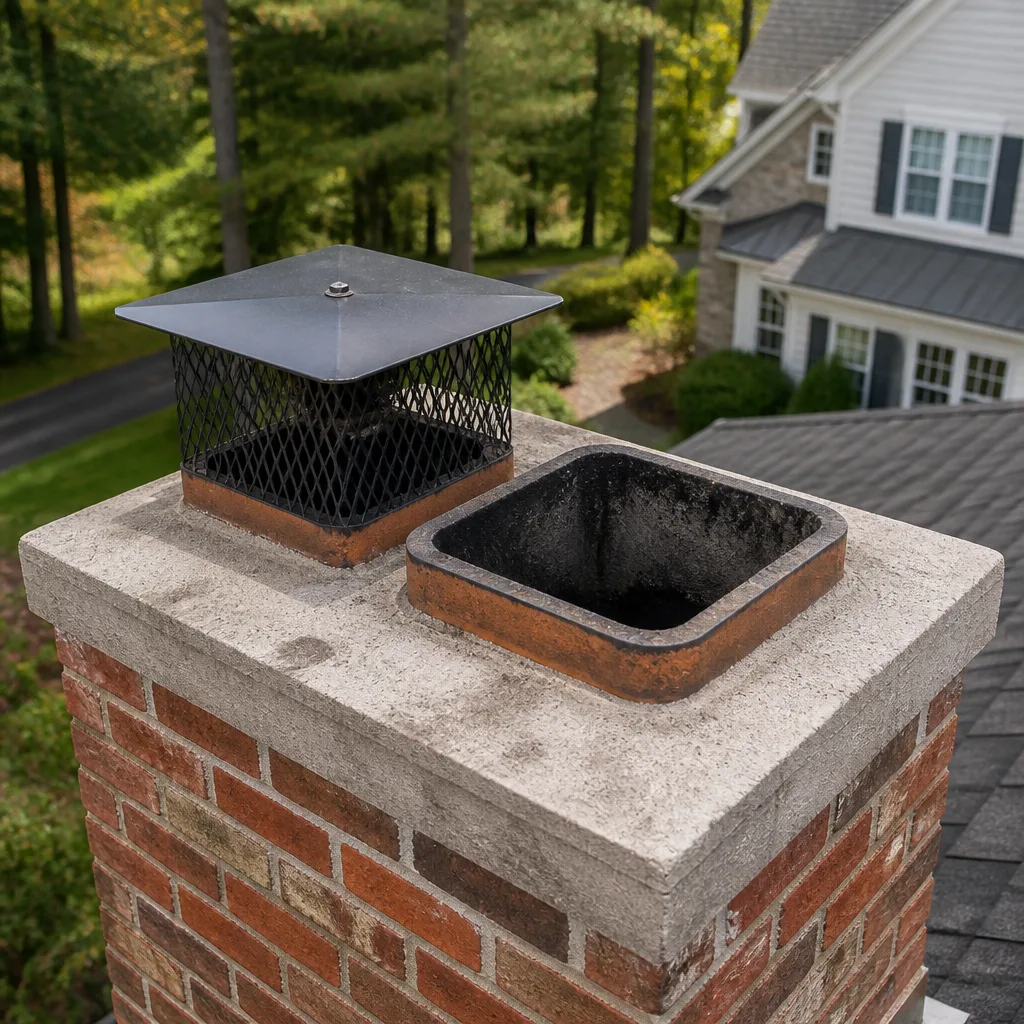
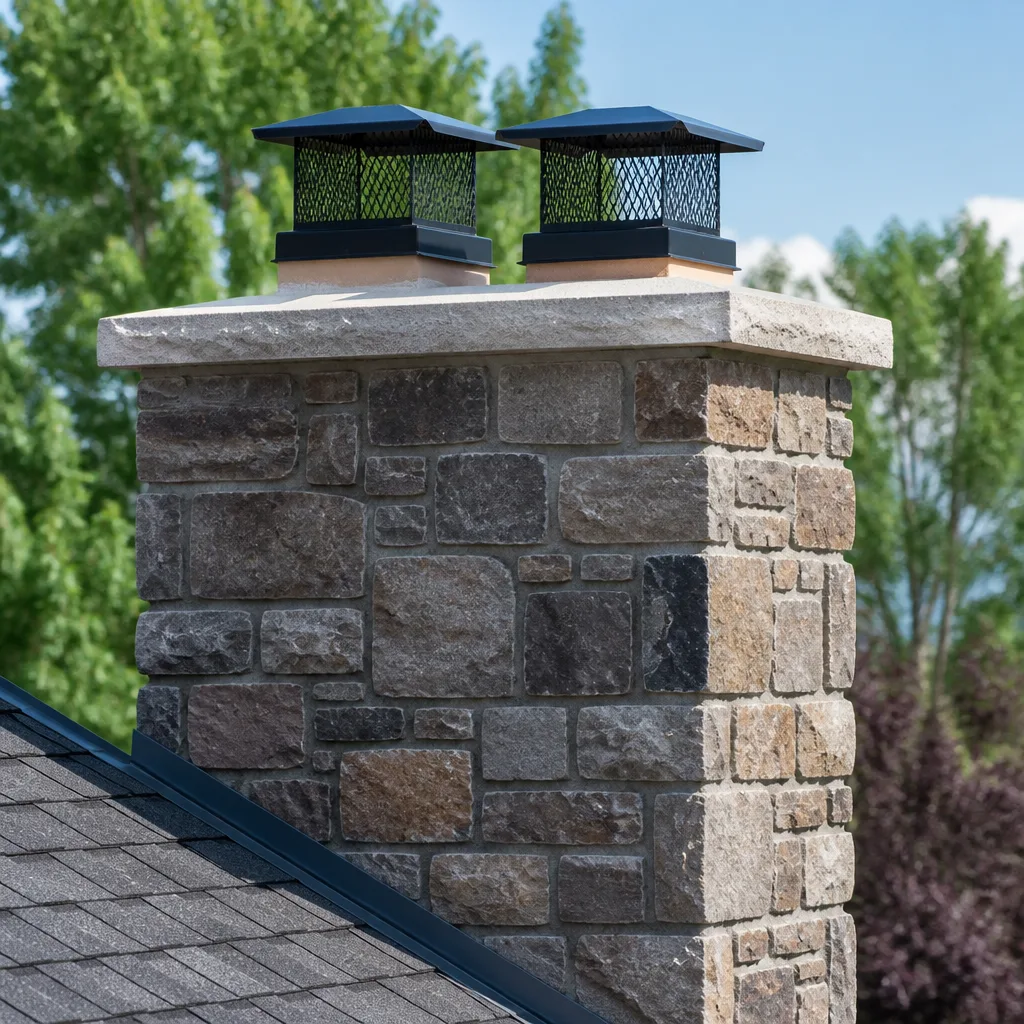
Pass condition: Screen mesh measures 3/4-inch or smaller (NFPA 211 requirement for multi-family, best practice for single-family). No gaps, no rust-through, no deformation from falling branches. Cap overhang extends at least 1 inch beyond flue tile on all sides.
Fail condition: Mesh larger than 3/4-inch (sparks escape), missing sections (squirrels, raccoons, or the invasive Olympia roof rats enter), or cap sitting flush with flue opening (rain drives straight in). In Olympia’s mature neighborhoods like Eastside and Bigelow Highlands, Douglas fir debris accumulates heavily; a cap without proper overhang channels needles directly into the flue.
2. Crown Condition
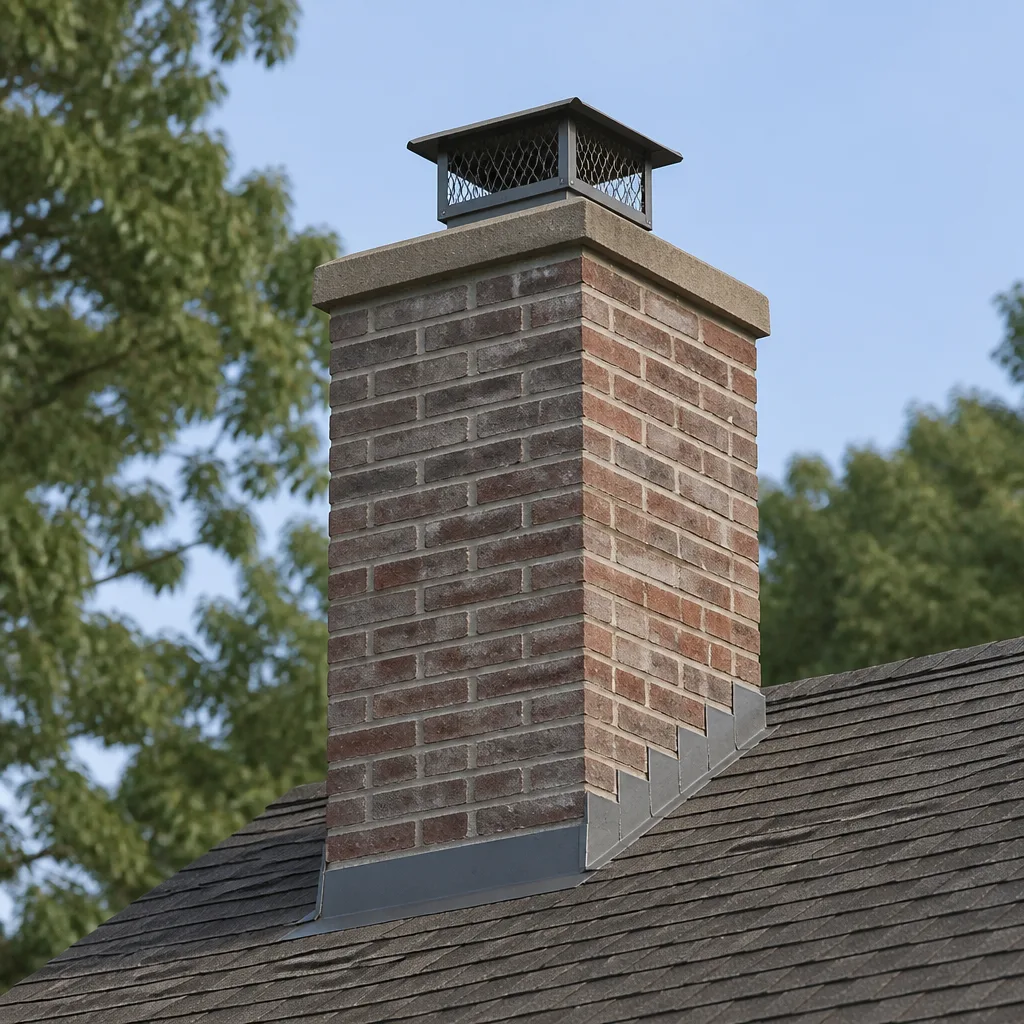
Pass condition: Concrete or mortar crown slopes away from flue at minimum 1/4-inch per foot. No cracks wider than 1/8 inch. No spalling (surface flaking) deeper than 1/4 inch.
Fail condition: Any crack that admits a standard flathead screwdriver tip. Any depression that holds water. In Olympia’s climate, a crown with standing water will freeze-thaw cycle three to four times per winter, accelerating concrete degradation. We’ve replaced crowns in the Governor Stevens neighborhood that failed in under five years due to poor initial slope.
3. Flue Liner Inspection (Camera-Required)
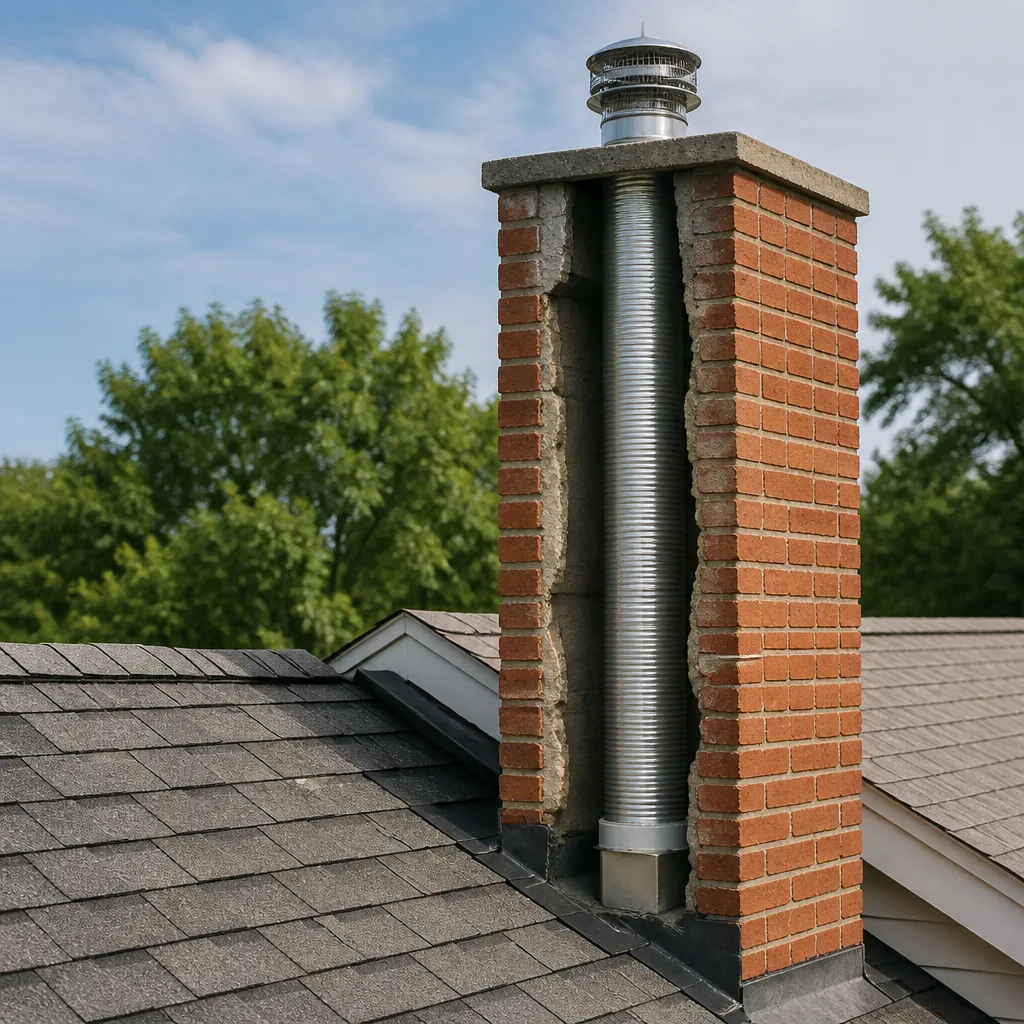
Pass condition: Clay tile joints align within 1/8 inch. No visible cracks in tile walls. No glaze creosote exceeding 1/8-inch thickness. No mortar erosion exposing liner joints.
Fail condition: Any crack visible on camera scan. Any tile with missing corner or spalled interior surface. Glaze creosote (shiny, tar-like, impossible to brush off) exceeding 1/8 inch - this is Class III creosote, the fuel source for chimney fires. In our experience across Olympia’s 1920s-1950s housing stock in South Capitol and Westside, original clay liners show thermal shock cracking at the firebox throat (the transition from smoke chamber to flue) in roughly 30% of inspections.
4. Smoke Chamber and Firebox
Pass condition: Smoke chamber walls are parged (smooth-coated) with no exposed brick edges. Firebox brick shows no mortar loss deeper than 1/2 inch. No visible cracks through to exterior masonry.
Fail condition: Exposed corbelled brick in smoke chamber (creates turbulence, deposits creosote). Any crack in firebox rear wall - this is the wall separating fire from framing, and failure here is a direct structural fire risk.
5. Draft Test
Pass condition: Single sheet of newspaper, lit and held at firebox opening, draws flame and smoke consistently up the flue within 10 seconds.
Fail condition: Smoke rolls back into room, or flame hesitates, or test works only with windows open (indicating negative pressure house). In Olympia’s tighter new construction around Meridian and Hawks Prairie, we’ve seen draft failures in homes with range hoods and bath fans running simultaneously - the chimney competes for makeup air and loses.
6. Damper Operation
Pass condition: Damper opens fully (blade angle 90 degrees to flue), closes completely (no visible gap), and operates without binding. No rust scale flaking from blade edges.
Fail condition: Blade corroded through at edges, common in Olympia within 8-12 years due to marine air infiltration. We’ve replaced dampers in homes off Budd Inlet where salt air accelerated corrosion to the point of blade perforation.
During-Season Logging: What Homeowners Should Track
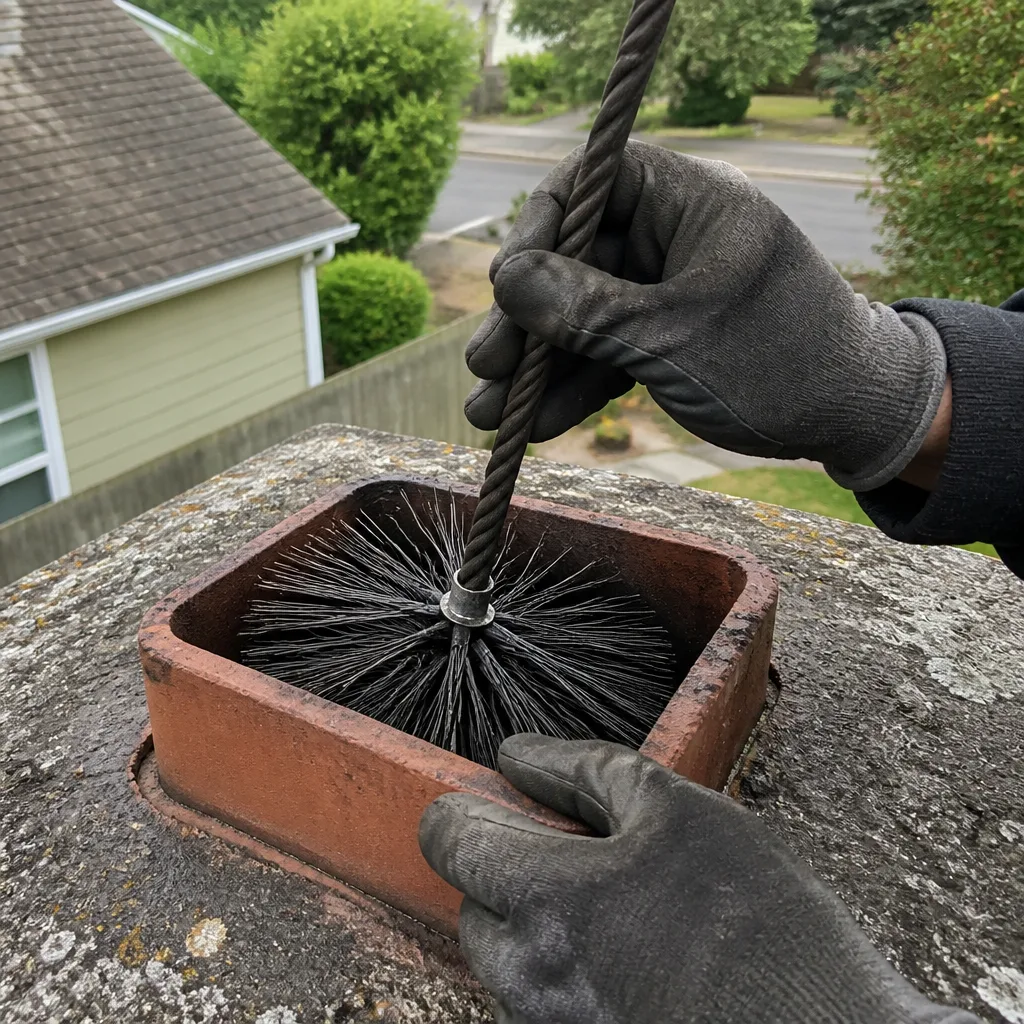
A checklist you only use once per year misses the Chimney Cleaning Warning Signs: A Olympia Homeowner’s Reference Guide that develop between sweeps. These are the during-season indicators an Olympia homeowner can observe and log, with the threshold that triggers a service call:
Smoke Rollback Frequency
Normal: Brief puff of smoke on initial fire startup, clearing within 30 seconds.
Call threshold: Smoke enters room on more than 1 in 5 fire starts, or persists beyond 2 minutes. Log the date, weather conditions, and whether any exhaust fans were running. In Olympia’s frequent low-pressure systems, ambient barometric pressure drops can reduce natural draft - but consistent rollback suggests blockage, liner damage, or negative pressure issues requiring correction.
Odor After Rain
Normal: Faint wood-smoke scent for 24 hours after burning.
Call threshold: Sharp, acrid, or “ashtray” odor detectable more than 48 hours after last fire, especially following rain. This indicates water infiltration activating creosote deposits, or worse, decomposing organic matter (animal nesting) in the flue. In Olympia’s 40+ inches of annual rainfall, water entry is not a minor issue - it’s the primary accelerator of liner deterioration. We’ve extracted saturated owl nests from chimneys in the Woodard Heights area that the homeowner had noted as “musty smell after storms” for two seasons.
Fire Startup Time
Normal: Kindling establishes sustainable flame within 5 minutes, with visible draft drawing smoke upward.
Call threshold: Requires more than 15 minutes to establish draft, or repeated relighting. Extended startup time indicates excessive creosote narrowing the flue, cold flue syndrome (exterior chimney on north wall, common in Olympia’s 1970s-1980s split-levels), or partial blockage.
Glass Sooting Pattern
Normal: Light haze on glass, cleanable with damp cloth.
Call threshold: Heavy black deposit within 3 fires, or deposit forming in distinct bands (indicates alternating rich/lean burn, often from damper not fully open or inadequate combustion air). Photograph the pattern - it’s diagnostic.
Exterior Masonry Temperature
Normal: Exterior chimney face at room temperature or slightly warm during active fire.
Call threshold: Hot to touch, or thermal imaging shows localized hot spot. Indicates liner breach allowing combustion gases to contact surrounding masonry - immediate safety concern, fire risk.
For more guides & resources, keep a simple log: date, observation, weather. A notebook by the hearth is sufficient. This record becomes evidence if a dispute arises with a sweep who claims “everything was fine” - and it’s invaluable documentation under Washington State disclosure law when you sell.
Post-Season Assessment: Pacific Northwest Conditions
Olympia’s climate imposes specific post-season maintenance requirements that checklists written for drier regions ignore entirely. The marine influence, winter rainfall pattern, and spring growth cycle create damage modes unseen in interior climates.
Moss Intrusion on the Crown
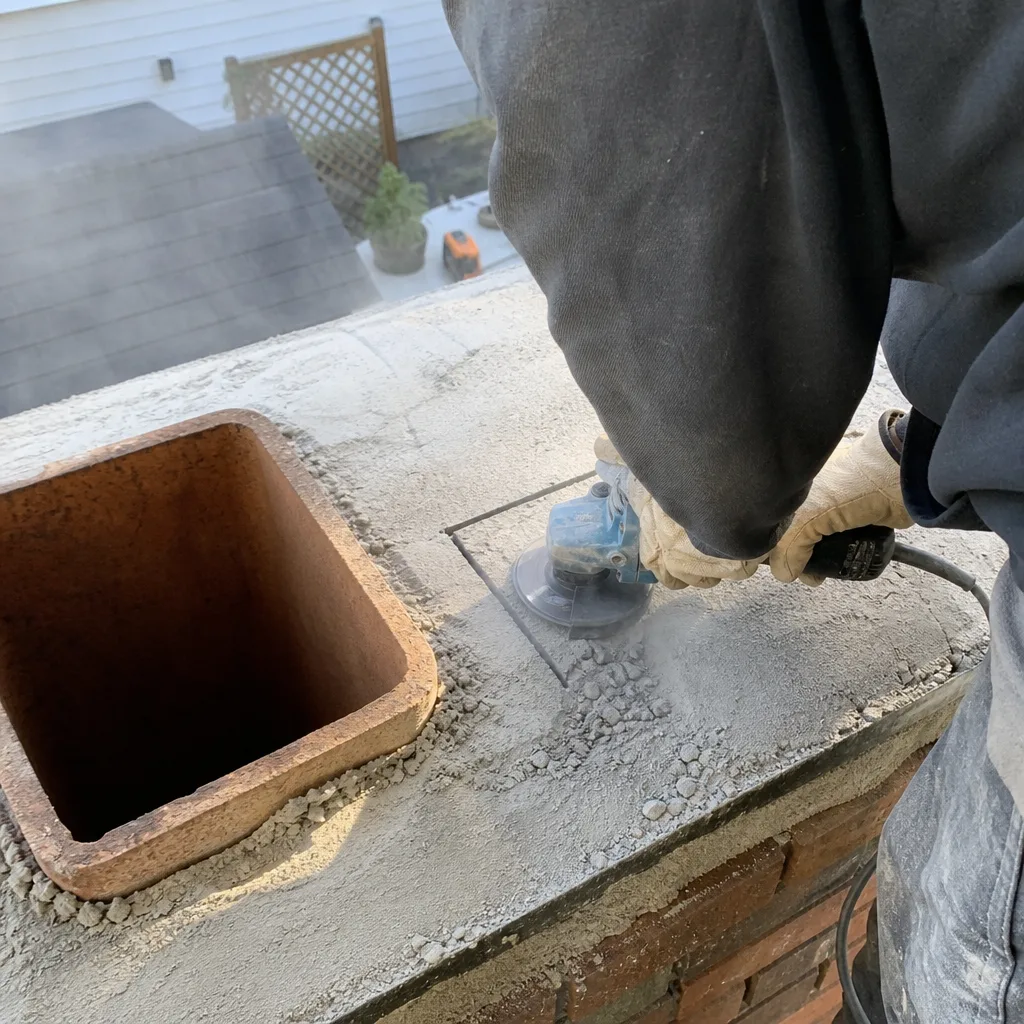
Inspect the crown and top two feet of exterior masonry in April, after the last frost risk. Moss establishes on porous concrete within one Olympia winter if the crown has micro-cracks or inadequate slope. Pass/fail: any green growth on crown surface, or moss extending into mortar joints. Moss root structures penetrate mortar, accelerating freeze-thaw damage. We’ve crown-sealed chimneys in the Carlyon neighborhood where moss had created finger-width voids in the mortar bed.
Efflorescence on Exterior
White powdery deposits on exterior brick indicate water migration through the masonry, dissolving salts and depositing them at the surface. In Olympia’s wet winters, minor efflorescence on the above-roof portion is common and not immediately critical. Fail threshold: efflorescence below the roofline, or any location where the deposit is accompanied by spalling or mortar erosion. Below-roof efflorescence indicates water entry at the chimney base, often from failed flashing or saturated chimney shoulder in homes without a cricket (the peaked diversion structure required by code on chimneys wider than 30 inches).
Damper Blade Corrosion from Marine Air
Even with damper closed, marine air infiltrates the flue during the off-season. Inspect the damper blade with a flashlight in May - look for rust scale, pitting, or reduced blade thickness at edges. Pass/fail: any perforation or blade thickness reduced below 1/16 inch. In homes within 2 miles of Puget Sound, particularly in East Bay and Boston Harbor areas, we’ve documented damper replacement need at 8-year intervals versus 15+ inland.
Smoke Shelf Debris
The smoke shelf (the flat area behind the damper) collects fallen debris, soot, and condensation runoff. In Olympia’s wet shoulder seasons, this material compacts and holds moisture, accelerating corrosion of the smoke chamber and firebox base. Professional cleaning removes this; homeowner inspection checks for odor (musty or sour indicates biological growth in compacted debris).
Cap Screen Vegetation
Spring inspection of cap screen: any seedling growth, accumulated fir needles, or wasp nest initiation. Olympia’s bigleaf maple and Douglas fir produce heavy spring debris; a screen that was clear in October can be 30% occluded by May. Reduced screen area increases draft resistance and can cause smoke rollback on marginal systems.
Documentation Standard: What a Completed Sweep Must Leave Behind
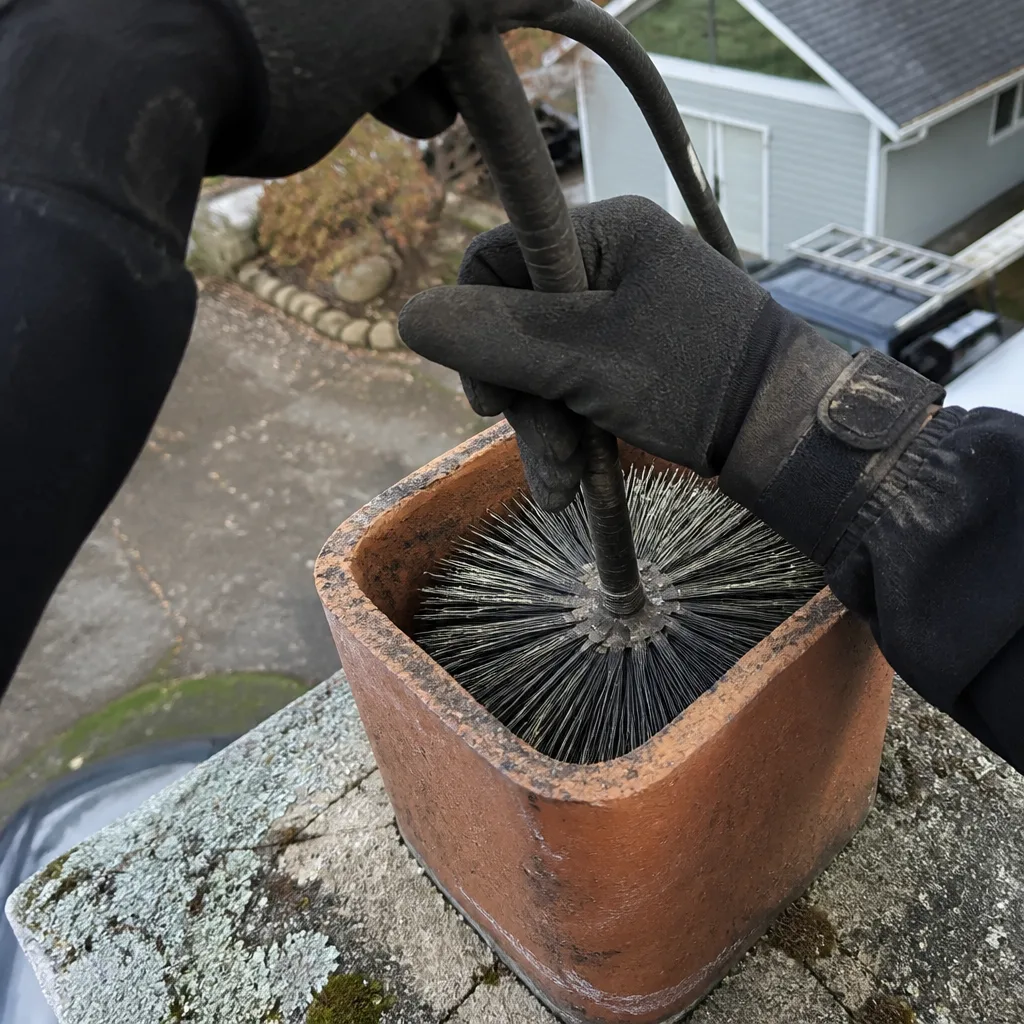
A checklist without documentation is merely a memory aid for the technician. Under the Haven Standard, a completed sweep visit must produce records the homeowner can use for warranty claims, insurance disputes, and real estate disclosure. Here’s the minimum documentation, and what each item should contain:
Written Summary
Not a generic “chimney cleaned” checkbox form. The summary must state:
- Chimney type, flue dimensions, and liner material
- Creosote class found (I, II, or III) and thickness measured
- Condition of each component inspected: crown, cap, liner, smoke chamber, firebox, damper
- Any defects found, with location and severity
- Recommended actions, prioritized as immediate (safety), scheduled (maintenance), or monitor (observation)
- Technician name, date, and next recommended inspection date
Clause 4 of the Haven Standard requires this summary to reference the photo record by image number, so each claim is verifiable.
Camera-Capture Images (Minimum Two)
At minimum: one image at the firebox throat showing liner condition at the most stressed transition point, and one image at the flue top showing cap and upper liner condition. In practice, a thorough Level 2 inspection produces 15-30 images. Each image should be timestamped, include location metadata (feet from top or bottom), and show the condition being described in the written summary.
Since 2009, we’ve maintained these records as standard practice - not as an upsell. When a homeowner in the Indian Creek neighborhood needed to document liner condition for an insurance claim after a neighbor’s house fire, her photo record from our 2019 visit established that her liner was intact and the claim was processed without dispute.
Signed Price Record
Haven Standard Clause 1: written price, written scope, written warranty before work begins. The signed record confirms what was agreed, what was performed, and what warranty applies. The 365-Day Done Right Promise covers all work; the signed record is the proof of purchase.
How Homeowners Should Store Documentation
Keep physical copies with your home maintenance file, and request digital backup. These records transfer with the home and satisfy Washington State’s requirement for disclosure of “material facts affecting the value or desirability of the property” - which includes known chimney defects.
Using Your Checklist When Selling an Olympia Home
Washington State law requires sellers to complete a Seller Disclosure Statement (Form 17) identifying known defects in structural components, including fireplaces and chimneys. A maintenance checklist with documentation transforms this from a liability into a selling point.
Matching to Buyer’s Inspection Requirements
Buyer’s inspectors in Olympia typically follow ASHI or InterNACHI standards, which include visual chimney assessment but not camera inspection unless specifically engaged. A seller who provides Level 2 documentation from a recognized sweep preempts the buyer’s uncertainty and demonstrates proactive maintenance.
Here’s how to align your records:
- Date proximity: Documentation within 12 months of listing is current; within 6 months is ideal. If your last sweep was 18+ months ago, schedule pre-listing inspection.
- Defect disclosure: Form 17 asks about “fireplace/chimney problems.” If your checklist shows a monitored crack (not immediate repair), disclose it with the monitoring record - this satisfies the duty and shows responsible management.
- Warranty transfer: The 365-Day Done Right Promise applies to the work, not the homeowner - clarify with your sweep whether warranty documentation transfers. We provide transferable records on request.
- Repair estimates: If your checklist identifies needed work, obtain written estimate before listing. Undisclosed defects discovered during buyer inspection typically cost 1.5-2x the original estimate in negotiated credits.
In Olympia’s competitive market, particularly in the $450K-$650K range where first-time buyers dominate, documented chimney condition removes a common inspection contingency objection. We’ve provided pre-listing inspections for sellers in the Fones Road area who used the clean report as a featured disclosure in their listing packet.
The Cost of Neglect: Olympia-Specific Risks
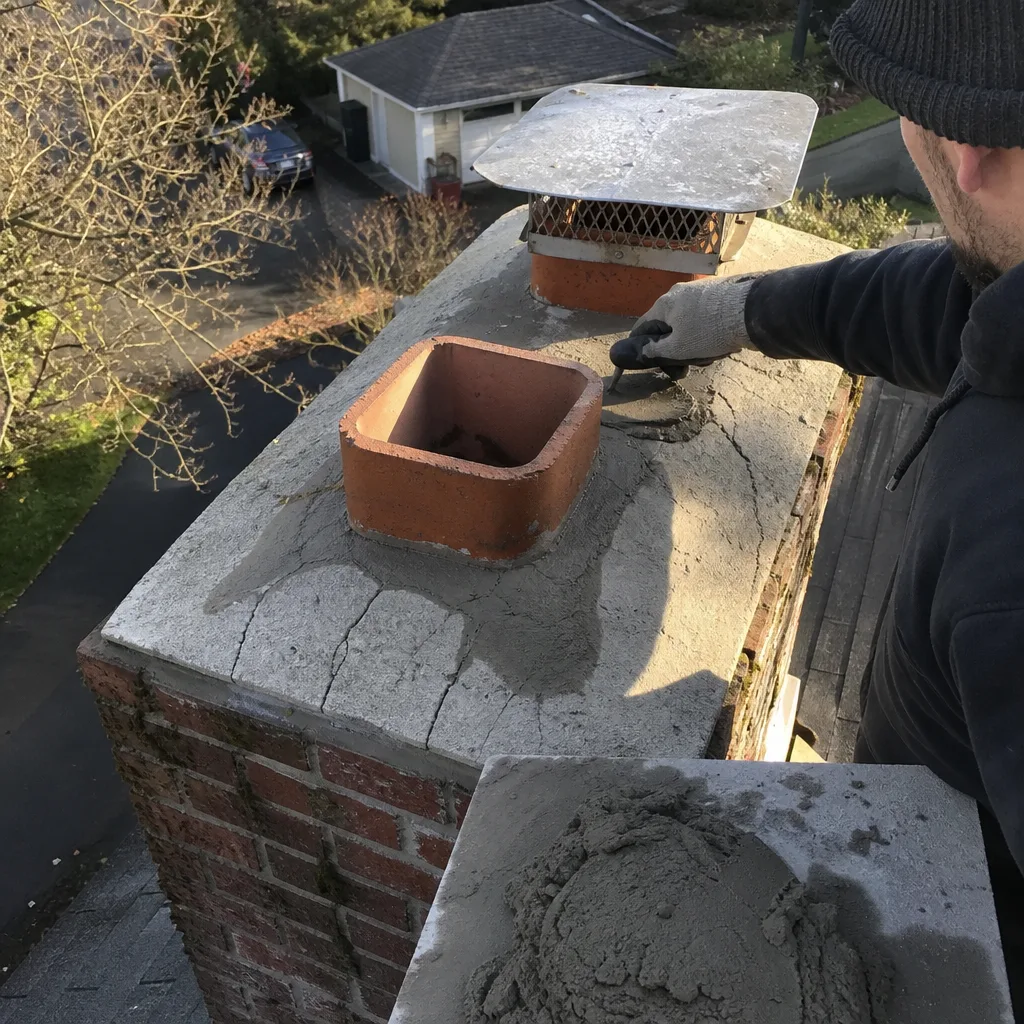
Skipping maintenance in Olympia doesn’t produce the slow degradation of drier climates. The combination of wet winters, marine air, and wood-burning culture creates accelerated failure modes with specific cost consequences.
Chimney fire risk: Class III creosote ignites at approximately 451°F - lower than the sustained flue temperatures in an active fireplace. Olympia’s EPA-certified wood stoves, required in new installations, burn efficiently but produce more creosote than open fireplaces when operated at low settings for overnight burn. A chimney fire in a lined flue typically damages the liner ($1,800-$4,500 replacement); in an unlined or breached flue, it can require full rebuild ($8,000-$15,000+).
Carbon monoxide infiltration: Liner cracks or mortar loss allows combustion gases to enter wall cavities. In Olympia’s older homes with balloon framing (common pre-1940), these gases travel horizontally between studs. We’ve detected CO in second-floor bedrooms from firebox cracks the homeowner hadn’t noticed because the fireplace “worked fine.”
Water damage cascade: Failed crown or flashing allows water into the chimney structure, then into attic and wall cavities. In one Westside inspection, a $400 crown repair deferred for three years became a $12,000 chimney rebuild plus interior drywall and insulation replacement.
Insurance and liability: Washington insurers increasingly require documented chimney inspection for wood-burning systems. Undisclosed known defects can void coverage for fire loss. Our photo records have supported homeowners in claim disputes where the insurer questioned maintenance history.
Common Mistakes to Avoid
- Treating “swept” as synonymous with “inspected.” A sweep removes creosote; an inspection evaluates structure. In Olympia, we’ve found cracked liners in chimneys swept annually by brush-only services that never ran a camera. Demand both, or you’re paying for half a service.
- Using the wrong firewood. Unseasoned fir and cedar, abundant and cheap in Thurston County, produce heavy creosote. Pass/fail: split wood shows cracks at ends, sounds hollow when knocked, moisture meter reads below 20%. In Olympia’s damp climate, wood stored outdoors needs 18-24 months to season - not the 6 months often claimed.
- Ignoring negative pressure symptoms. If your fireplace smokes only when the dryer runs, the problem isn’t the chimney - it’s house pressure. Installing a powered makeup air unit (typically $800-$1,400) solves what no amount of sweeping will fix. We’ve diagnosed this repeatedly in tight new construction around Lacey and Tumwater.
- DIY creosote removal with chemical logs. These modify creosote to a more brushable form but do not remove it. They also produce acidic residue that accelerates metal component corrosion. In Olympia’s marine environment, this is particularly destructive to stainless steel caps and dampers.
- Deferring crown repair until “next year.” One Olympia freeze-thaw cycle converts a $350 crown seal into a $2,800 crown rebuild. The threshold for action is any crack admitting a screwdriver tip - not “when it looks bad.”
- Failing to document. Without photos and written summary, your “annual sweep” is unverifiable memory. For warranty, insurance, and real estate purposes, undocumented maintenance is equivalent to no maintenance.
- Assuming all sweeps follow the same standard. NFPA 211 defines three inspection levels; Level 1 is visual, Level 2 requires camera. In Olympia, we’ve encountered competitors charging for “inspection” that consists of a flashlight look from the firebox. Ask specifically: “Do you run a camera to the flue top?” If the answer is no or costs extra, you’re not receiving a Level 2 inspection.
When to Call a Professional
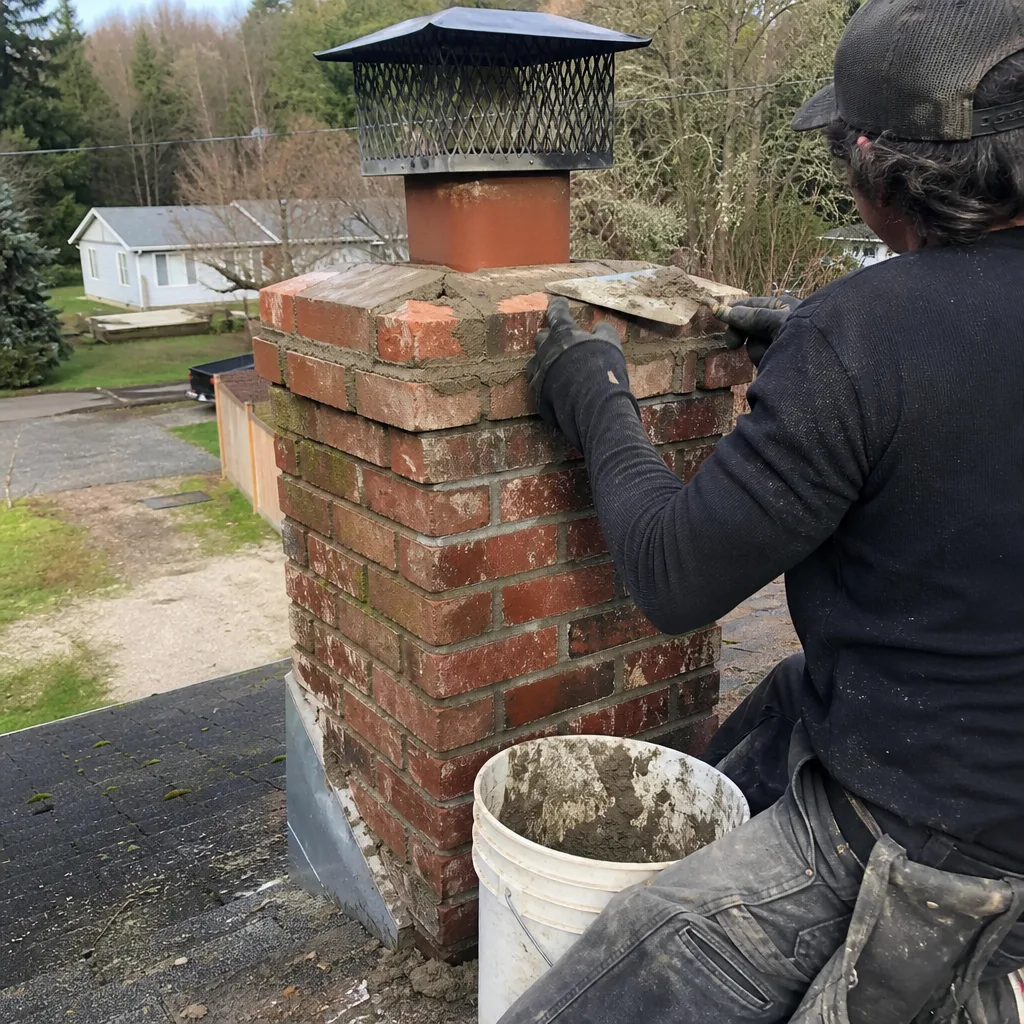
Call when any fail condition appears on your checklist, when during-season logging hits a call threshold, or when documentation from your last sweep is missing or incomplete. Specific scenarios requiring immediate professional assessment: visible cracks in firebox or liner, hot spots on exterior masonry, smoke rollback that doesn’t clear within 2 minutes, or odor after rain that persists 48+ hours.
Level Two Chimney Olympia offers free estimates in Olympia - call (360) 464-2015. Every estimate includes a written price before work starts, and our Chimney Cleaning & Sweep in Olympia service includes the camera-scan inspection and documented photo record that Clause 4 of the Haven Standard requires on every job. We also provide Chimney Repair in Olympia and Fireplace Services in Olympia for systems requiring more than maintenance.
Frequently Asked Questions
A complete chimney sweep with Level 2 camera inspection in Olympia typically ranges from $280 to $450 for a standard fireplace or wood stove flue. Factors affecting price include flue accessibility (steep roof pitch, chimney height), creosote severity (Class III requires chemical treatment before brushing), and whether repairs are needed. Level Two Chimney Olympia provides a written price before any work begins - no exceptions. Call (360) 464-2015 for an exact quote; estimates are free.
Annually for wood-burning systems in active use, per NFPA 211. In Olympia’s climate, even occasional use (fewer than 20 fires per season) warrants inspection every two years due to moisture-related deterioration independent of creosote accumulation. Gas fireplace systems require less frequent sweeping but still need annual inspection of venting and burner condition. The 1/8-inch creosote rule is absolute: if buildup reaches this thickness, sweep regardless of interval.
An unlined chimney is not code-compliant for new installation and is a known safety hazard. Existing unlined chimneys in Olympia’s pre-1950s housing stock may continue in use only if a Level 2 inspection confirms intact, undamaged masonry with no evidence of heat transfer to surrounding structure. In our experience, roughly 60% of unlined chimneys we inspect in South Capitol and Westside fail this standard and require liner installation ($1,800-$4,500 depending on flue dimensions and access). We provide a free second opinion on any competitor’s written liner replacement estimate.
Skipped maintenance produces three predictable outcomes in Olympia’s climate: creosote accumulation to Class III (chimney fire fuel), water infiltration accelerating liner and masonry damage, and undetected liner breaches creating carbon monoxide risk. The financial trajectory is consistent: deferred $350 maintenance becomes $2,500 repair becomes $8,000+ rebuild. We’ve documented this progression in homes across Olympia where owners “meant to get to it” for three to five seasons.
Level 1 is visual assessment of readily accessible portions - appropriate for annual maintenance of systems with no changes or known issues. Level 2 adds internal camera scan of the full flue length, attic and crawl space inspection of chimney structure, and assessment of clearances to combustibles. It’s required for real estate transactions, after chimney fire or lightning strike, or upon change of appliance type. Level Two Chimney Olympia performs Level 2 as standard on every visit - we don’t offer a lesser inspection.
You can burn with a stuck-open damper, but you’re heating the outdoors and accelerating creosote cooling in the flue. More critically, a stuck-open damper in Olympia’s wet season admits continuous moisture, accelerating liner corrosion and creosote hydration. Schedule repair - typically $180-$400 for standard throat damper, $450-$800 for top-sealing damper replacement. Don’t burn until assessed if the damper is stuck closed; this forces combustion gases into the room.
The Bottom Line
A chimney maintenance checklist is only as good as the evidence it produces. For Olympia homeowners, that means seasonal inspections with measurable pass/fail criteria, during-season logging of smoke behavior and odor, post-season assessment for Pacific Northwest-specific damage, and documentation that survives the technician’s departure. The checklist isn’t a memory aid for the sweep - it’s your verification tool, your warranty support, your insurance evidence, and your real estate disclosure record. Demand camera inspection, written summary, and photo documentation on every visit. Anything less is a checkbox without a standard.
Written by Corrine Halstead, Owner at Level Two Chimney Olympia, serving Olympia since 2009.