
Last updated September 21, 2026
Level 1 sweep and inspection to the NFPA 211 annual standard - flue, crown, cap, and flashing checked and photographed
Chimney sweep logs do not sweep chimneys. They loosen some creosote - which then falls where a brush and vacuum still have to collect it.
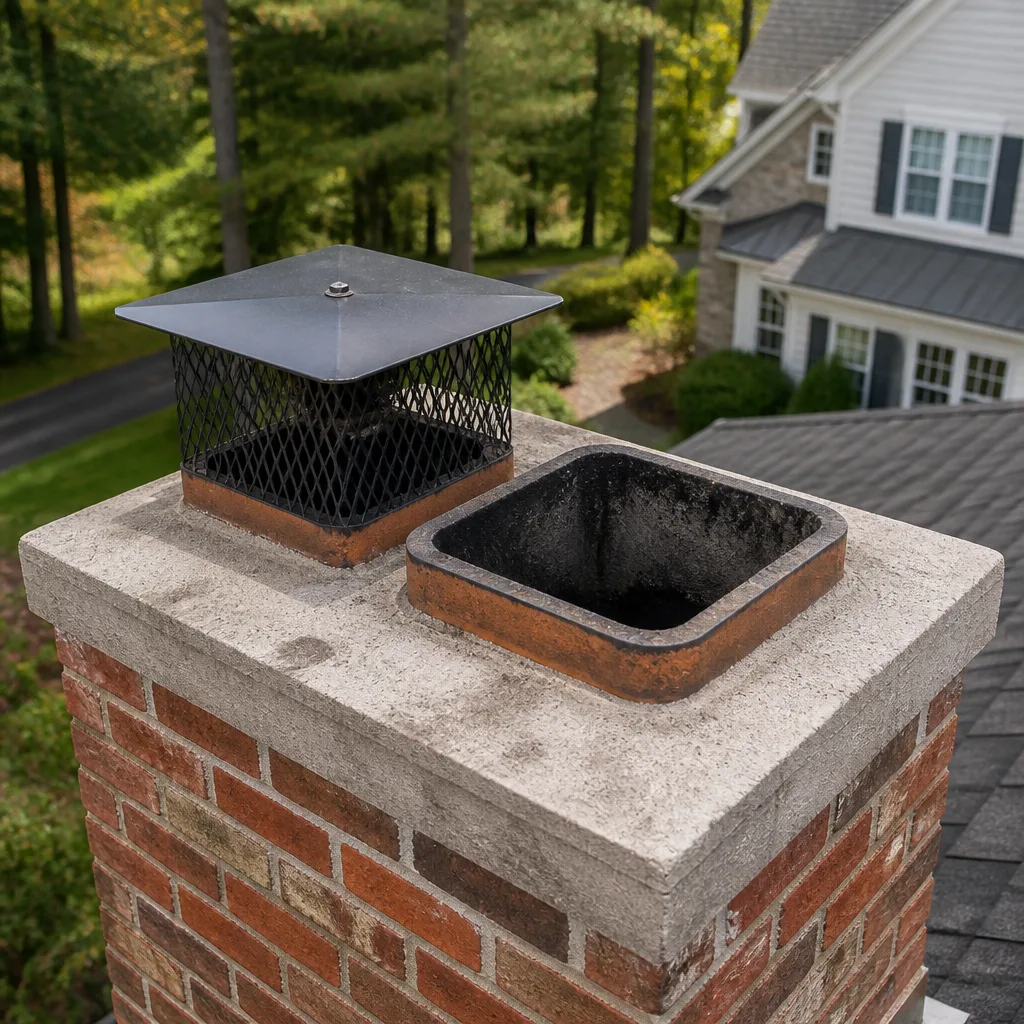
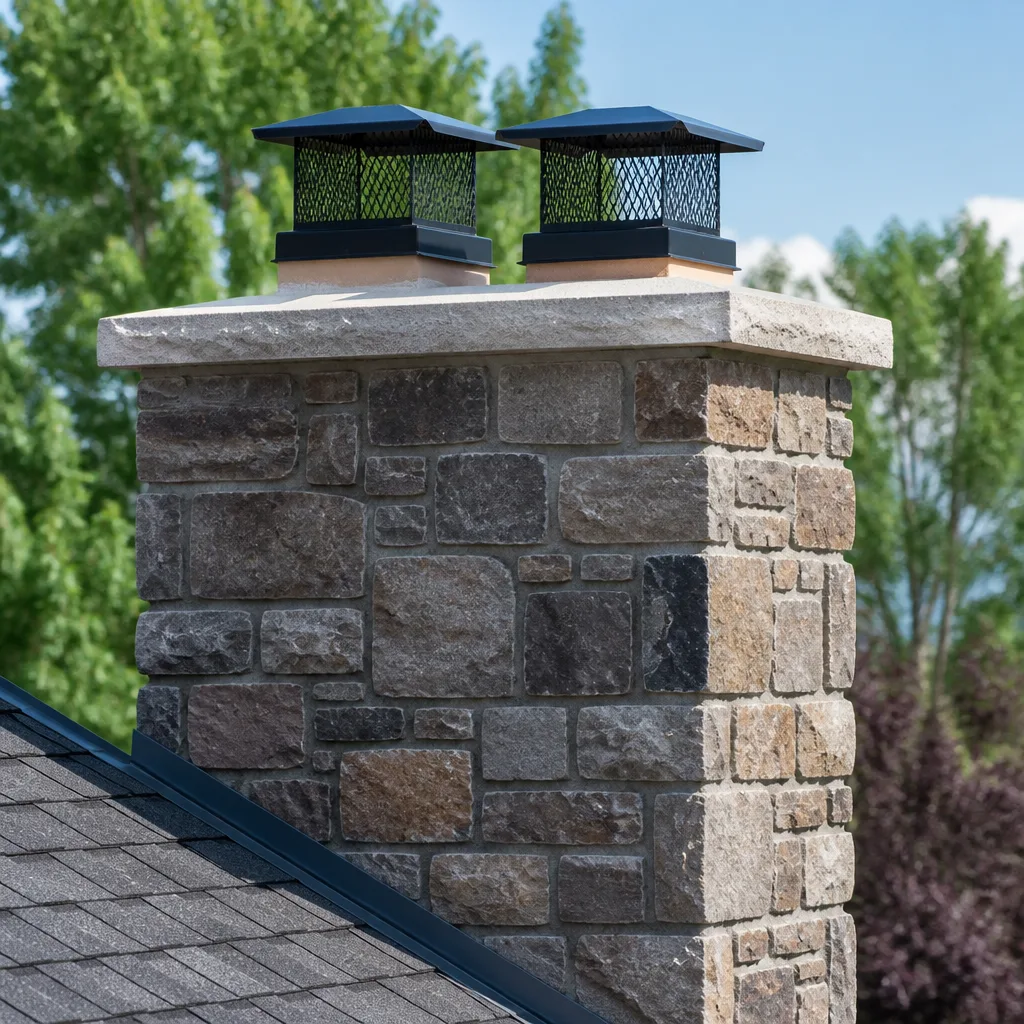
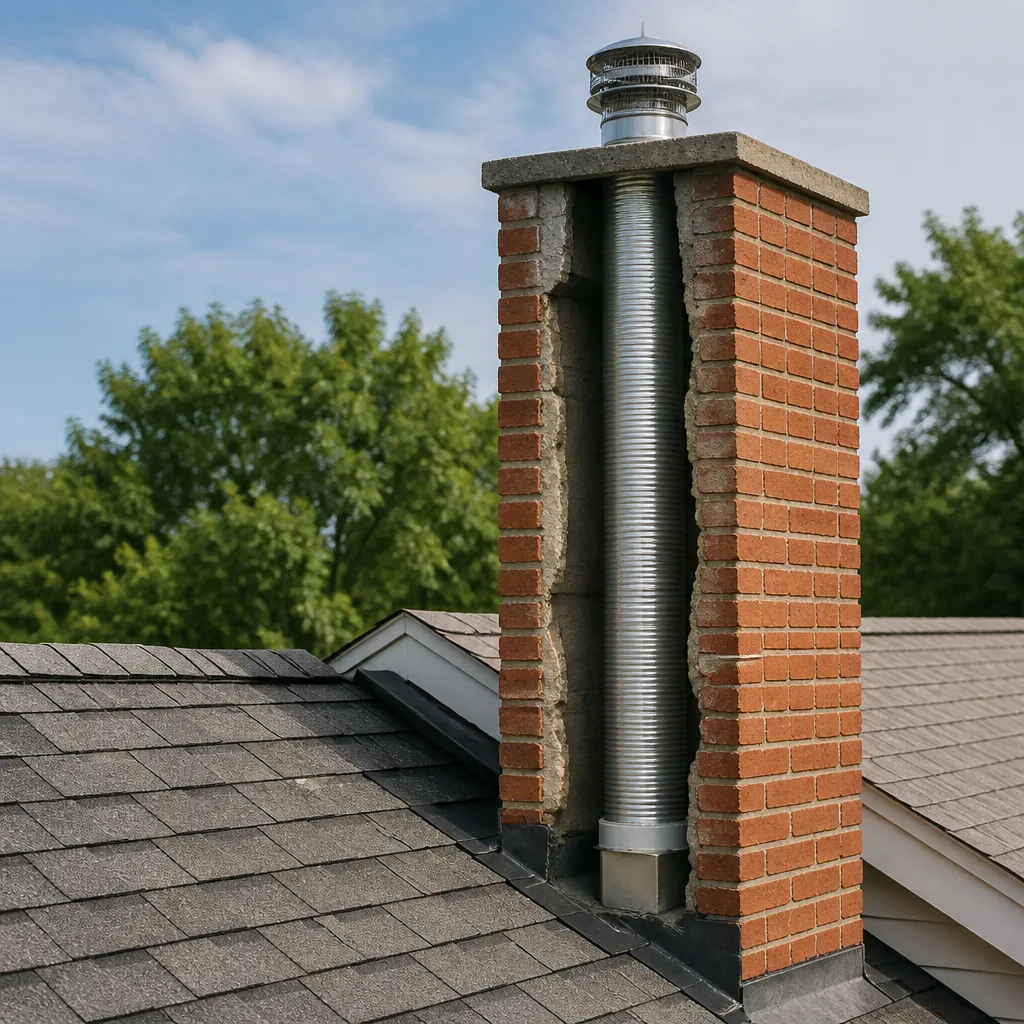
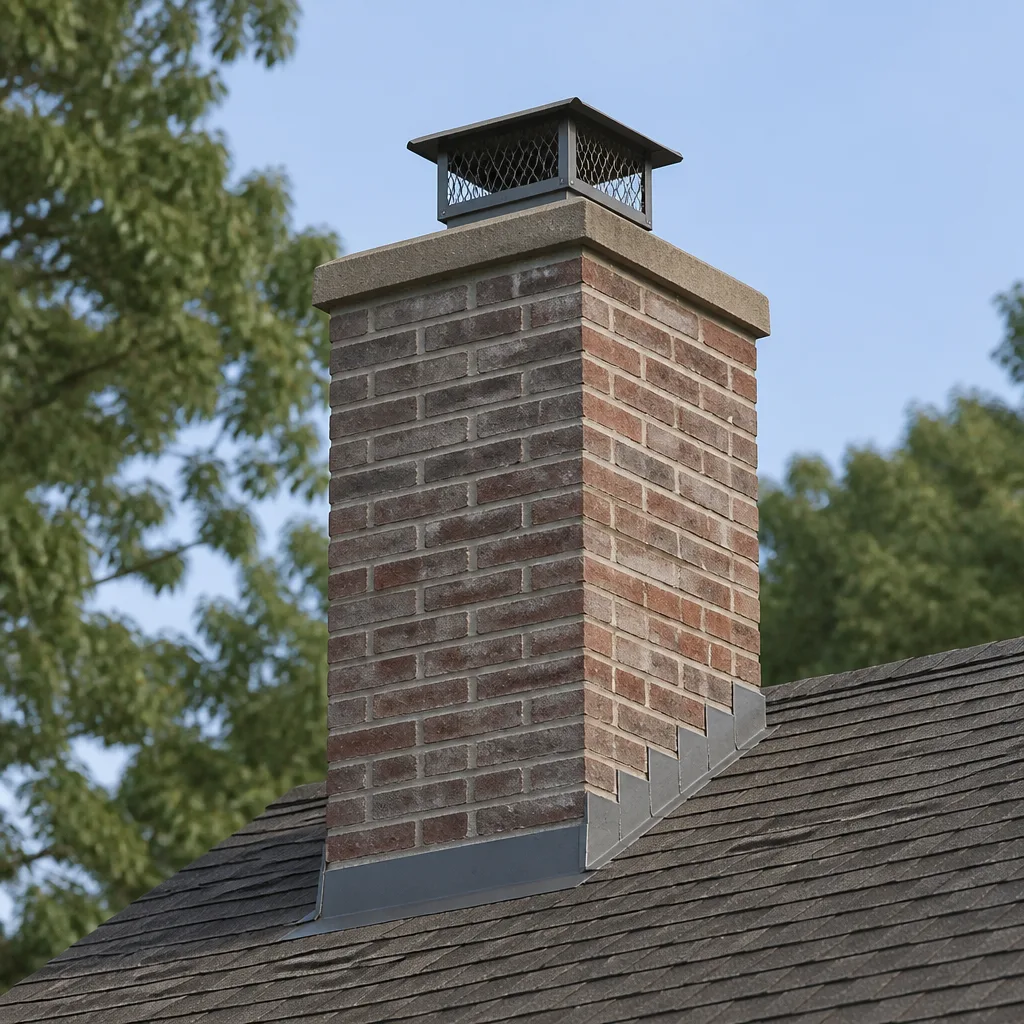
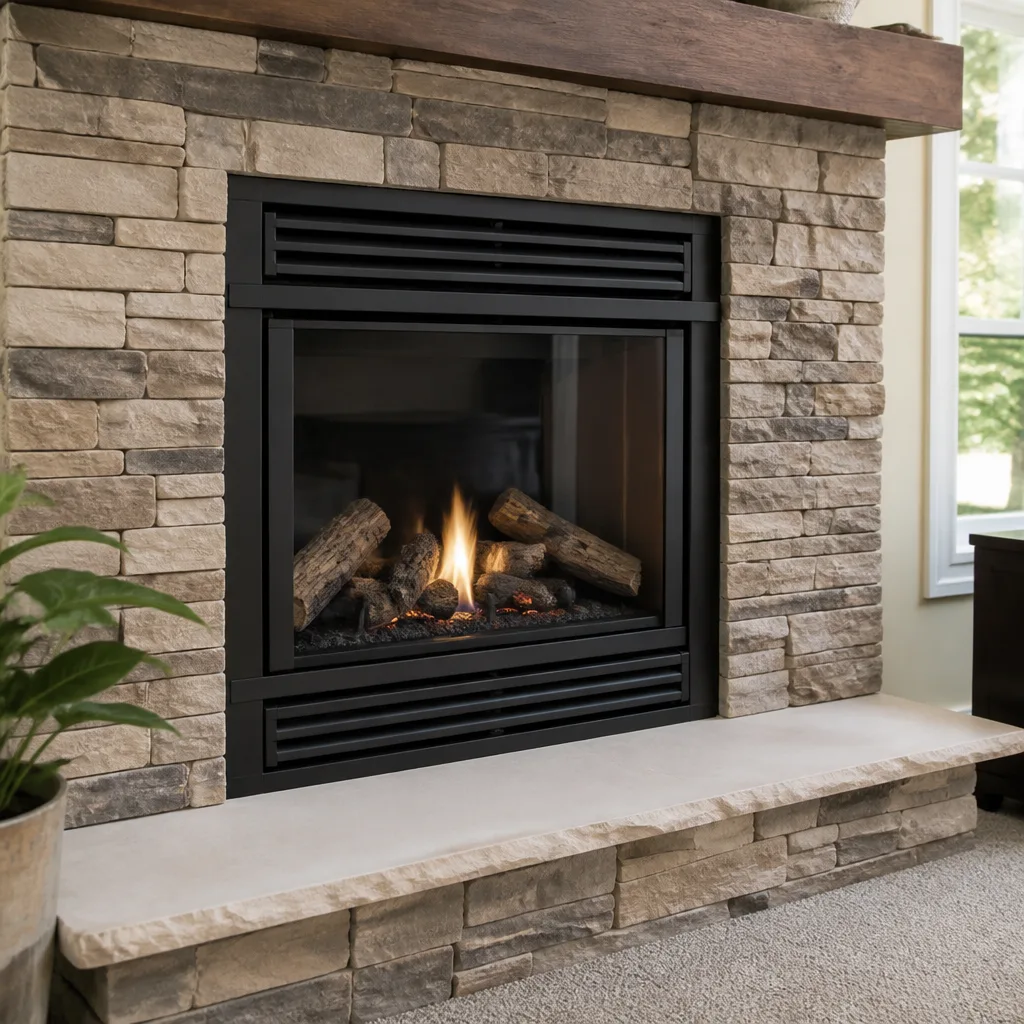
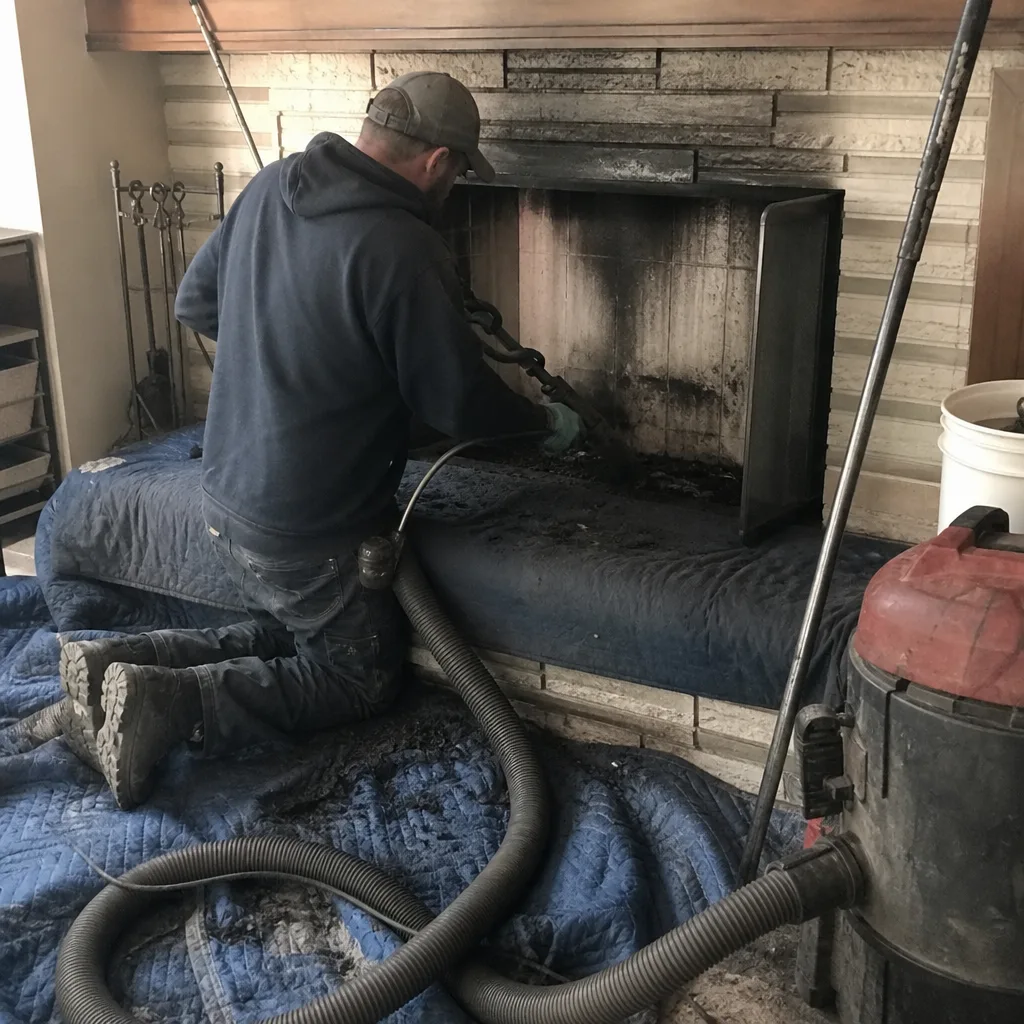 Before
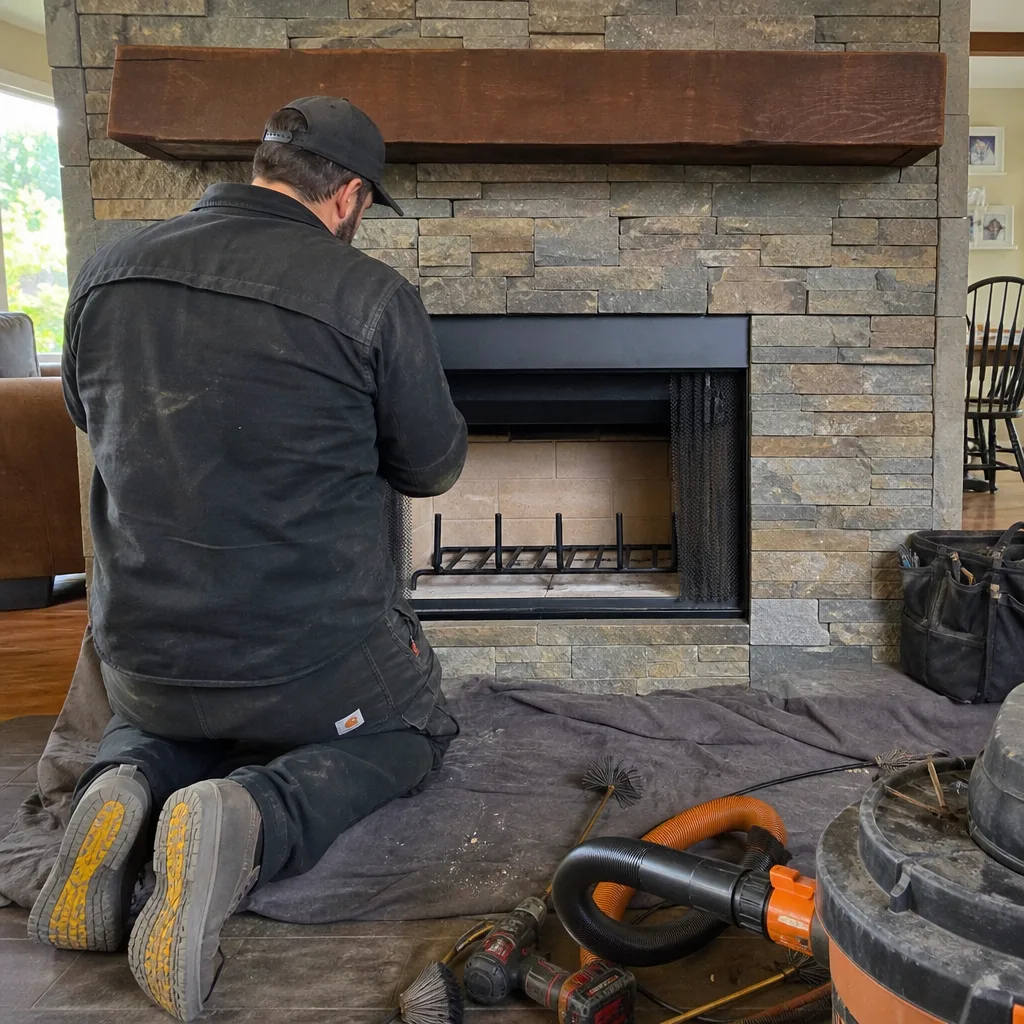 After
After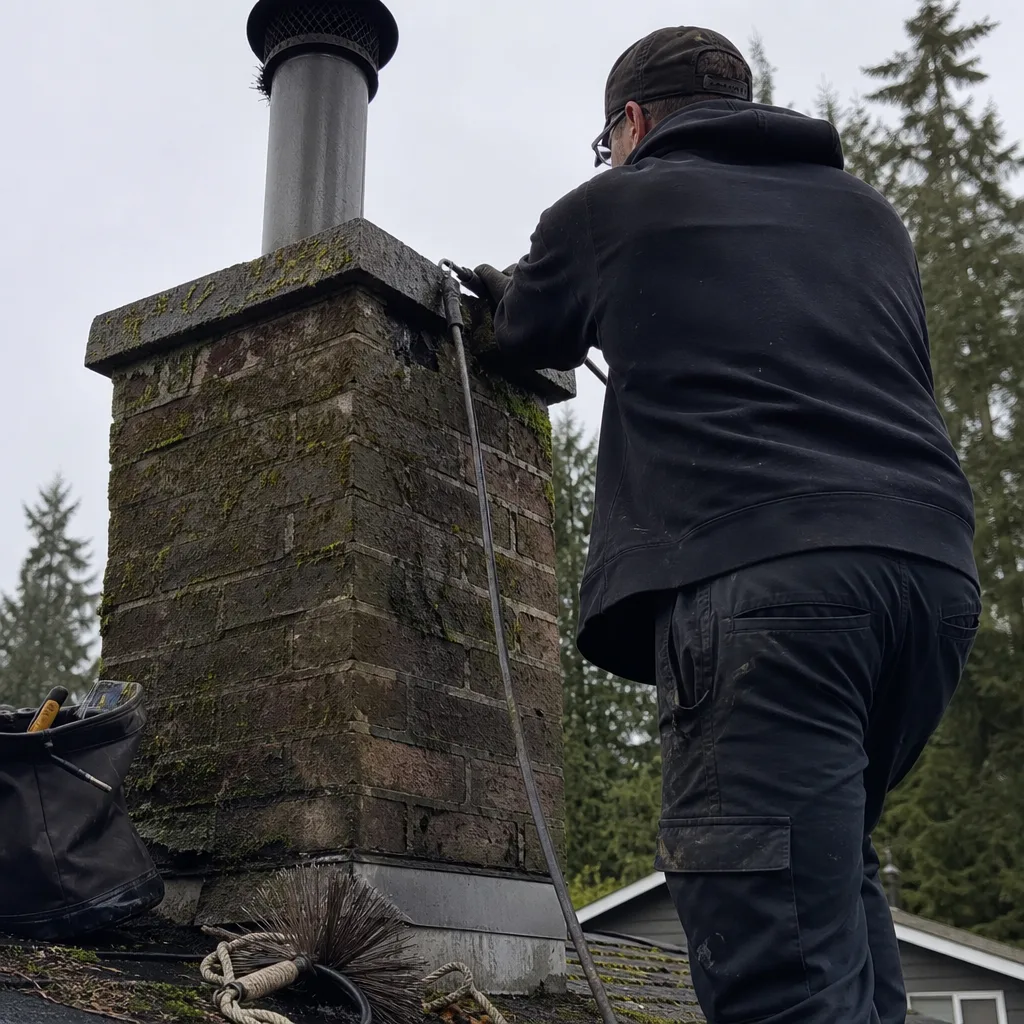 Before
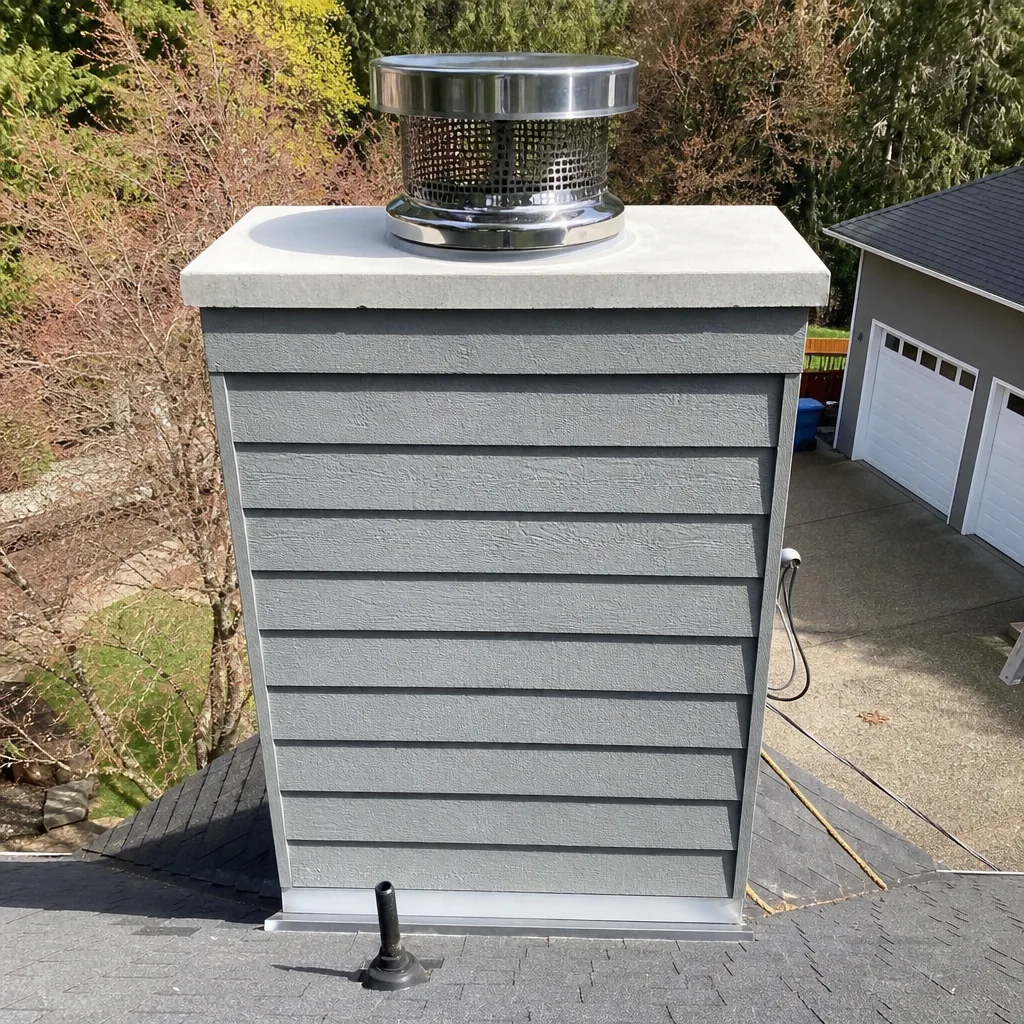 After
After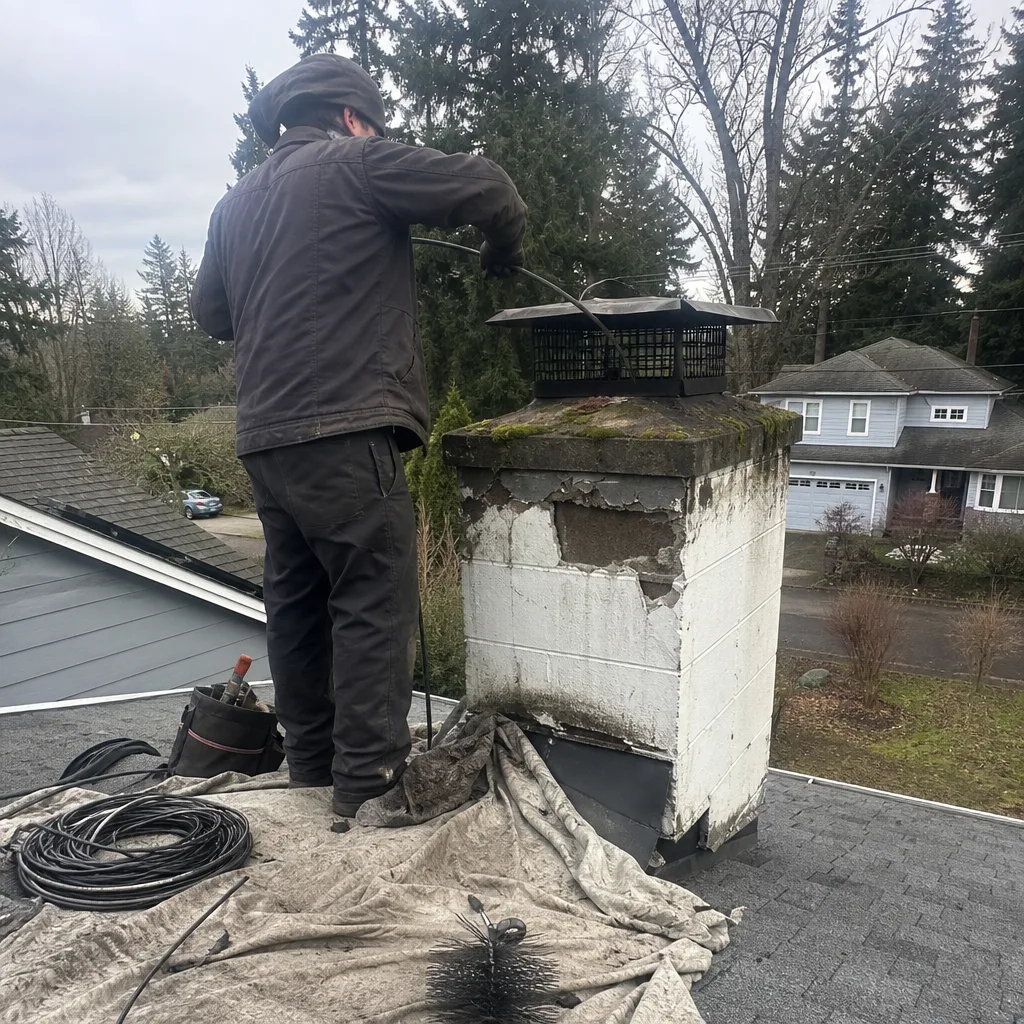 Before
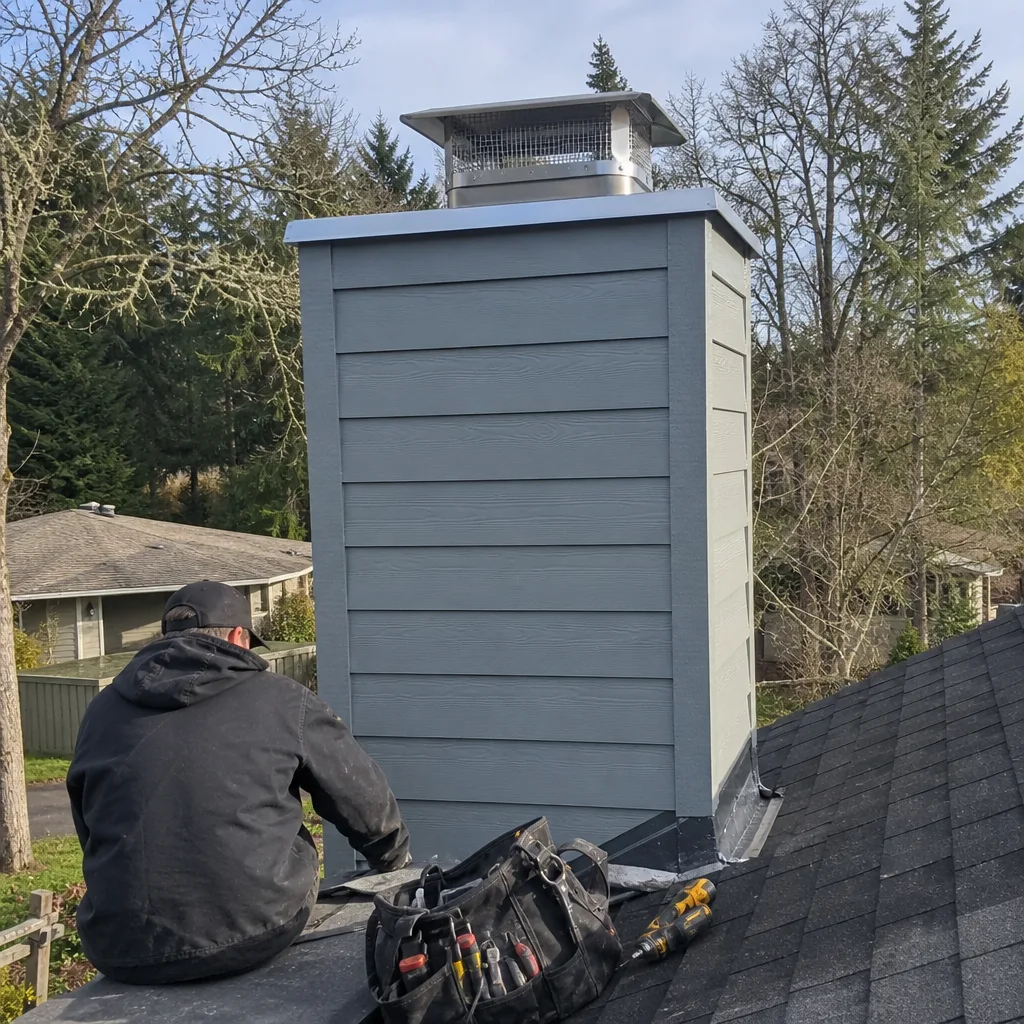 After
AfterChimney Cleaning Warning Signs: A Olympia Homeowner’s Reference Guide
That sulfur smell after a rainstorm? It isn’t your yard, your drains, or seasonal dampness settling into old drywall. In our experience inspecting chimneys across Olympia since 2009, it’s pyrolized creosote absorbing moisture through a cracked flue liner tile and releasing sulfur dioxide back into the living space. The fireplace may have been brushed six months ago. The odor will keep returning until the liner condition is documented with a camera, not assumed clean because a brush passed through.
Pacific Northwest moisture creates a specific warning-sign profile that differs from drier climates. Olympia homeowners often misread slow, moisture-driven deterioration as normal “old house” character or seasonal settling. This guide maps the warning signs we’ve documented across more than 38,000 inspections - the ones that warrant immediate action, the ones that allow scheduled response, and the ones that get mistaken for something else entirely.
Quick Answer
The warning signs that matter most in Olympia are moisture-driven and incremental: persistent odors after rain, white efflorescence on firebox walls, rust streaks on damper blades, and exterior crown cracking with organic growth. These indicate creosote degradation, liner compromise, or water intrusion that a standard brush cleaning won’t resolve without camera documentation. A sulfur or asphalt smell, visible rust, or any new discoloration on ceilings near the chimney stack warrants an NFPA 211 Level 2 inspection with photo record.
Table of Contents
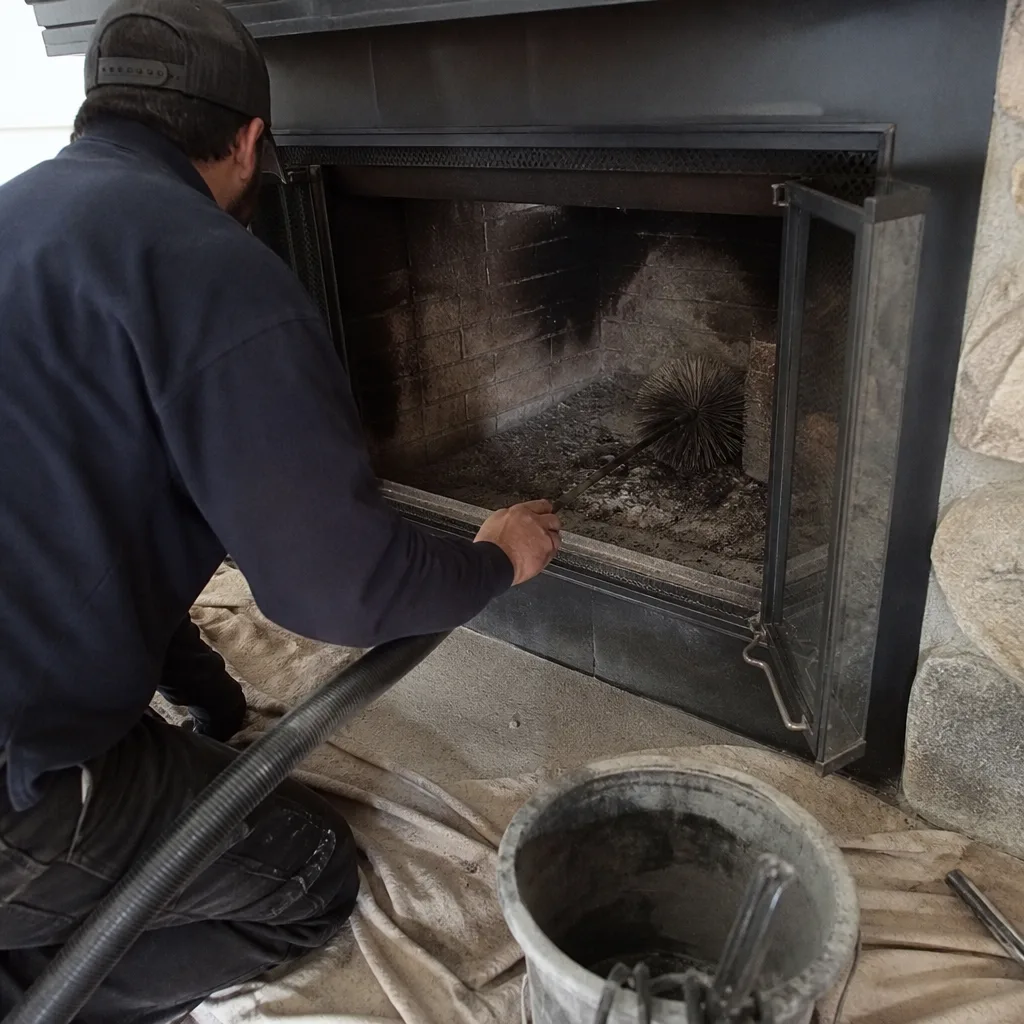
- The Five Moisture-Specific Warning Signs in Pacific Northwest Homes
- Creosote Stages You Can Identify Without Equipment
- Draft Problem vs. Clearance Problem vs. Blockage
- Warning Signs Outside the Flue
- Immediate No-Fire vs. Schedule Within 30 Days: A Triage Framework
- How Olympia’s Climate Accelerates Specific Deterioration Patterns
- Common Mistakes to Avoid
- When to Call a Professional
- Frequently Asked Questions
 Before
 After
AfterThe Five Moisture-Specific Warning Signs in Pacific Northwest Homes
Olympia receives roughly 50 inches of annual precipitation, with concentrated fall-through-spring moisture that penetrates chimney systems through cap gaps, crown fissures, and deteriorated mortar joints. We’ve identified five warning signs that appear disproportionately in our region and get misdiagnosed by homeowners and some sweep companies alike.
1. Efflorescence on the Firebox Back Wall
White, powdery deposits on the rear firebox wall indicate soluble salts migrating through masonry as moisture moves inward. In Olympia’s older homes - particularly in neighborhoods like Bigelow Highlands and Governor Stevens - we see this where original firebrick meets deteriorated parging behind the damper throat. The salts themselves are not hazardous, but their presence proves water is entering the system and carrying dissolved minerals from mortar or soil contact. Left unaddressed, the freeze-thaw cycle degrades the firebox lining and can expose surrounding framing.
What to look for: A chalky white film that reappears after wiping, often with a faint mustiness distinct from wood smoke. If you see this, the moisture source is active.
2. White Staining on the Exterior Chase
Factory-built chimney chases wrapped in siding or stucco develop white streaking where the chase cover or crown allows water behind the exterior finish. In Olympia’s South Capitol and Eastside neighborhoods, where many 1970s-1990s homes feature framed chases with metal flues, this staining often appears first at chase corners or below the cap perimeter. The white material is the same salt migration as efflorescence, but its exterior location signals that water is running down the flue interior and exiting through chase-wall gaps.
We’ve replaced chase covers in Olympia where the homeowner assumed the staining was paint failure or normal weathering. Camera inspection revealed rusted galvanized flue sections and deteriorated insulation packing - damage invisible from below.
3. Damper Blade Rust Streaks
Rust on the damper blade or frame indicates chronic moisture passage through the flue, not merely humidity. In our Olympia inspections, rust streaks that run vertically down the blade - as opposed to light surface oxidation - correlate with crown cracks or missing cap spark arrestors that allow direct water entry. The damper sits at the smoke chamber throat, the narrowest point in the system; water concentrates here before evaporating or dripping into the firebox.
A damper that sticks, squeals, or won’t fully close often has rust-thickened pivot pins. We document this with photos from below and camera footage from above, since the rust source is almost always upstream.
4. Crown Cracking with Organic Growth
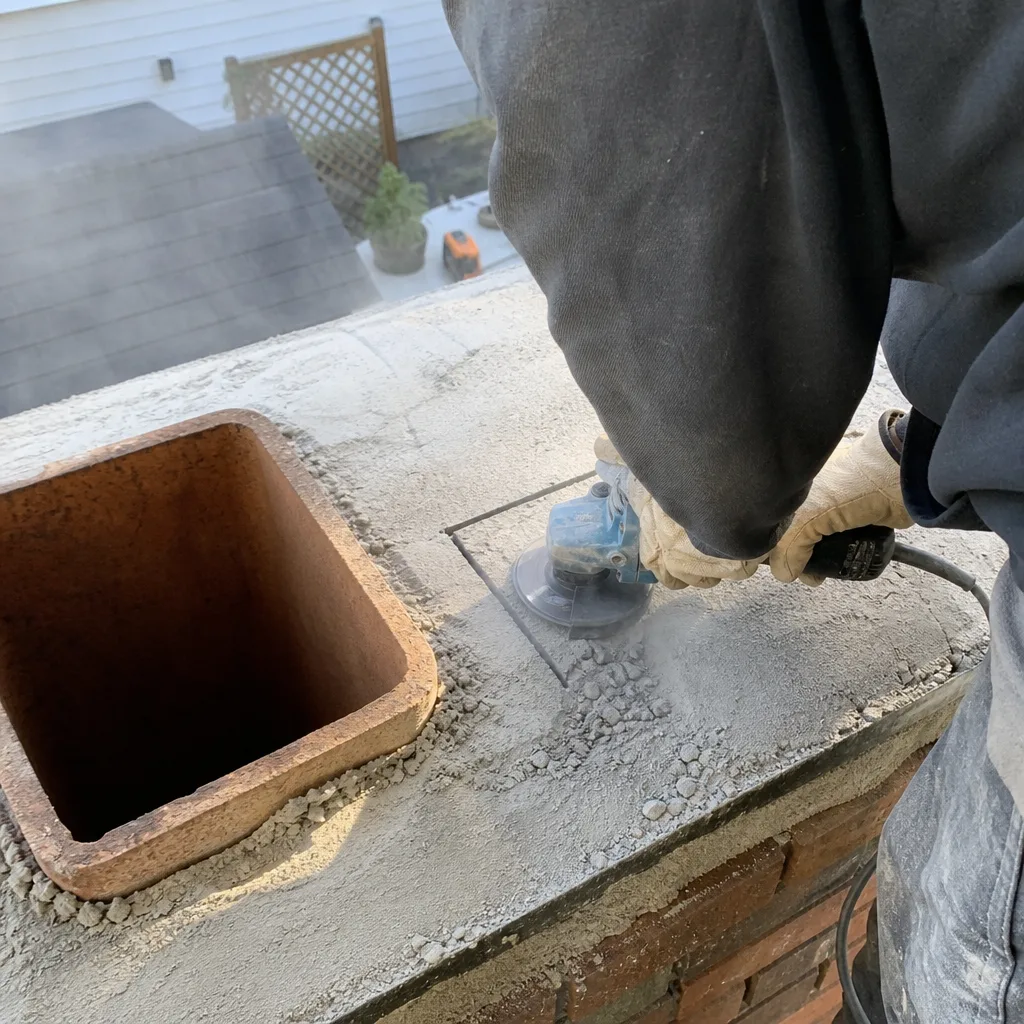
Concrete chimney crowns should shed water with a slight bevel and overhang the masonry below. In Olympia’s climate, crowns without proper drip edges or expansion joints crack within 5-10 years, and those cracks retain enough moisture to support moss or algae colonization. We’ve photographed green growth on crowns in the Woodard Heights area where the homeowner hadn’t looked at the chimney top in years - the organic matter was literally holding water against the crown surface, accelerating freeze-thaw spalling.
A crown with visible vegetation is not a cosmetic issue. It’s a documented water entry point that degrades the mortar wash below and, eventually, the flue liner itself.
5. Persistent Odor After Rain
This is the sign most frequently dismissed in Olympia homes. After rainfall, pyrolized creosote - the hardened, heated residue that forms when wood smoke condenses on flue walls - absorbs atmospheric moisture. If the flue liner has hairline cracks or missing mortar joints, that moisture-laden creosote off-gases sulfur compounds and volatile organic compounds back into the house through the fireplace opening.
The smell is often described as asphalt, matches, or rotten eggs. It intensifies in homes with negative pressure from exhaust fans or HVAC returns. A standard sweep removes loose material but cannot seal liner cracks or identify the breach location without camera inspection. We’ve had Olympia homeowners tell us they stopped using their fireplace entirely because of the smell - when the actual fix was liner documentation and targeted repair, not abandonment. For homeowners weighing whether to tackle maintenance themselves or call a pro, our DIY vs Professional Chimney Cleaning guide breaks down what each approach can and cannot address.
Creosote Stages You Can Identify Without Equipment
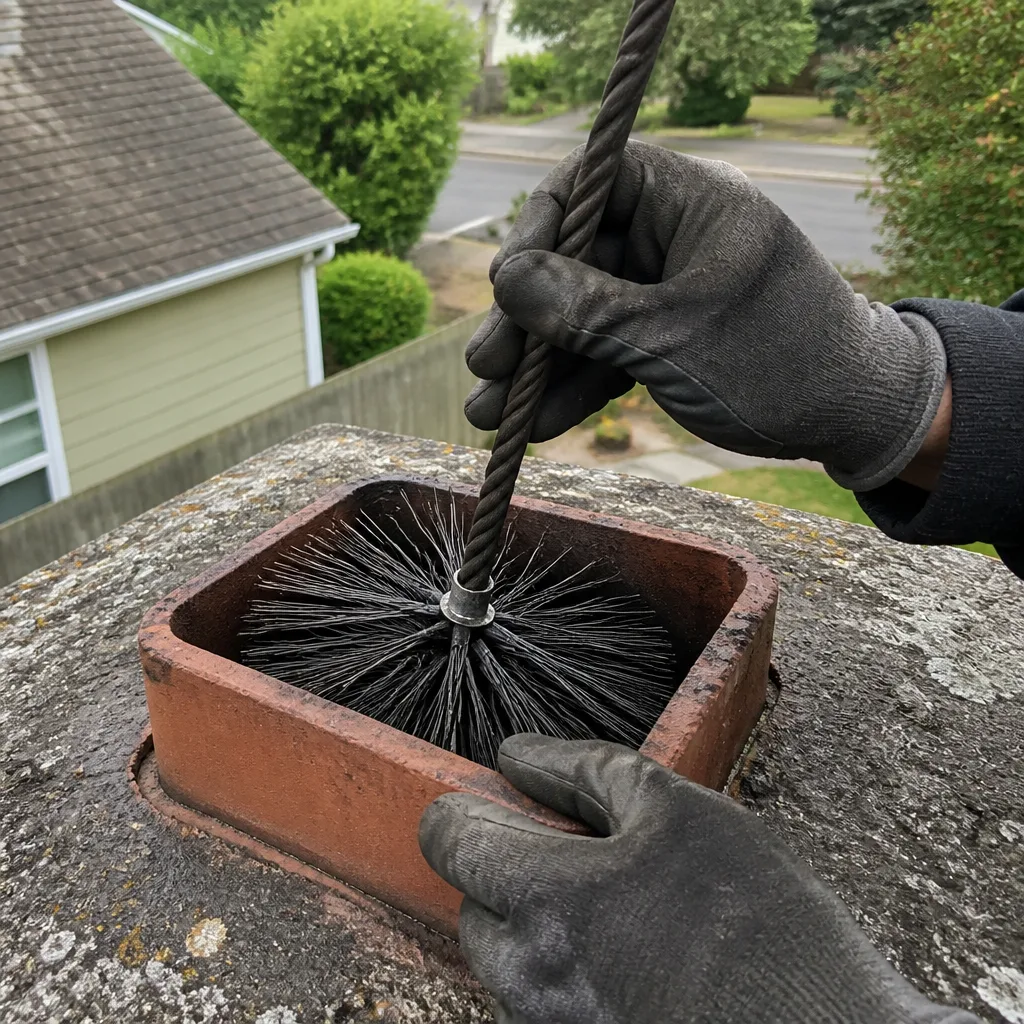
NFPA 211 recognizes three creosote stages, and each carries distinct implications for cleaning method, fire risk, and timing. Homeowners can learn to distinguish them with a flashlight and fireplace poker, though accurate classification requires professional inspection.
Stage 1: Dusty, Brushes Off
Appears as light gray or black soot that smudges on contact. Resembles fireplace ash but adheres to flue walls. In Olympia, we see this in regularly maintained systems burning well-seasoned Douglas fir or maple, typically in homes that sweep annually. Stage 1 removes readily with standard rotary brushing and poses minimal fire risk if addressed before accumulation exceeds 1/8 inch.
Stage 2: Flaky, Hardened
Appears as brittle, layered flakes that detach with light scraping. The texture resembles burnt peanut brittle or fish scales. Stage 2 indicates repeated heating cycles have begun polymerizing the residue - it’s no longer simple soot but a hardened hydrocarbon matrix. This is the critical transition phase.
Here’s the Olympia-specific timing that competitors rarely state explicitly: Stage 2 identified in October, before heavy burning season, typically progresses to Stage 3 by February in homes burning 3+ cords of mixed hardwood. The moisture content in our regional firewood - often 20-25% even when “seasoned” - accelerates condensation in cooler flue temperatures. We document this progression repeatedly in Chimney Cleaning & Sweep in Olympia appointments where the homeowner skipped the previous season.
Stage 3: Tar-Like Glaze
Appears as shiny, black, enamel-hard coating that resists mechanical removal. Stage 3 is glazed creosote, formed when Stage 2 material is repeatedly heated to combustion temperatures without fully igniting. It has the lowest ignition point and the highest heat release rate of any creosote form.
Stage 3 removal requires chemical treatment - typically magnesium-based powders applied over 12-24 hours before mechanical cleaning - or in severe cases, rotary chain flailing. We use HeatShield and Copperfield chemical systems where appropriate, with written scope and pricing before application. Stage 3 found in any quantity warrants immediate cleaning before next use; in our Haven Standard documentation, we flag it as “no-fire until cleared.”
Key distinction for homeowners: Stage 1 sounds hollow when tapped with a metal tool. Stage 2 cracks and flakes. Stage 3 rings solid, like ceramic. If you’re unsure, assume the more severe stage and schedule inspection.
Draft Problem vs. Clearance Problem vs. Blockage
These three symptom profiles produce similar complaints - smoke in the room, difficulty starting fires, cold drafts - but stem from different failures and require different repairs. Misdiagnosis is expensive. We’ve seen Olympia homeowners quoted $4,000 liner replacements for $200 blockages, and $300 sweeps sold for clearance violations that actually require structural modification.
Draft Problem: The Symptom Profile
Smoke spills at fire start-up, then draws properly once flue temperature rises. Cold air falls from the fireplace when not in use. Odors vary with barometric pressure and wind direction. These symptoms indicate inadequate flue temperature or negative house pressure, not physical obstruction.
Common Olympia causes: Exterior chimneys on north-facing walls that never warm sufficiently; tall trees or adjacent structures creating wind-pressure zones; tightly sealed modern homes with powerful kitchen and bath exhaust. Solutions range from top-sealing dampers (we install Gelco and Famco models) to combustion air supplies to flue extension. Camera inspection rules out liner damage before we recommend draft-specific fixes.
Clearance Problem: The Symptom Profile
Smoke or heat marks on adjacent mantel, trim, or wall surfaces. Cracked or discolored drywall near the chimney breast. These indicate the fireplace or flue was installed with insufficient clearance to combustibles, or that framing has shifted into the required gap.
In Olympia’s historic homes - particularly in the Downtown and Westside districts - we’ve documented original masonry fireplaces where later renovations enclosed the chimney breast with standard framing, reducing clearances below NFPA 211 minimums. This is not a sweep issue. It requires structural evaluation, potential reframing, and often HeatShield or similar clearance-reduction systems installed to code. We provide written documentation of clearance measurements and photo evidence for contractor or insurance review.
Blockage: The Symptom Profile
Sudden onset of poor draft after previously normal operation. Smoke backup regardless of fire size or duration. Audible fluttering or whistling from the flue. These indicate physical obstruction.
Olympia-specific blockages we encounter: Bird nests in uncapped flues (common March-July); collapsed clay liner segments in pre-1960 homes; debris from deteriorated chimney crowns washing down the flue; and, in one memorable case, a beehive occupying the smoke chamber of a vacant home in the Indian Creek neighborhood. Blockages are the simplest to diagnose with camera inspection and typically the least expensive to resolve - assuming the sweep company actually looks before quoting replacement.
Our protocol: camera down the flue on every Chimney Repair in Olympia or cleaning call, with footage reviewed jointly with the homeowner when possible. Clause 4 of the Haven Standard requires this documentation; we don’t guess at obstruction vs. draft vs. clearance.
Warning Signs Outside the Flue
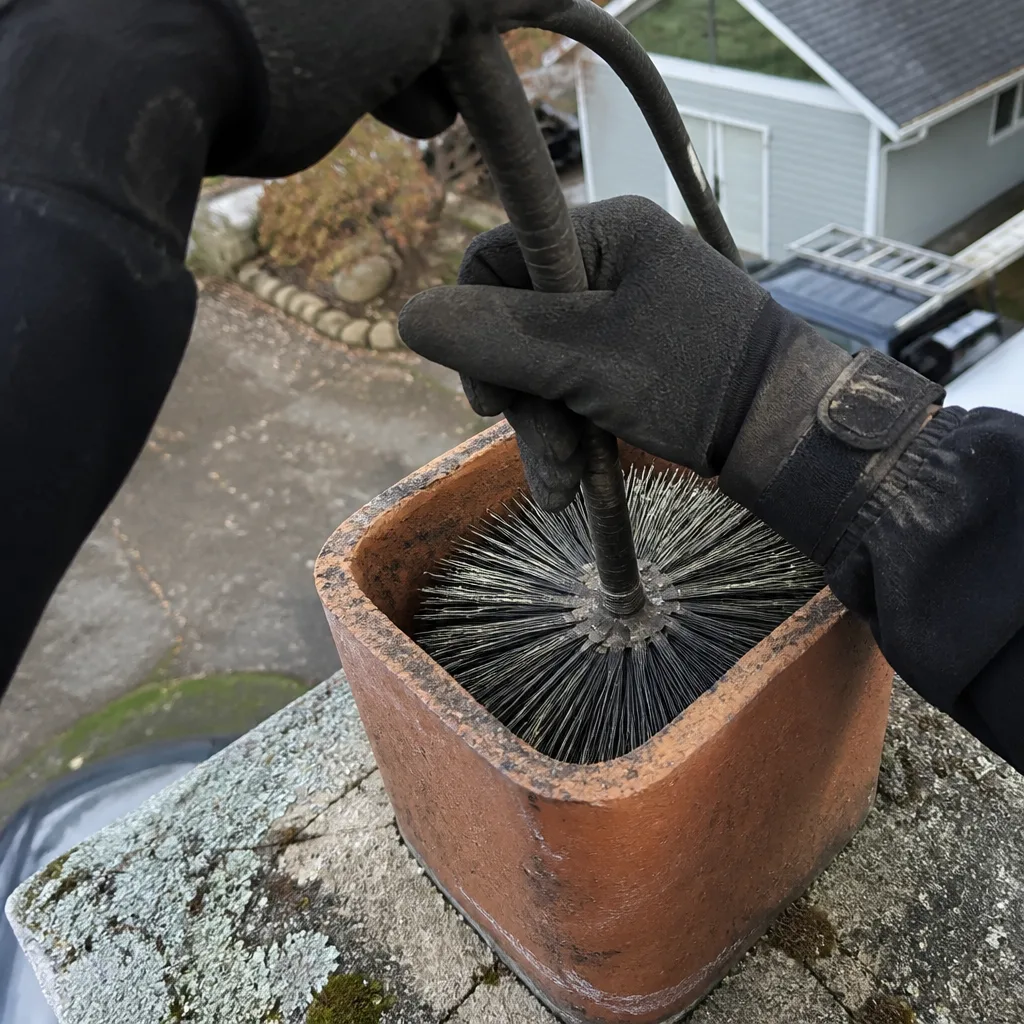
Some of the most diagnostically valuable signals appear where homeowners don’t think to look. These exterior and adjacent-space indicators often predate visible flue damage by months or years.
Spalling Brick at the Roofline
Spalling - the flaking or popping of brick faces - occurs when moisture penetrates masonry, freezes, and expands. In Olympia’s climate, freeze-thaw cycles are milder than Midwestern winters but more frequent, with repeated wet-dry cycling through fall and spring. Spalling at the roofline specifically indicates failed crown or cap waterproofing, since lower chimney sections are protected by eaves and remain drier.
We photograph spalling progression annually for Olympia homeowners with aging masonry. Early spalling (surface flaking) may allow tuckpointing and crown repair. Advanced spalling (exposed brick cores, loose units) often requires partial rebuild with matching brick sourcing through our Haven buying network.
Dark Staining on Interior Ceiling Near Chimney Stack
Water stains on drywall or plaster ceilings adjacent to the chimney chase indicate active leakage at the flashing or crown level. The stain pattern matters: circular or irregular stains suggest crown or cap failure; linear stains following ceiling joists suggest flashing separation at the roof intersection.
In Olympia’s newer construction, we’ve traced ceiling stains to failed step flashing where the chimney passes through composite shingle roofs - often installation defects invisible until moisture accumulates. In older homes, the cause is typically deteriorated counter-flashing or absent cricket (the peaked diversion structure behind chimneys on sloped roofs). We document the stain pattern, roof-penetration geometry, and recommended repair scope with photos before any work begins.
Discoloration of Adjacent Attic Insulation
This is the warning sign almost no homeowner discovers independently, and almost no sweep company mentions. Fiberglass or cellulose insulation adjacent to the chimney chase in the attic that appears darkened, compressed, or stained indicates chronic warm, moist air leakage from the flue envelope. The discoloration is a combination of soot particle filtration and moisture-driven mold or mildew.
We find this during Level 2 inspections that include attic access, which NFPA 211 requires for accessible adjacent spaces. In Olympia’s 1950s-1970s ranch homes - common in the Lacey-adjacent neighborhoods - the original chimney chases were framed with minimal firestop sealing between floors and attic. Warm flue air migrates through these gaps, condensing in cold attic spaces and degrading insulation performance while creating combustion safety concerns. The fix is firestop sealing and often chase air-sealing, not simply sweeping the flue.
Immediate No-Fire vs. Schedule Within 30 Days: A Triage Framework
Not every warning sign demands the same response. We’ve developed this framework through 15 years of Olympia inspections, and we communicate it explicitly to every homeowner who calls with concerns. For more guides & resources on maintaining your system through our wet seasons, see our blog.
Immediate No-Fire: Use the Fireplace Now and Call Today
- Visible flames or glowing material in the flue after the fire is out. This indicates active chimney fire or sustained creosote ignition. Evacuate, call 911, then call for inspection before next use.
- Sudden onset of smoke filling the room with any fire size. Suggests complete blockage or structural flue failure. Do not attempt to “burn through it.”
- Fallen liner segments visible in the firebox or damper area. The flue is no longer structurally intact; combustion gases may enter wall cavities.
- Carbon monoxide detector activation with fireplace in use. Treat as emergency; ventilate, evacuate if symptoms present, and inspect before restart.
- Strong petroleum or chemical odor during burning. Indicates possible exterior contaminant (roofing tar, paint solvents) volatilizing in the flue, or improper fuel.
Schedule Within 30 Days: Reduce or Suspend Use, Book Inspection
- Any Stage 2 or 3 creosote identified by homeowner or previous sweep. Burning accelerates progression; schedule before heavy-use season.
- Persistent odor after rain with no visible firebox damage. Indicates liner compromise requiring camera documentation; not immediately hazardous if fireplace is unused.
- Damper rust with operational stiffness. Functional degradation; moisture source needs identification.
- Exterior crown cracking with or without organic growth. Water entry active but typically slow; address before freeze-thaw accelerates.
- Spalling brick limited to surface flaking. Masonry degradation in early stage; repairable before structural intervention required.
- Draft problems that resolve after extended warm-up. Inefficient and unpleasant but not immediately hazardous; evaluate for damper or flue extension solutions.
Monitor and Document: Annual Inspection Sufficient
- Stage 1 creosote with no other symptoms
- Minor exterior staining without progression
- Historical repairs with documented photo record showing stable condition
We provide dated photo documentation for all Olympia homeowners in the “monitor” category, with specific indicators to watch for before the next scheduled inspection.
How Olympia’s Climate Accelerates Specific Deterioration Patterns
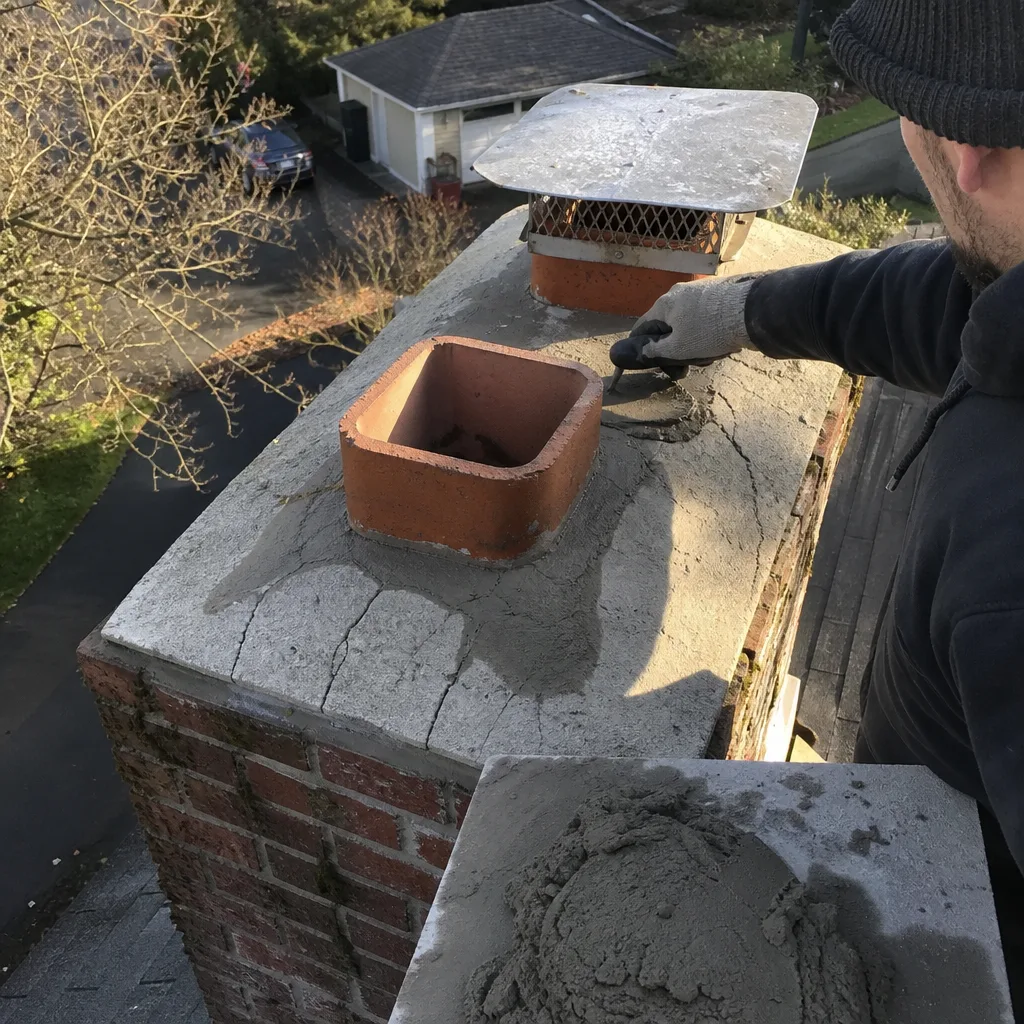
Olympia’s maritime climate - mild winters, wet shoulder seasons, moderate temperature swings - creates deterioration mechanics distinct from both drier inland regions and harsher northern climates.
Moderate freeze-thaw frequency: Unlike Minnesota or Michigan, Olympia rarely sees sustained subzero temperatures. But we experience dozens of freeze-thaw cycles each winter as temperatures oscillate around 32°F. This is actually more damaging than deep cold, because moisture repeatedly liquefies and re-freezes in masonry pores, expanding with each cycle. Crown concrete and mortar joints degrade faster here than in colder, drier climates where water remains frozen for months.
Extended moisture exposure: Our rainy season runs October through May, with only brief summer drying periods. Chimney systems that leak in October remain saturated for seven months. We’ve documented liner deterioration in Olympia homes where a single crown crack allowed continuous water entry through an entire wet season, degrading clay tiles to the point of spalling - damage that might take years in a climate with dry summers.
Wood combustion patterns: Olympia’s abundant local firewood - primarily Douglas fir, western red cedar, and alder - burns differently than eastern hardwoods. Fir and cedar have higher resin content, producing more volatile combustion byproducts that condense as creosote at lower flue temperatures. Alder burns cleaner but requires more frequent loading, leading to smoldering cycles that favor Stage 2 formation. Homeowners burning mixed local cordwood without moisture metering (target below 20%) accumulate creosote faster than NFPA’s generic guidance suggests.
Soil and foundation interaction: Olympia’s clay-rich soils and high water table affect masonry chimneys with below-grade exposure, particularly in older homes with original construction. We’ve found deteriorated parging and efflorescence in basements where chimney bases wick groundwater, a pattern rare in well-drained regions.
For Fireplace Services in Olympia that account for these regional factors, we specify Pacific Northwest-appropriate materials - DuraFlex stainless liners for wet-climate durability, HeatShield crown repair systems formulated for freeze-thaw resistance - and document why in every written scope.
Common Mistakes to Avoid
- Assuming a recent sweep means the system is sound. A brush cleaning removes accessible creosote but does not evaluate liner condition, crown integrity, or hidden blockage. We’ve found cracked liners in Olympia chimneys swept annually by brush-only companies with no camera documentation.
- Attributing all odors to “old house smell” or seasonal dampness. Sulfur and asphalt odors from a fireplace are never normal. They’re combustion byproduct off-gassing through liner breaches, and they indicate active gas pathway into living space.
- Accepting “it looks fine from below” as inspection. The NFPA 211 Level 2 standard requires internal camera inspection of the flue, smoke chamber, and accessible portions of the firebox. A flashlight look from the hearth or roof is not a Level 2 inspection, regardless of what it’s called.
- Delaying crown repair until leaks are visible inside. By the time water stains appear on ceilings or walls, crown damage has typically progressed to liner exposure and firebox degradation. Exterior crown maintenance is preventive, not reactive.
- Burning unseasoned wood because “it’s what was available.” In Olympia’s wet climate, “seasoned” wood sold in fall is often 25-30% moisture. We provide moisture meter readings during inspections and can recommend local suppliers with verified dry storage.
- Ignoring attic insulation discoloration. Homeowners rarely enter attics; when they do, they don’t know that darkened insulation near the chase indicates long-term air leakage. This is a diagnostic signal we specifically train our technicians to document and explain.
- Confusing draft problems with liner replacement needs. We’ve reviewed competitor quotes in Olympia recommending full stainless liner replacement for draft issues solvable with a top-sealing damper or flue extension. Camera documentation prevents unnecessary expenditure.
When to Call a Professional
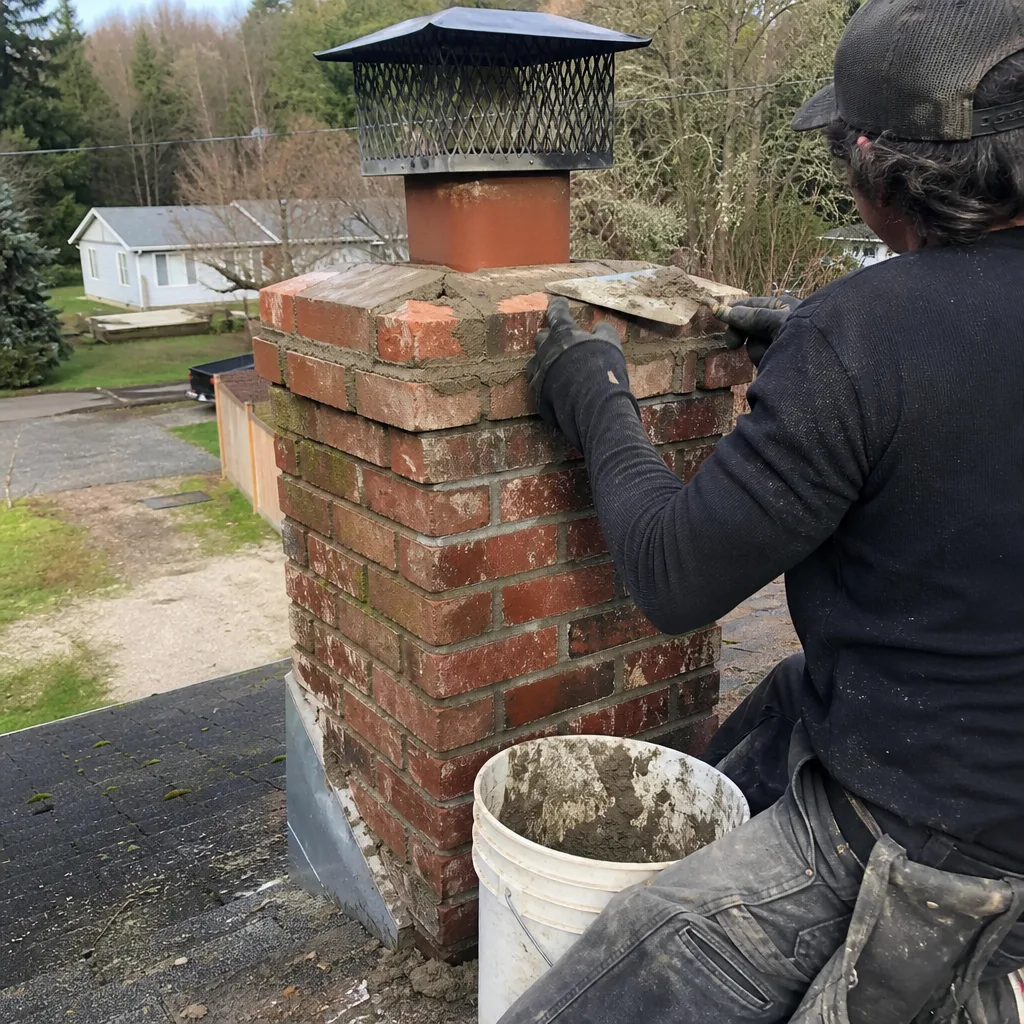
Call for an NFPA 211 Level 2 inspection if you’ve noticed any warning sign described in this guide, if your last inspection included no camera documentation, or if you’re unsure when your chimney was last evaluated beyond a brush cleaning. In Olympia’s climate, annual inspection is prudent for actively used fireplaces; every two years minimum for occasional use.
Level Two Chimney Olympia offers free estimates in Olympia - call (360) 464-2015. Every estimate includes written scope, written price before any work begins, and a documented photo record under Clause 4 of the Haven Standard. We also provide free second opinions on any competitor’s written estimate, with no obligation.
Our live phone support runs 24 hours a day, 7 days a week. Calls are answered by a person, not voicemail. You’ll receive a text when your assigned, background-checked technician is en route, with license information and name confirmation.
Frequently Asked Questions
A standard chimney sweep and NFPA 211 Level 2 inspection in Olympia typically runs $249-$349 for a single-flue system, depending on accessibility, roof height, and creosote stage. Stage 3 glazed creosote requiring chemical pretreatment adds $150-$250. We deliver a written price before any work starts - Clause 1 of the Haven Standard - and include the camera-scan photo record at no additional charge. Call (360) 464-2015 for an exact quote; estimates are free.
You need a new liner only if camera inspection documents damage that compromises safety or code compliance - cracks, missing mortar joints, or deterioration that allows combustion gas leakage. We do not recommend liner replacement without photo evidence you can review yourself, and we provide free second opinions on any competitor’s written liner quote. Many “liner replacement” recommendations we’ve reviewed in Olympia were for draft or blockage issues solvable without liner work.
NFPA 211 recommends annual inspection for all chimney systems, with cleaning frequency determined by creosote accumulation. In Olympia’s climate, with typical mixed hardwood burning of 2-3 cords annually, most active fireplaces need annual sweeping. Occasional-use systems may extend to every two years with inspection, but the wet climate means moisture-driven deterioration progresses regardless of use frequency. We date-stamp photo records so you can track condition year over year.
Skipped maintenance allows creosote progression from Stage 1 to Stage 2 to Stage 3, increasing chimney fire risk and eventually requiring more expensive chemical or mechanical removal. Moisture entry through undetected crown or liner damage degrades masonry, corrodes metal components, and can produce combustion gas leakage into living spaces. In Olympia specifically, we’ve documented homes where two skipped seasons resulted in flue liner collapse requiring partial rebuild - costs that dwarf preventive maintenance. The 365-Day Done Right Promise covers our work, but it cannot reverse deterioration that occurred before we arrived.
The smell is pyrolized creosote absorbing atmospheric moisture through liner cracks or missing mortar joints, then off-gassing sulfur compounds. A standard brush cleaning removes loose surface material but cannot seal the moisture pathway or identify the breach location. Only camera inspection locates the specific crack or joint allowing absorption. In Olympia’s wet climate, this is one of the most common calls we receive, and one of the most commonly misdiagnosed by brush-only sweep companies.
A Level 1 inspection is visual, from accessible areas, without specialized equipment - appropriate for unchanged systems with no known concerns. A Level 2 inspection, required at property sale or after any operational change or known damage, includes internal camera examination of the flue, smoke chamber, and accessible portions of the firebox and attic, plus written documentation. Level Two Chimney Olympia performs Level 2 as our default on every visit; we haven’t done flashlight-only inspections since 2009, when we made camera documentation standard practice that became Haven Standard Clause 4.
The Bottom Line
Olympia’s moisture-driven climate produces chimney warning signs that are incremental, not dramatic. The sulfur smell after rain, the white dusting on firebox brick, the rust streak on a damper blade - these are not character traits of an old house. They’re diagnostic signals of specific, documentable conditions that progress predictably if unaddressed.
The homeowners who avoid expensive surprises are those who treat warning signs as data, not ambiance. Camera documentation separates actual condition from assumption. Written scope and pricing before work starts separates necessary repair from unnecessary replacement. And a dated photo record, maintained year over year, shows progression before it becomes emergency.
We’ve completed more than 38,000 inspections and cleanings since 2009, every one with written price before work started and documented record at completion. If you’ve noticed any sign described here, or if you’re uncertain when your chimney was last evaluated with camera documentation, call for an estimate. The inspection itself is the only way to know what you’re actually dealing with.
Written by Corrine Halstead, Owner at Level Two Chimney Olympia, serving Olympia since 2009.